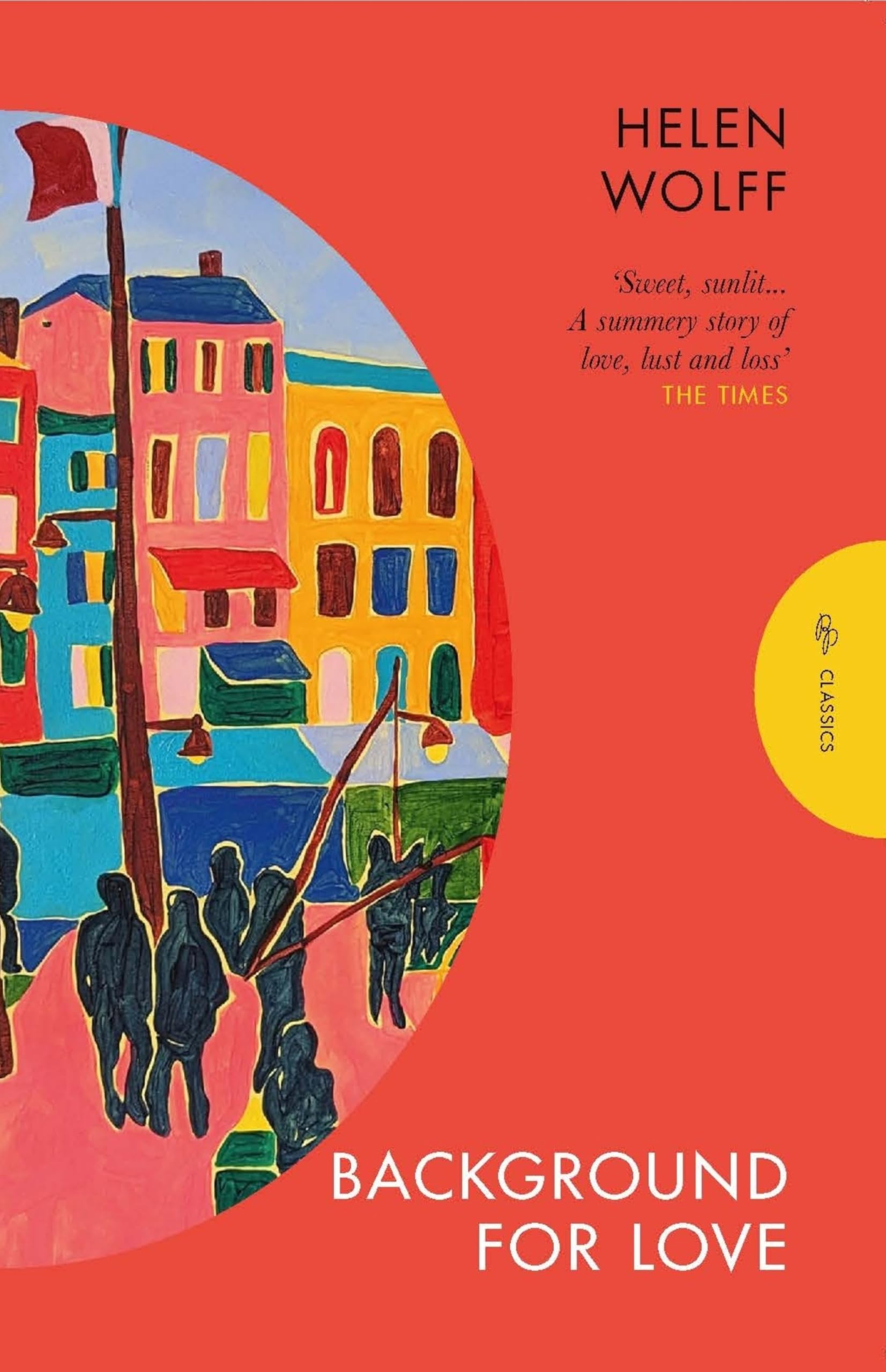



A lush autobiographical story of young love, 1930s Côte d’Azur, and rising fascism in Nazi Germany — by the famed publisher of Calvino, Pasternak, and Gunter Grass In a giddy rush, a young woman and her older lover leave 1930s Berlin for a summer vacation on the Côte d'Azur. As they drive along stunning bays, linger over sumptuous meals and steal kisses on the street, they seem marvelously in sync, each enchanted by the other. But as she observes her lover's wandering eye and rigid world-view, the woman decides to leave in search of a cottage of her own near Saint-Tropez. There, amid the vineyards and lemon trees, she will forge startling new connections and pass an unforgettable summer of independence and freedom. Background for Love is an irresistible autobiographical novel by the great publisher Helen Wolff, who together with her husband, Kurt Wolff, Kafka’s first publisher, set up Pantheon Books in America after fleeing Nazi Germany. In the fascinating companion essay, historian Marion Detjen, the author's great-niece, delves into Helen's path to writing and the autobiographical context of the novel in her early life with Kurt. Helen is remembered as a great publisher, a multilingual reader who brought authors such as Italo Calvino and Georges Simenon to English-speaking readers – only now is her own reputation as a writer coming to the fore. Recently recovered from the archive and translated for the 1st time by Tristram Wolff, the author's grandson, this is a a fast-paced, highly intense, and emotionally gripping novel of passion and self-discovery. "Wolff may not have wanted her book to be seen by outside eyes, but her summer of love is a tale so rich, evocative and forbidden, it is irresistible." -- British Vogue "Helen Wolff’s exquisite autobiographical novella Background for Love captures a brief yet idyllic Côte d’Azur respite from the impending fascism of 1930s Germany." — Foreword Reviews Helen Wolff (1906-1994) was born in Macedonia to a German father and Austro-Hungarian mother. At twenty-one, she went to Munich to apprentice at Kurt Wolff Verlag, Kafka's original publisher. She began an affair with Kurt, whom she went on to marry. The couple fled Nazi Germany, first for France and eventually for the United States, arriving almost penniless in 1941. The Wolffs founded a new imprint of Pantheon Books in 1942. Helen, a gifted linguist who could read four languages, published significant works by writers including Italo Calvino, Umberto Eco, Georges Simenon and Boris Pasternak. She wrote fiction and plays but always kept her own writing private. Background for Love was first published in Germany in 2020 to wide acclaim. Marion Detjen is a historian at Bard College Berlin. She teaches migration history and is Program Director for International Education and Social Change, a scholarship program for displaced students. This is it: we’re really on our way. Blankets and big suitcases and coats, a pile of maps, sunglasses to protect us from the dust and the glare. Chocolate, hard-boiled eggs, cognac, bananas: it’s going to be a long journey, a journey without lunch, instead we’ll have a quick bite when the gates are lowered at railroad crossings, and there’ll be irritated chewing when we’re delayed at the border. We’ve put a long winter behind us, full of work and anxie- ties, rain, fog, hail and snow. It’s five in the morning. We have the feeling we’re running from something, toward the easy life, toward a sunlit world. It’s almost a kind of betrayal, this journey through the gray morning haze, betrayal of the friends who have stayed behind to freeze, betrayal of the morning and evening papers that from now on will only ever reach us late, hardly any scent left to them, hardly even true anymore. We feel guilty as Germany slips by beneath us, devoured by our accomplice’s four wheels, as the windshield wiper, eager accessory, busily shoves away a fine mist of rain. We’re on our way: the car, you and I. Oh yes, in spite of it all it’s sheer joy to be on the road. Anything could happen to us, a flat tire, an accident might call us back, like a gendarme hard on the heels of a fugitive—but each kilometer makes us feel safer. The uncertain early light grows surer, more confident. We really are on our way—I move closer to you. You wear thick gloves, a good camel traveling coat, you’re hidden in its warm skin and you watch your turns closely, you watch for slippery streets and for obstacles that might get in the way of your progress. Later on it will get easier, I know, clearer, your strained attention can relax once the world crosses from the early hour into plain morning, the spell broken. But at this hour shrubs still look like haycarts, haycarts like shrubs, danger lurks, the farmers have long poles on the sides of their carts hidden by the early light. We have to just keep going, we can’t afford to get tripped up now, we’re on our way. ‘It’s gorgeous,’ I say. ‘Not completely real