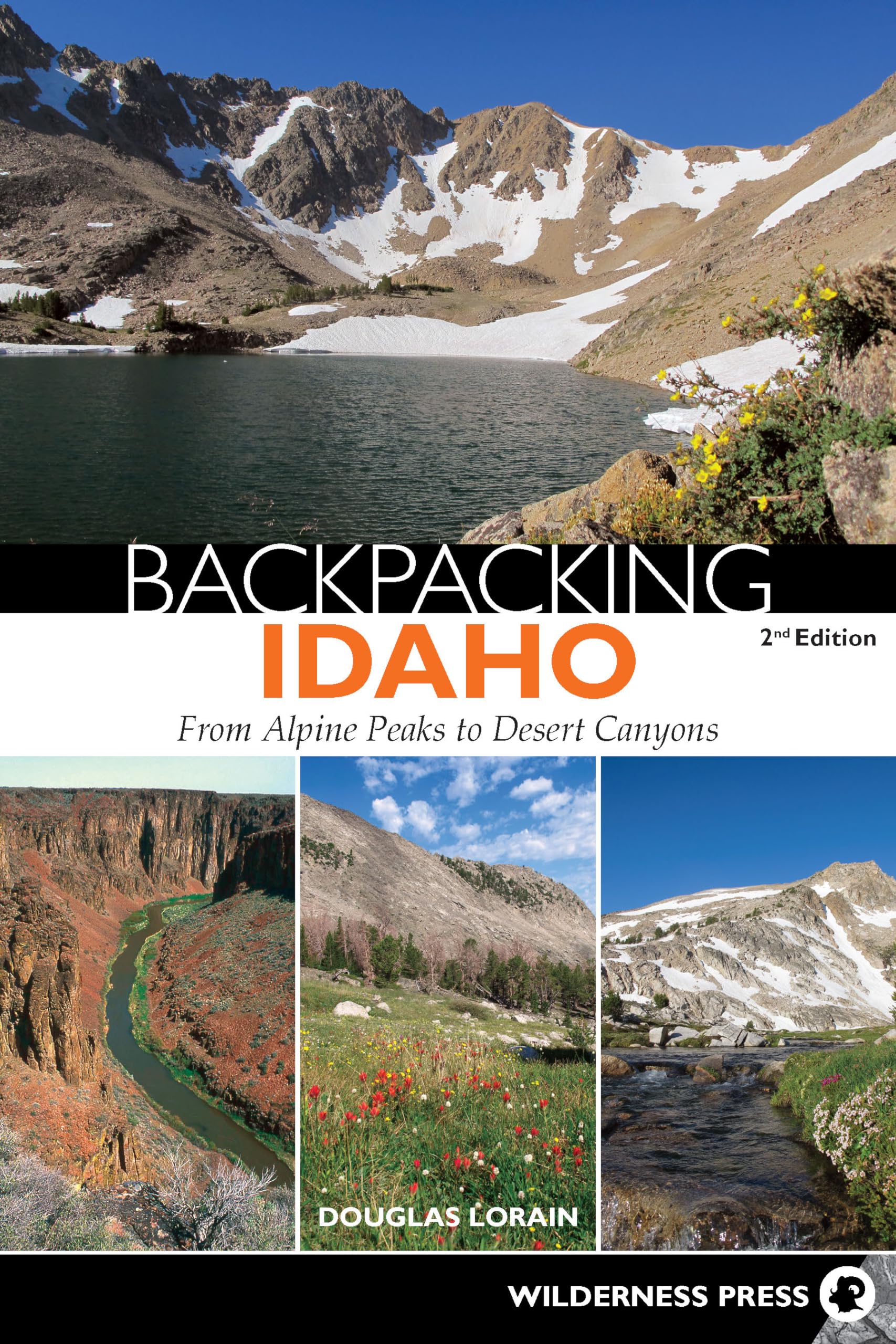



A virtually undiscovered backpacking paradise, Idaho has numerous wilderness areas of mind-boggling size. Backpackers can find complete solitude, wildlife, and some of North America's most outstanding scenery. Idaho's mountains also boast great weather -- fewer thunderstorms than the central Rockies, less rain than Oregon and Washington, and cooler summer temperatures than California. Backpacking Idaho takes you to what author Doug Lorain calls a "Shangri-la" for backpackers. In the craggy Selkirk Mountains you'll find lush forests, small cirque lakes, and jagged granite peaks. Watch for ospreys, river otters, and belted kingfishers in the swift Selway River. Explore hundreds of miles of trails in the gently rolling forested hills in north-central Idaho, or head to Hell's Canyon, the deepest gorge in North America, where you'll find both alpine tundra and cactus-studded desert. Ever since Douglas Lorain's family moved to the Pacific Northwest in 1969 he's been obsessively hitting the trails of his home region. He has written numerous other guidebooks about the Pacific Northwest and lives in Hamilton, MT. LONG CANYON LOOP RATINGS: Scenery: 7, Solitude: 6, Difficulty: 6 - MILES: 37 (52) (These numbers exclude the road walk back to the Canyon Creek trailhead.) - SHUTTLE MILEAGE: 4 - ELEVATION GAIN: 8,200' (13,000') - DAYS: 3–4 - MAP(S): USGS Pyramid Peak, USGS Smith Falls, USGS Smith Peak - USUALLY OPEN: Mid-July–early October - BEST: Late July–September - PERMITS: None - RULES: Maximum group size of 12 people, unless you specifically notify the Bonners Ferry Ranger District; fires are strongly discouraged; staying more than three nights at any given campsite is prohibited. - CONTACT: Bonners Ferry Ranger District, 208-267-5561 SPECIAL ATTRACTIONS Unusual wildlife; lush rain forests CHALLENGES Grizzly bears; relatively wet weather; limited water and few campsites along Parker Ridge HOW TO GET THERE From the junction of US 2 and US 95 about 2 miles north of Bonners Ferry, drive 12.6 miles north on US 95 to a junction. Go straight on ID 1 for 1.1 miles, and then turn left (west) on a county road, following signs to Copeland Bridge and Westside Road. Stay on this paved road for 3.5 miles, taking a bridge over the Kootenai River, and come to a T-junction. Turn right on the paved Westside Road and drive 3.5 miles to the Parker Creek trailhead, which has room for only one or two cars to park. If you have two cars, leave one here. To reach the recommended starting point, continue another 3.5 miles on Westside Road, and then turn left (uphill) at a signed junction with a narrow, gravel, dead-end road that goes 0.1 mile to the small parking lot for the Canyon Creek trailhead. Note: This trailhead is on private land. The public is allowed to park but not camp here. INTRODUCTION As the wettest range in the state of Idaho, the Selkirk Mountains support forests that are so lush they resemble the rain forests of the Pacific Northwest coast. The trees include such relatively unusual Idaho species as western red cedar, western hemlock, western yew, and Pacific dogwood, while the undergrowth is a mass of ferns, mosses, and lichens that assail the hiker with a stunning display of greenery. In a grand sampling of this wet environment, the first half of this hike takes you up Long Canyon, the last major unlogged valley in the Selkirk Mountains, where a magnificent shady forest provides a hiking experience unlike anything else in the state. But there is more to admire here than dense forests. Along the ridges are jagged peaks; hidden cirques filled with small, scenic lakes; and expansive views of the deep, green valleys below. In addition, wildflowers bloom in profusion, especially along the open ridgetops, where the forests have yet to recover from a series of large forest fires. This superior hike is the finest backpacking adventure in the Selkirk Mountains because it includes the best of the area’s low-elevation forests as well as some of the range’s most beautiful lakes and ridgetop views. WARNING: This is grizzly bear country. Please heed the guidelines given on page 11. Remember that bears and dogs do not get along. Accordingly, the U.S. Forest Service strongly discourages bringing your dog. If you must bring your pet, be sure that the animal is on leash at all times. DESCRIPTION The trail, which has been significantly rerouted from what is shown on the U.S. Geological Survey (USGS) maps, follows an overgrown road the first 200 yards, and then narrows to a foot trail and wanders gradually uphill through a nicely varied forest. The mix of evergreen trees here is more diverse than just about anywhere else in the state. Douglas-firs and western red cedars are the most common species, but there are also western larches and grand firs, as well as ponderosa pines, western white pines, and western hemlocks. The ground cover is kept in check by the deep shade of the canopy, but in places you will find pipsissewa, Ore