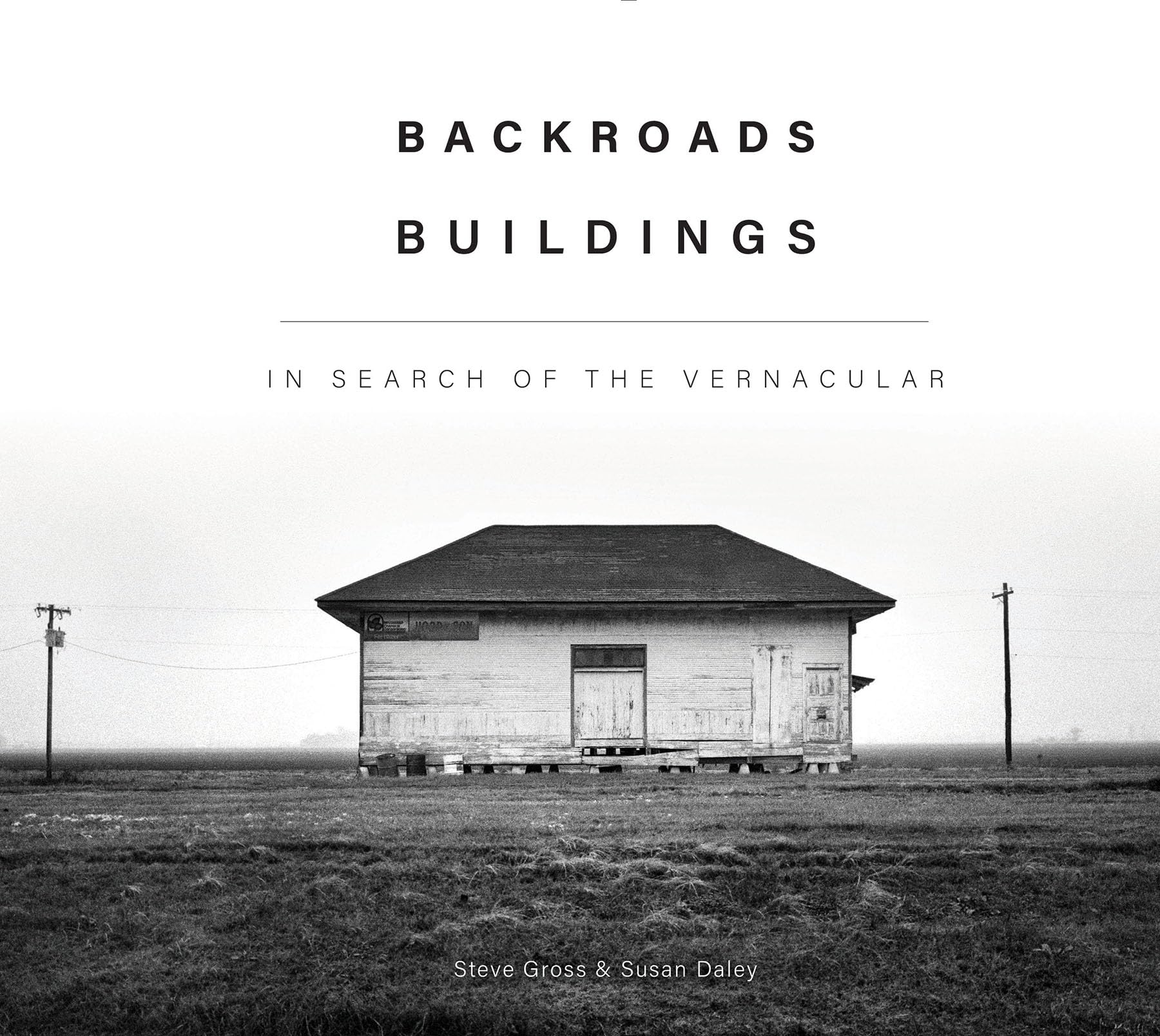



From New England to the Deep South, photographers Susan Daley and Steve Gross have captured more than 100 forgotten buildings along America's old auto routes. Isolated in full-color and black-and-white portraits, the roadside cafés, feed stores, grange halls, juke joints, and general stores are a poignant reminder of the ingenuity of local building practices and working-class culture during the years between the Civil War and the Great Depression. With their humble beauty and distinctive character, these once-useful structures infuse the American landscape with a strong sense of place. This collection of buildings preserves a sampling of our country's architecture heritage and encourages travelers to slow down and notice the details. OLD HOUSE JOURNAL ~ April 2021 The ineffable tug of the pastON A BACKROAD Long-time OHJ friends and contributors Steve Gross and Susan Daley have released their 13th book, revealing again their inimi- table perspective. Subtitled "In Search Of The Vernacular," Backroads Buildings captures over a hundred structures that time left behind: "little buildings that catch an essence and grab your heart," is how architect Denise Scott Brown puts it. See grange halls and juke joints, battered little houses dripping with Gothic orna- ment, rusted filling stations, and faded signs on family- owned cafes. Photos capture haunting images and, on occasion, a building as sculpture. Each one irrevocably tied to its site, the buildings evoke a strong sense of place. The book might also conjure up working-class culture between the Civil War and the Great Depression, or the dawn of the postwar era. It's an important record, because many of these survivors soon will be gone. The Guardian ~ March 31, 2021'A parallel universe' : the rickety pleasures of America's backroads - in picturesFrom rundown churches to shuttered stores, this road trip across America offered up countless gems - as long as you opened your eyes to them. Architect Magazine ~ April 15, 2021 by Aaron BetskyLiving in the rural Southeast, as I do now, makes me even more aware of the basic building blocks of American architecture. They are not only the houses that we usually think of as the cores of our communities, or the office buildings and factories, but also the places of intersection and gathering--which is to say, the sites where we shop, eat, or pray. They are the small commercial buildings at crossroads or just along the side of the road that make up so much of the common landscape outside of the urban core. Most of the time we overlook these stores and shops because their functions and their signs overwhelm them. It is only when they are no longer in use, become overgrown, or are burnished by age and use that we begin to see and appreciate them. A new book of photographs by the photographers Steve Gross and Susan Daley, Backroads Buildings: In Search of the Vernacular (Schiffer Books), portrays these everyday structures with love and precision. The book's strength is the way it captures the haunting beauty of these buildings. That beauty comes as much from their age and abandonment as it does from the simplicity and clarity of their forms. It is what happens with these forms that keeps your attention as you leaf through this book. The variations both within and of the forms show how endless the possibilities are, even if you start with such simple ingredients. Although many of the buildings are similar, none of them are the same. The addition of a wing or a porch, the reduction of a window frame, or even the misplacement of a single window within a symmetrical array catches your eye, extends the rhythm of the structures, and gives their compositions an unexpected twist. Many of these quirks also reveal, or at least make you wonder about, the functions of these buildings and the lives that unfolded inside. They also hint at larger constructs--for instance, the social and economic networks that animated these communities and that the curator Brian Wallis references in the book's all-too-short introduction. Over the years, disuse, reuse, and the simple passage of time have reshaped these buildings in different ways, giving more hints of the lives led there, even as natural vegetation has now taken over more and more of their surfaces. The resolution, control of light (not too bright, not too flat), angle (not fully frontal, but not dynamic), and color of the photography sharpens or softens the shapes as necessary to make them even more evocative. Printed on sturdy paper and bordered by seas of white, these images take emblems of everyday life and transform them into monuments to a bygone way of making, trading, and living. Some day we will be able to publish a similar work that shows the Arby's, Starbucks, Kroger's, and Home Depots that are the current paragons of the commercial vernacular. It may be a more difficult undertaking, because the materials and forms of these contemporary structures are less varied, and the obj