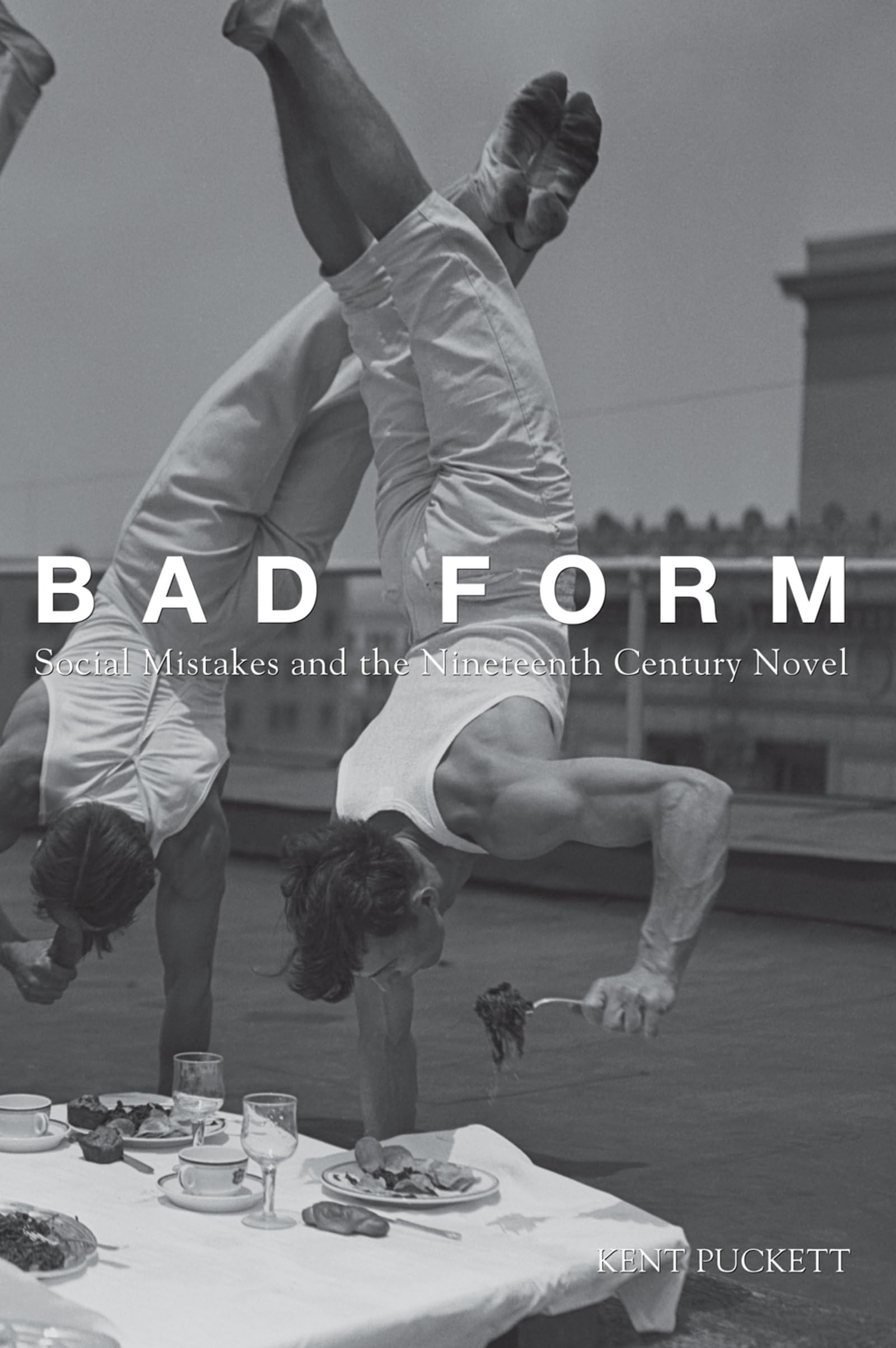



What--other than embarrassment--could one hope to gain from prolonged exposure to the social mistake? Why think much about what many would like simply to forget? In Bad Form: Social Mistakes and the Nineteenth-Century Novel, Kent Puckett argues that whatever its awkwardness, the social mistake-the blunder, the gaffe, the faux pas-is a figure of critical importance to the nineteenth-century novel. While offering significant new readings of Thackeray, Flaubert, Eliot, James, and others, Puckett shows how the classic realist novel achieves its coherence thanks to minor mistakes that novels both represent and make. While uncovering the nineteenth-century novel's persistent social and structural reliance on the non-catastrophic mistake-eating peas with your knife, saying the wrong thing, overdressing-Bad Form argues that the novel's once considerable cultural authority depends on what we might otherwise think of as that authority's opposite: a jittery, anxious, obsessive attention to the mistakes of others that is its own kind of bad form. Drawing on sociology, psychoanalysis, narrative theory, and the period's large literature on etiquette, Puckett demonstrates that the nineteenth-century novel relies for its form on the paradoxical force of the social mistake. "Novels need mistakes in order to sustain the edgy relationship between narration and character that defines the genre. So Kent Puckett argues in his new book which is, itself, no novel, for though there is nary a misstep to be found in these tightly argued pages, Bad Form nonetheless brilliantly coheres. Perfectly balanced between theory and criticism, Bad Form illuminates the nineteenth-century novel's connections to psychology, sociology, and politics and offers alert, surprising readings of works by Flaubert, Eliot, and James."--Sharon Marcus, Columbia University "Kent Puckett's Bad Form has the nerve to show us how thoroughly our lives are shaped by our terror of social mistakes. Who could forgive this effrontery? Only a reader thrilled by Puckett's dazzling demonstration of how compelling, rich, and novelistic such mistakes can be. Bad form, Puckett teaches us, makes good books, and his own Bad Form is one of the best books on the novel in years."--Joseph Litvak, Tufts University "This book offers something genuinely unusual and important: a new way to understand--and to work with--literary form. Bad Form moves, with brilliant agility, from the subtle dynamics of social anxiety to the inner logic of nineteenth-century narrative, unfolding the relationship between those little mistakes that constantly take place within novels and the formal enterprise of the novel itself."--Alex Woloch, Stanford University "In a series of terrific readings of Thackeray, Flaubert, Eliot, and James, Kent Puckett shows us how the social mistakes that can painfully unnerve the characters who commit them also expose the nineteenth-century novel for what it is: a grandiose form with the nerve to claim to know society up and down. Those nineteenth-century narrators hiding behind impersonal omniscience never looked so embarrassingly naked. Thanks to Puckett our understanding of the novel just got a whole lot sharper." --Jonathan Grossman, University of California, Los Angeles "Puckett skillfully demonstrates the existence of a species of bad form that held particular significance for the omnisciently narrated nineteenth-century novel and the world it figured. Kent Puckett's concluding analysis of Jean Renoir's film The Rules of the Game as an instance of 'bad form's late style' is a winning stroke." -- Times Literary Supplement "Engaging and elegant." -- Journal of Aesthetics and Art Criticism "Effective as a study of social mistakes and the agonizing, overwrought significance that many Victorian plots give them. As Puckett shows well, Balzac, Flaubert, Eliot, James, and many others were so highly attuned to the "crises" a faux pas could cause their protagonists that they turned their novels into regulators monitoring such gaffes, even as they plundered them for aesthetic gain and a troubling amount of schadenfreude." -- Modern Language Quarterly Argues that the social mistake is crucial to the structure of the nineteenth-century novel. Kent Puckett is Associate Professor of English at the University of California, Berkeley. Used Book in Good Condition