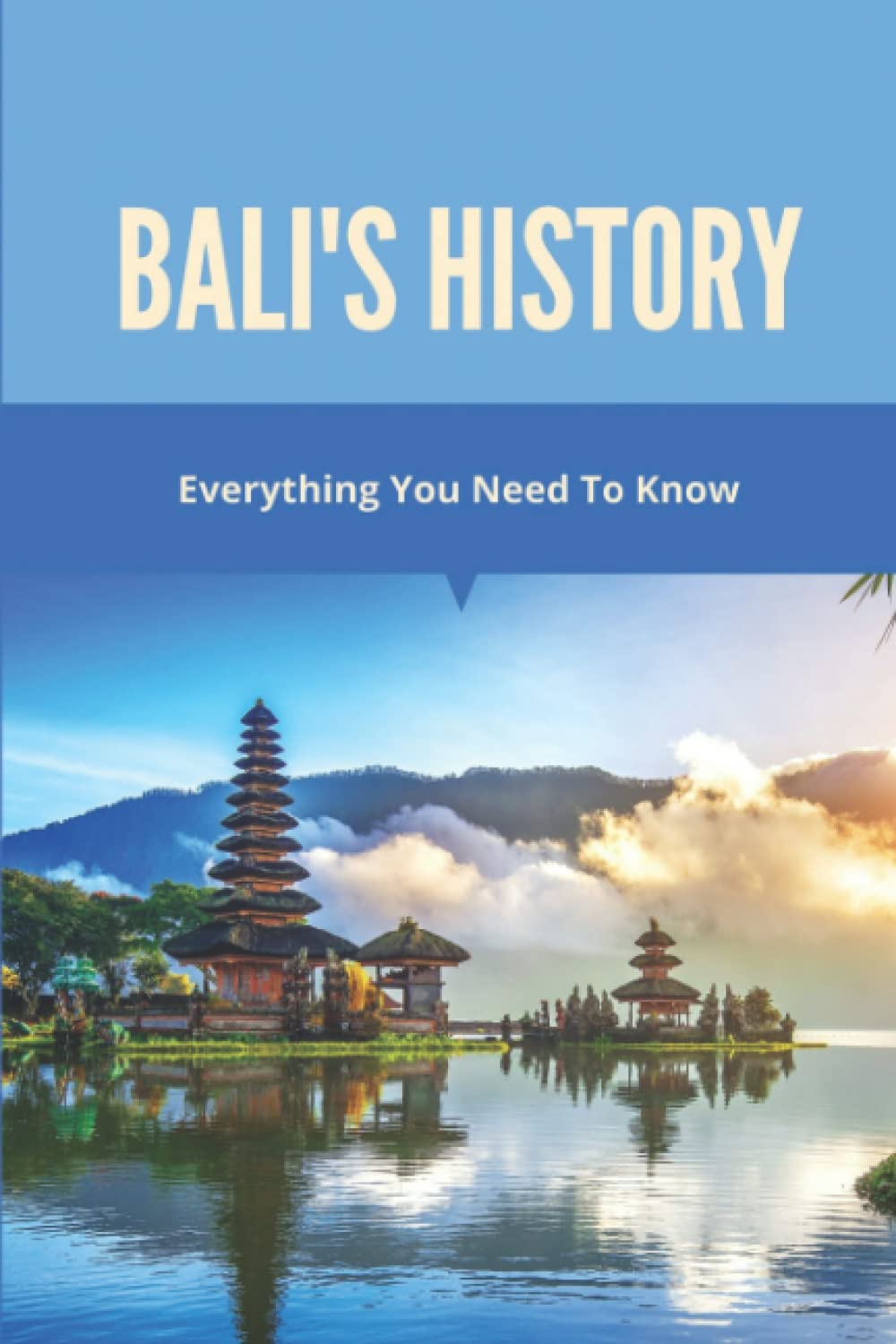



Bali came under the rule of the Majapahit empire of eastern Java in 1343 and continued under the Majapahit's until the empire was overthrown in 1478 by Muslims. The Dutch first visited Bali in 1597, when the island was divided among a number of warring Muslim states. Bali was inhabited around 2000 BCE by Austronesian people who migrated originally from the island of Taiwan to Southeast Asia and Oceania through Maritime Southeast Asia. Culturally and linguistically, the Balinese are closely related to the people of the Indonesian archipelago, Malaysia, the Philippines, and Oceania. If you want more information on Bali and learn its history, you are in the right place. In this book, you will know: -How the island of Bali was home to paleolithic humankind -Why Bali’s Asian biodiversity and rich, fertile soils are not found on the neighboring islands -What makes up the unique human heritage of indigenous Balinese -How the island retained its endemic Balinese Hinduism despite 1,300 years of Muslim influence -From where and from whom the Balinese learned their abundant skills in metalworking, crafting, sculpture, and art -How art and ritual offerings form the basis of Balinese life, from where the island draws its name -How it was that the island nation of Bali was not interested in seafaring and maritime trade -Insight into the Balinese pride in being the true ancestors of the collapsed Javanese Indianized Majapahit Empire -How this gentle, peaceful island consistently evaded total domination by foreign powers and curiously repelled colonialists for much of its history -And much more!