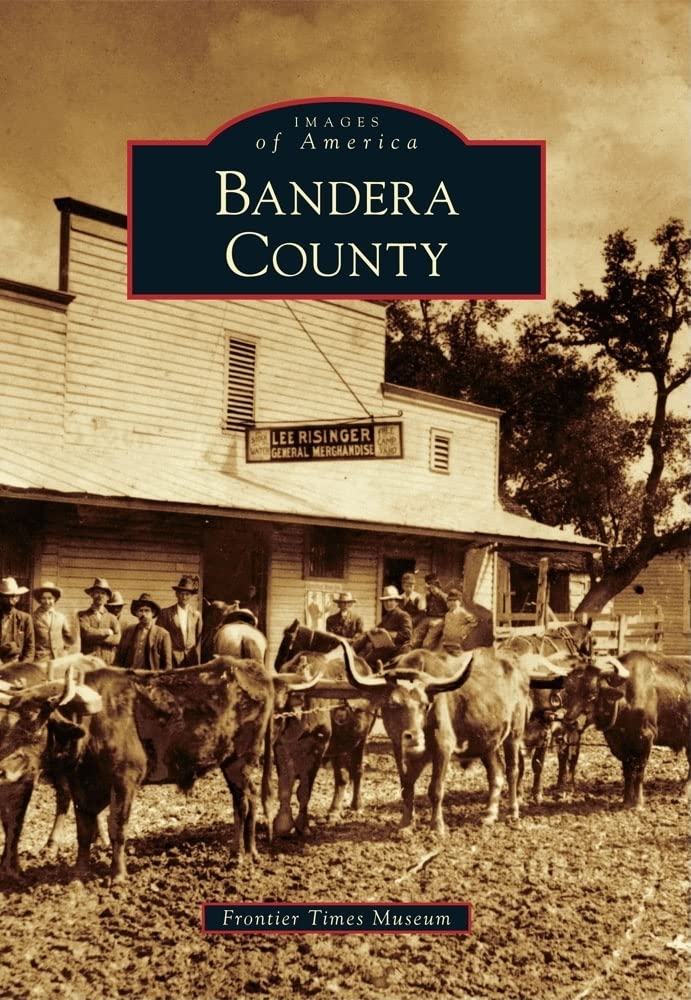



Located in the picturesque Texas Hill Country, Bandera County was named for nearby Bandera Pass, a naturally occurring passageway through the neighboring hills. Near the pass, the Medina River weaves its way through the county. In 1853, a group of settlers arrived and set up camp to make shingles from the huge cypress trees that grew along the river. Soon immigrant workers from Poland were recruited to work at a newly built sawmill. The beauty and abundance of resources also attracted an early group of Mormons, who established a nearby colony. The town of Bandera was designated the county seat at the formation of Bandera County in 1856. Bandera became a staging area for cattle drives up the Western Trail, and today the county still maintains its frontier character. The Western way of life prevails as visitors from around the world come to sample cowboy living on local dude ranches and enjoy honky-tonk music and dancehalls. Title: Museum debuts historical book, 'Bandera County' Author: Mary Allyce Schenk Publisher: Bandera County Courier Date: 5/27/2010 Did you ever wonder how long Stein's Clothiers has been on 11th Street? Do you know who and what was there before Mary and Bobby Stein's family opened their store? Was Main Street always Main Street? How about all those names like Amasa Clark, George Hay, Issac Langford? Who were they and what did they look like? And, who the heck was Policarpio Rodriquez? With the debut of "Bandera County," a pictorial history of the county's heritage, all those questions and many others are not only answered, but are also documented in one jam-packed volume. Beautifully reproduced photos dating from the mid-1800s to the present introduce readers to founding families of Bandera County - along with early businesses, churches, livestock, rodeos, cowboys, natural disasters and even the construction of the dam that created Medina Lake. "Bandera County" is the second in Arcadia Publishing's "Images of America." Published under the umbrella of The Frontier Times Museum, "Bandera County" reads like a favorite family photo album. Museum Collection Manager Rebecca Hoffstutler Norton coordinated the project as primary writer and editor; however, she is quick to give credit to those who assisted her and those who loaned family and private collection photos. In the book's Acknowledgements, she writes, "A special thank-you to Peggy Tobin for not only contributing to the introduction, but also for her dedication to preserving and documenting the history of Bandera County." Museum Trustee Claire Roberts, and Lauren Langford are also credited for their help and assistance. Norton added, "Please mention how indebted we are to the Bandera County Historical Commission for opening their photo archives to us and for their support of this project." "Bandera County" dusts off the history of the county's past and makes it fresh and new for all who visit or live here. Whether you are a history buff or just want to see a picture of Scooter Fries as a fresh-faced kid being honored in 1948, Maudeen Marks on one of her beloved longhorns or John Graham riding a camel, this book has something for you. A softcover book, "Bandera County," is priced at $21.99. Published by Arcadia Publishing, it is available at local retailers, online bookstores or through the publisher at www.arcadiapublishing.com or by calling 888-313-2665. Additionally, administrators, staff and board of directors of the Frontier Times Museum invite the community to a book launch party from 5 pm until 7 pm, Thursday, June 3, at the museum, 510 13th Street. Title: Frontier Times Museum launches its debut of Bandera County Author: Mary Allyce Publisher: Bandera Bulletin Date: 5/25/2010 How did camels find their way to Camp Verde, Texas? And why? Was Main Street in Bandera always Main Street? Who were the Hays, the Langfords, Amasa Clark and what did they look like? How long has Stein's Clothiers been on 11th Street? Did you know that shingle making was once a thriving industry in the Cowboy Capital? With the debut of Bandera County, a pictorial history of the county's heritage, all those questions and many others are not only answered, they are documented in one jam packed volume. Beautifully reproduced photos dating from the mid-eighteen hundreds to the present introduce readers to founding families of Bandera County along with early businesses, churches, livestock, rodeos, cowboys, natural disasters and even the construction of the dam that created Medina Lake. Published as part of its "Images of America" series by Arcadia Publishing, under the umbrella of The Frontier Times Museum, Bandera County reads like a favorite family photo album. Museum Collection Manager, Rebecca Hoffstutler Norton coordinated the project as primary writer and editor and is quick to give credit to those who assisted her and those who loaned family and private collection photos. In the book's Acknowledgements, she writes, "A special th