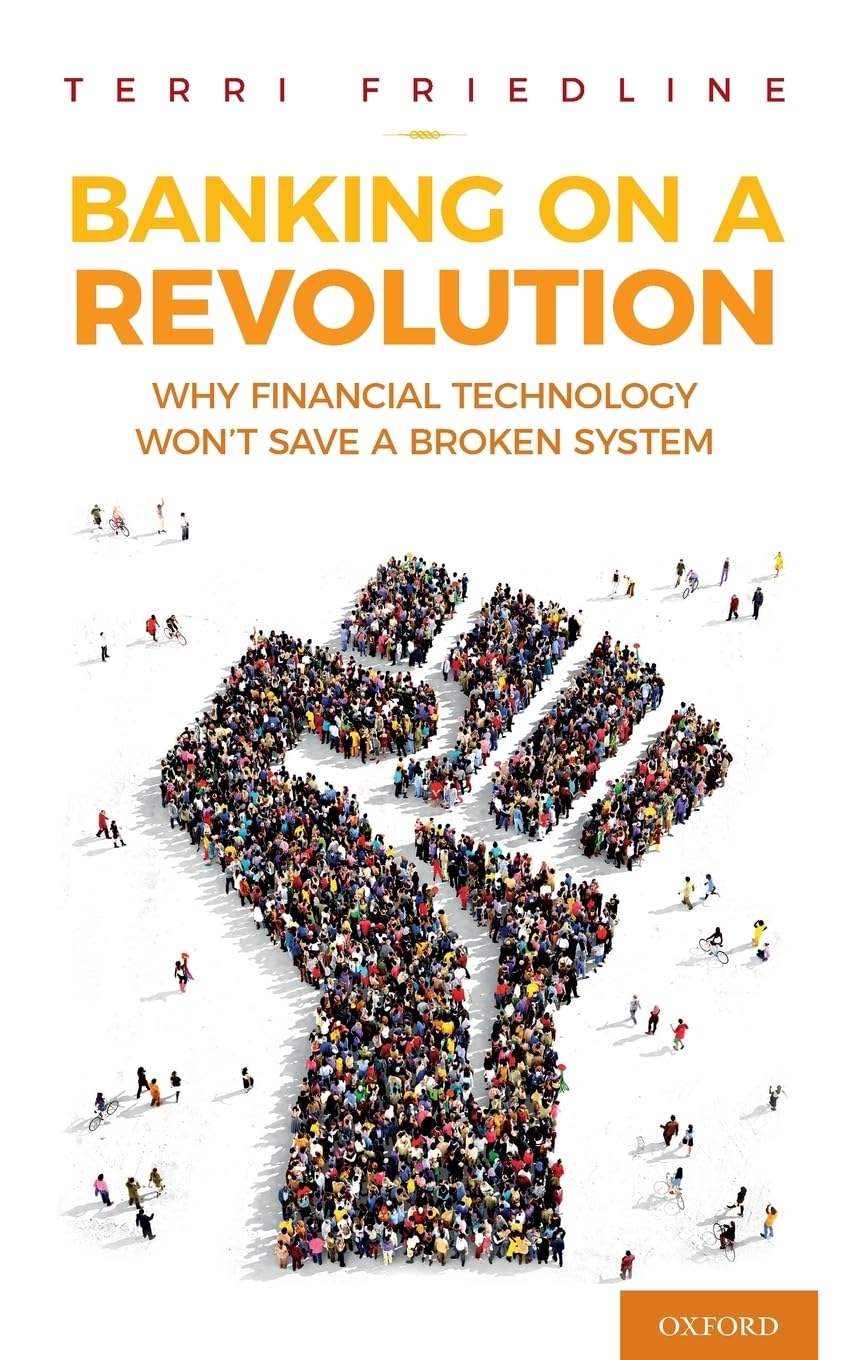
Banking on a Revolution: Why Financial Technology Won't Save a Broken System
$40.26
by Terri Friedline



Can grassroots social movements impact the financial system? Technological advancements are poised to completely transform the financial system, and soon it will be unrecognizable. Banks are increasingly using financial technologies ("fintech") to deliver products and services and maximize their profits. Technology enthusiasts and consumer advocates laude the field for its potential to expand access to banking and finance. However, if history is any indication, fintech stands to reinforce digital forms of redlining and enable banks' continued racialized exploitation of Black and Brown communities. Banking on a Revolution takes the perspective that the financial system needs a revolution-not the impending revolution driven by technology. Studying the various ways the financial system bolsters whites by exploiting and marginalizing Black and Brown communities, Terri Friedline challenges the optimistic belief that fintech can expand access to banking and finance. Friedline applies the lens of financialized racial neoliberal capitalism to demonstrate the financial system's inherent racism, and explores examples from student loan debt, corporate landlords, community benefits agreements, and banking and payday lending. Banking on a Revolution is deeply rooted in theory and research, and it presents new interpretations of the climate crisis, student loan debt, and community benefits agreements and their relationships to the financial system. The book makes a compelling case for a revolutionized financial system that centers the needs, experiences, and perspectives of those it has historically excluded, marginalized, and exploited. "Summing Up: Recommended. With reservations. Graduate students, faculty, and professionals." -- F. E. Foldvary, CHOICE "Professor Friedline condenses complex economic phenomena into distinct issues and connects the work on segregation, predatory credit, and other financial issues to the everyday work of advocacy. She weaves flawlessly between both macro and micro economics and offers institutional critiques and paths toward economic activism. Every social worker, teacher, scholar, and student interested in achieving racial justice should read this book." -- Mehrsa Baradaran, Law Professor, University of California, Irvine, and author of The Color of Money "This book provides an insightful and passionate diagnosis of how modern finance has been the root of a plethora of social issues. Friedline presents a compelling call to action for social workers and ordinary citizens to confront the pervasive injustice built into our economic system." -- Ken-Hou Lin, University of Texas at Austin, and author of Divested: Inequality in the Age of Finance "Too often books about low- and moderate-income people show only what they cannot be or do to make finance fair. Either the banks are too big or the movements are too weak. The Revolution offers a refreshing corrective, demonstrating how it is possible to have social movements succeed in turning banks into social institutions that work for the people most in need of service. While also documenting discrimination and redlining, even in digital finance, The Revolution insists that another reality is possible and provides a roadmap to get there. An important read, well timed." -- Frederick F. Wherry, Professor, Princeton University, and Founding Director of the Dignity and Debt Network "To fight for justice, we must understand injustice. Friedline's book is an indispensable field guide to the financialization of our economy and our democracy. She chronicles the sucking sound heard across the nation as the financial industry extracts wealth from Black, white, and brown communities in new and audacious ways, and tells the stories of the people who have had enough, and are fighting back." -- Porter McConnell, Americans for Financial Reform Campaign Director, Take on Wall Street "Friedline's The Revolution Will Not Be Financed speaks directly to the questions of our time, in its unwavering focus on how our financial system is calibrated to whiteness. Friedline's keen understanding of the relationship between small, incremental change and a larger strategic movement for revolutionary change and economic justice is especially visionary." -- Diane E. Thompson, former deputy assistant director of the Office of Regulations at the Consumer Financial Protection Bureau and author of Truth in Lending "A fundamental book to understand how the financial system decisions are classist, racist and deepen social inequalities. It calls Social Workers to organize the collective political struggle to democratize these decisions for a more just and humane Social Order." -- Silvana Martínez, Global President of International Federation of Social Workers "A refreshingly real and frank examination of our financial system. The book offers important insights and research on how we place the burden of fixing our problems on the individual instead of the system th