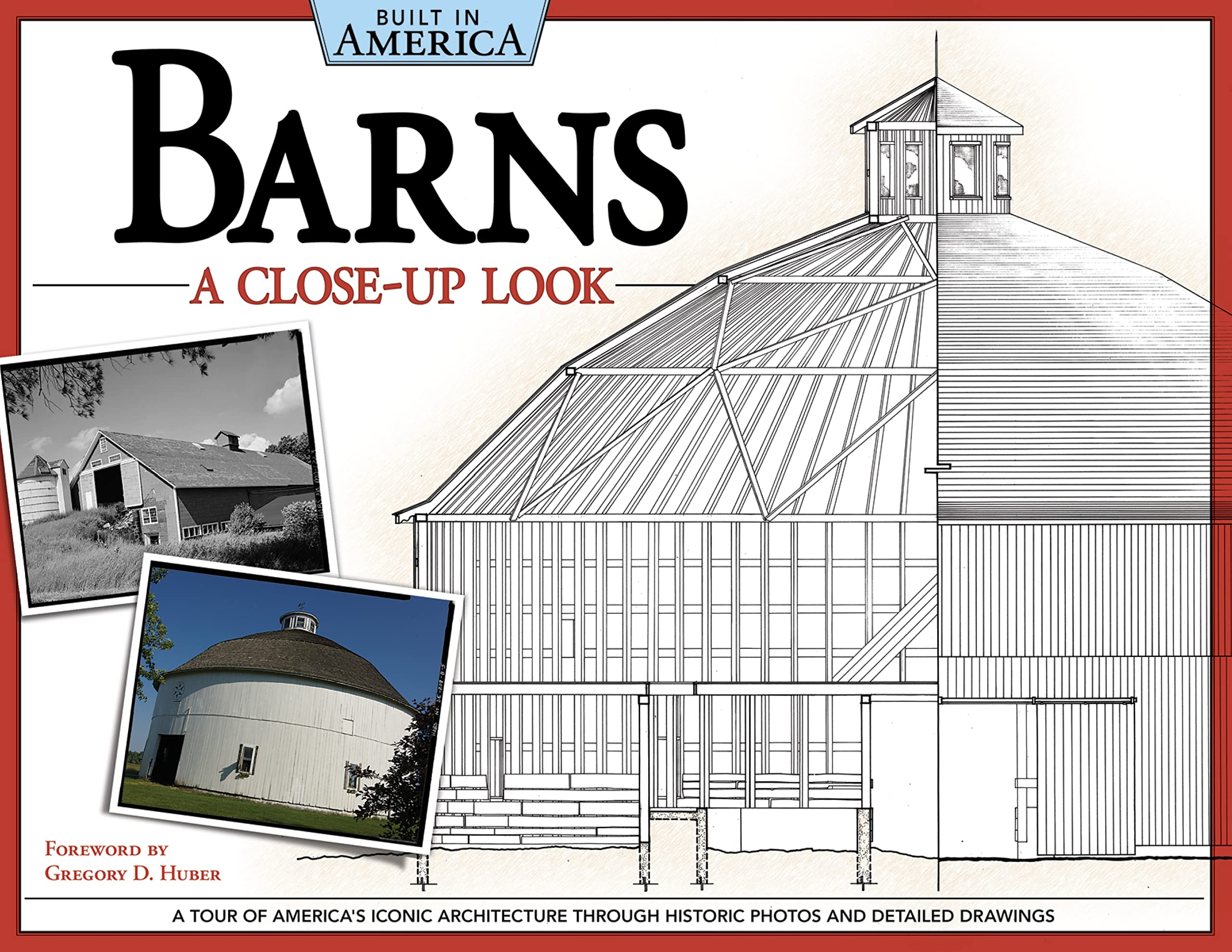
Barns: A Close-Up Look (Built in America): A Tour of America's Iconic Architecture Through Historic Photos and Detailed Drawings (Fox Chapel
$13.03
by Alan Giagnocavo



Many people know a barn from its exterior aspects, but few know the interior traits and features of these fascinating old structures and how they were conceived and constructed. While some barns have disappeared from the American landscape, many have been captured in the collections of the Historic American Building Survey (HABS) and the Historic American Engineering Record (HAER), preserving their architectural history through photographs and architectural drawings. As part of the Built in America series, Barns: A Close-Up Look takes an in-depth tour of fourteen historic barns, authoritatively documenting these structures with more than 90 scale drawings, detailed elevations, architectural plans, and 70 photographs in crisp black and white photography. Among others, you'll discover the remarkable round George Hall Barn, the famous Culp Farm Barn, which played a critical role in the Battle of Gettysburg, and the fascinating John Black Jr. Barn. To provide an even more intimate tour, architectural drawings reveal the historic nineteenth-century wood frame joinery techniques that make barn interiors such architectural marvels. And, to set the tone of your tour, barn and house historian Gregory D. Huber provides a foreword that emphasizes just how special barns are to the history and fabric of our country. General readers, architects, engineers, and historians will enjoy this detailed introduction to 19th century/early 20th-century American barn architecture. The 14 chapters celebrate 14 historic structures located in 11 states from around the US. Each chapter opens with a brief overview of the featured barn, including when it was built, how it was used, and its unique properties. Each structure is documented with scale drawings, detailed elevations, architectural plans, and b&w photographs accompanied by explanatory captions. The book includes a foreword by Gregory D. Huber, barn and house historian, independent scholar, and consultant based in Pennsylvania. Many people know a barn from its exterior aspects, but few know the interior traits and features of these fascinating old structures and how they were conceived and constructed. While some barns have disappeared from the American landscape, many have been captured in the collections of the Historic American Building Survey (HABS) and the Historic American Engineering Record (HAER), preserving their architectural history through photographs and architectural drawings. As part of the Built in America series, Barns: A Close-Up Look takes an in-depth tour of fourteen historic barns, authoritatively documenting these structures with more than 90 scale drawings, detailed elevations, architectural plans, and 70 photographs in crisp black and white photography. Among others, you'll discover the remarkable round George Hall Barn, the famous Culp Farm Barn, which played a critical role in the Battle of Gettysburg, and the fascinating John Black Jr. Barn. To provide an even more intimate tour, architectural drawings reveal the historic nineteenth-century wood frame joinery techniques that make barn interiors such architectural marvels. And, to set the tone of your tour, barn and house historian Gregory D. Huber provides a foreword that emphasizes just how special barns are to the history and fabric of our country. Editor Alan Giagnocavo - Alan is the Publisher for Fox Chapel Publishing, Skills Institute Press, Woodcarving Illustrated Magazine, and Scroll Saw Woodworking & Crafts Magazine. He has worked in the publishing industry his entire adult life, and currently spends his time acquiring new products and in market development. Co-Author Historic American Buildings Survey (HABS)- Established in 1933, HABS was developed to preserve the architectural history of America. Formed by the American Institute of Architects, The Library of Congress and the National Park Service, HABS is America's first federal preservation program and works to collect historic architectural photos and documents on a national scale. Learn more at: nps(dot)gov