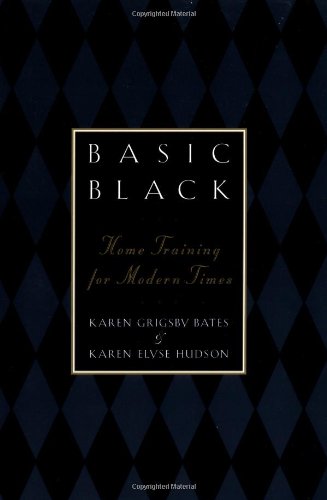



Etiquette for real people who live real lives. In Basic Black , Karen Grigsby Bates and Karen Elyse Hudson have gathered those elements that are, well, just basic to making life more livable–and they’ve added something specific to modern life. The information in Basic Black goes from "CP Time" to "Don’t You Dare," from addressing your wedding invitations to addressing a police officer who has perhaps arbitrarily stopped you as you’re driving through the city. It covers traditional etiquette, such as table settings, being a good host, letter writing, and tipping. Basic Black covers the essentials of black American tradition: joining a church, mentoring young people, planning a funeral, family reunions, participating in clubs and organizations. In addition, some delicate areas seldom discussed in other etiquette books are addressed here, such as race in the workplace, handling service people who are less than enthusiastic about having black customers, and keeping your job and your temper when racial slurs are used in your presence. As Bates and Hudson like to note, etiquette is about more than just which fork goes where: "As far as we’re concerned, no one will die if you use the wrong fork, but we’ll each lose a little piece of ourselves if we choose to live our lives without genuine respect for morality, character, kindness and other people." Etiquette for real people who live real lives. In Basic Black , Karen Grigsby Bates and Karen Elyse Hudson have gathered those elements that are, well, just basic to making life more livable?and they?ve added something specific to modern life. The information in Basic Black goes from "CP Time" to "Don?t You Dare," from addressing your wedding invitations to addressing a police officer who has perhaps arbitrarily stopped you as you?re driving through the city. It covers traditional etiquette, such as table settings, being a good host, letter writing, and tipping. Basic Black covers the essentials of black American tradition: joining a church, mentoring young people, planning a funeral, family reunions, participating in clubs and organizations. In addition, some delicate areas seldom discussed in other etiquette books are addressed here, such as race in the workplace, handling service people who are less than enthusiastic about having black customers, and keeping your job and your temper when racial slurs are used in your presence. As Bates and Hudson like to note, etiquette is about more than just which fork goes where: "As far as we?re concerned, no one will die if you use the wrong fork, but we?ll each lose a little piece of ourselves if we choose to live our lives without genuine respect for morality, character, kindness and other people." KAREN GRIGSBY BATES , a contributing columnist for the op-ed pages of the Los Angeles Times , has written for Vogue, The New York Times, Quarterly Black Review of Books, Essence, Emerge, and other publications. Her commentaries frequently appear on National Public Radio’s "All Things Considered." KAREN E. HUDSON is the author of Paul R. Williams, Architect: A Legacy of Style, a biography of her maternal grandfather, and The Will and the Way: Paul R. Williams, Architect, a biography for young people. They both live in Los Angeles. Chapter 1 IT GOES WITHOUT SAYING "If you're going to play the game properly, you'd better know every rule." Barbara Jordan Here's where we run through the basics. And basics are the foundation upon which good home training is built. You know what the basics are; you learned them in Sunday school. Or at the knees of your mother, grandmother, and aunts. And though the hectic pace of daily life sometimes threatens to hide that foundation, you know that if you reach deeply enough, you'll find the basics right there when you need them. Manners transcend social status, race, and gender. Courtesy and consideration help to make the unbearable parts of life a little more bearable. And you probably know, from having met one (or better, being one yourself), that a person who is considerate of others is welcome almost anywhere. All major religions have a simple phrase that distills what good manners are: doing unto others as you would like others to do unto you. This Golden Rule applies to friendships, workplace relationships, romances, and family interaction--virtually all human relationships. The basics of good manners (besides the above) include the very things that, in another age, were referred to in our culture as "home training." We're sure you remember them. They include the following: Respect for Elders -Standing (if sitting) when being introduced -Offering to pull up a chair or help put on a coat -Offering a seat when on public transportation -Speaking respectfully (saving one's slang for one's peers) -Offering to serve as an extra pair of arms and legs: "May I bring you some dessert, Aunt Emma? Let me tell you what's on the buffet table." "Would you like me to reach t