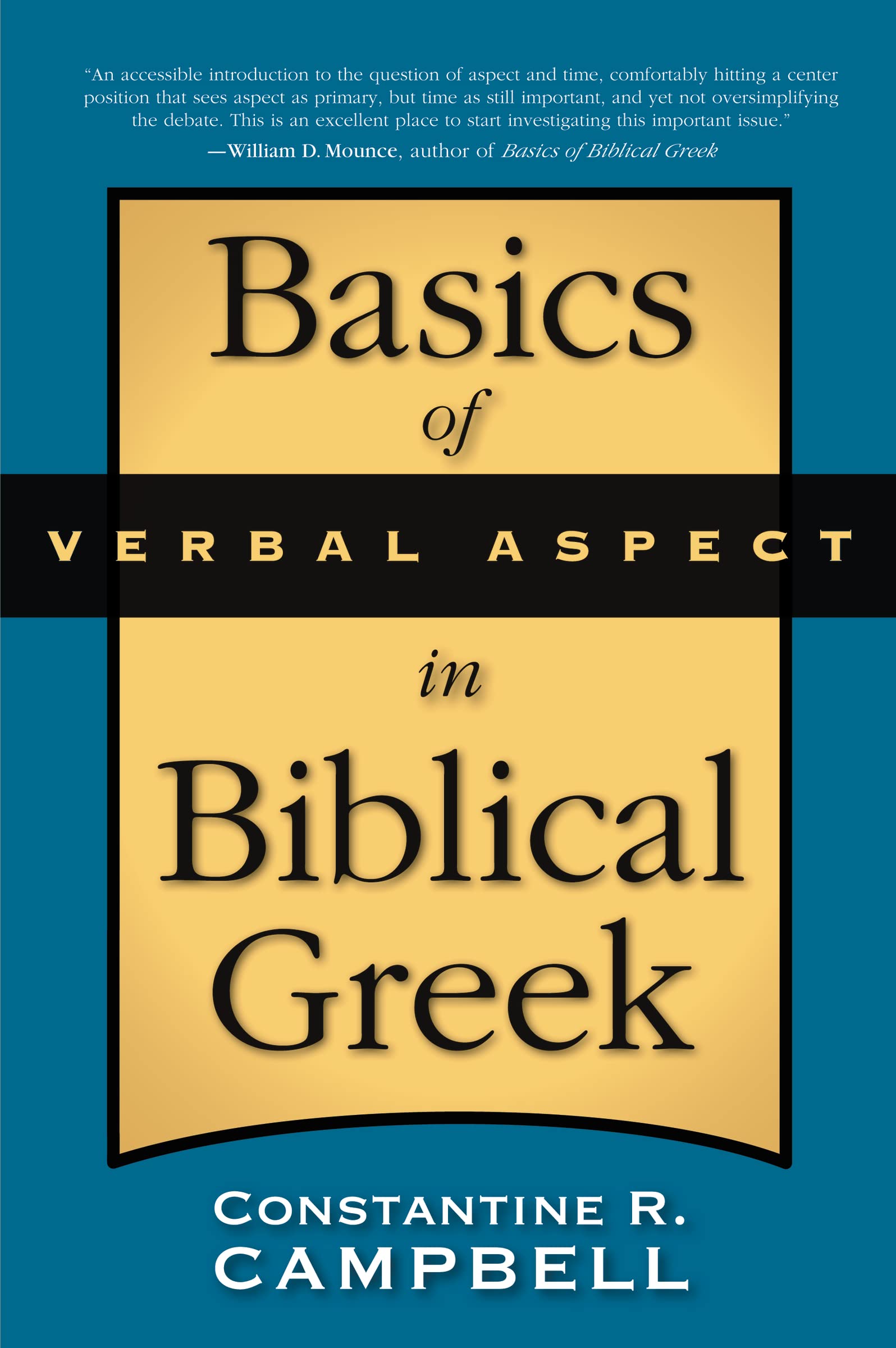



New Testament scholar Constantine Campbell investigates the function of verbal aspect within the New Testament Greek narrative. Verbal aspect in the Greek language has been a topic of significant debate in recent scholarship. The majority of scholars now believe that an understanding of verbal aspect is even more important than verb tense (past, present, etc.). This accessible and affordable textbook has done the job of simplifying the concept without getting caught up using terms of linguistics that no one except those schooled in that field can understand. Includes exercises, an answer key, glossary of key concepts, an appendix covering space and time, and an index to Scripture cited. Professors and students, at both the undergraduate and graduate levels, can use this is as a supplemental text in both beginning and advanced Greek courses. Pastors that study the Greek text will also appreciate this resource as a supplement to their preaching and teaching. _____________ "An accessible introduction to the question of aspect and time, comfortably hitting a center position that sees aspect as primary, but time as still important, and yet not oversimplifying the debate. This is an excellent place to start investigating this important issue." —William D. Mounce, author of Basics of Biblical Greek “An accessible introduction to the question of aspect and time, comfortably hitting a center position that sees aspect as primary, but time as still important, and yet not oversimplifying the debate. This is an excellent place to start investigating this important issue.” -- William D. Mounce, Author -- William D. Mounce Verbal aspect in the Greek language has been a topic of significant debate in recent scholarship. The majority of scholars now believe that an understanding of verbal aspect is even more important than verb tense (past, present, etc.). Until now, however, there have been no accessible textbooks, both in terms of level and price (most titles on the topic retail for more than $100). In this book, Constantine Campbell investigates the function of verbal aspect within the New Testament Greek narrative. He has done a marvelous job in this book of simplifying the concept without getting caught up using terms of linguistics that no one except those schooled in that field can understand. The book includes exercises, an answer key, glossary of key concepts, an appendix covering space and time, and an index to Scripture cited. Professors and students, at both the undergraduate and graduate levels, will use this is as a supplemental text in both beginning and advanced Greek courses. Pastors that study the Greek text will also appreciate this resource as a supplement to their preaching and teaching. Constantine R. Campbell (PhD, Macquarie University) is Associate Professor of New Testament at Trinity Evangelical Divinity School, Deerfield, Illinois. He is author of Paul and Union with Christ, Outreach and the Artist, Verbal Aspect, the Indicative Mood, and Narrative, Verbal Aspect and Non-Indicative Verbs, Not Ashamed, Basics of Verbal Aspect in Biblical Greek, and Keep Your Greek. Dr Campbell is a public speaker, musician, and author, and lives in Chicago. Basics of Verbal Aspect in Biblical Greek By Constantine R. Campbell Zondervan Copyright © 2008 Constantine R. Campbell All right reserved. ISBN: 978-0-310-29083-4 Contents Preface......................................................9Introduction: Verbal Aspect and Exegesis.....................11Verbal Aspect Theory1. What is Verbal Aspect?....................................192. The History of Verbal Aspect..............................263. Perfective Aspect.........................................344. Imperfective Aspect.......................................405. The Problem of the Perfect................................46Verbal Aspect and New Testament Text6. Verbal Lexeme Basics......................................557. Present and Imperfect Tense-forms.........................608. Aorist and Future Tense-Forms.............................839. Perfect and Pluperfect Tense-Forms........................10310. More Participles.........................................118A Concluding Postscript: Space and Time......................129Verbal Glossary..............................................134Answers to Exercises.........................................138Indexes......................................................155 Chapter One The Problem of the Perfect * * * The semantic nature of the perfect and pluperfect tense-forms is one of the great puzzles in Greek linguistics. There are several suggested options, ranging from the traditional analysis, to perfective aspect, stative aspect, and imperfective aspect. In this chapter we will briefly canvas most of these options before concluding that the perfect is imperfective in aspect. The Perfect Tense-Form Traditionally the perfect tense-form was understood as indic