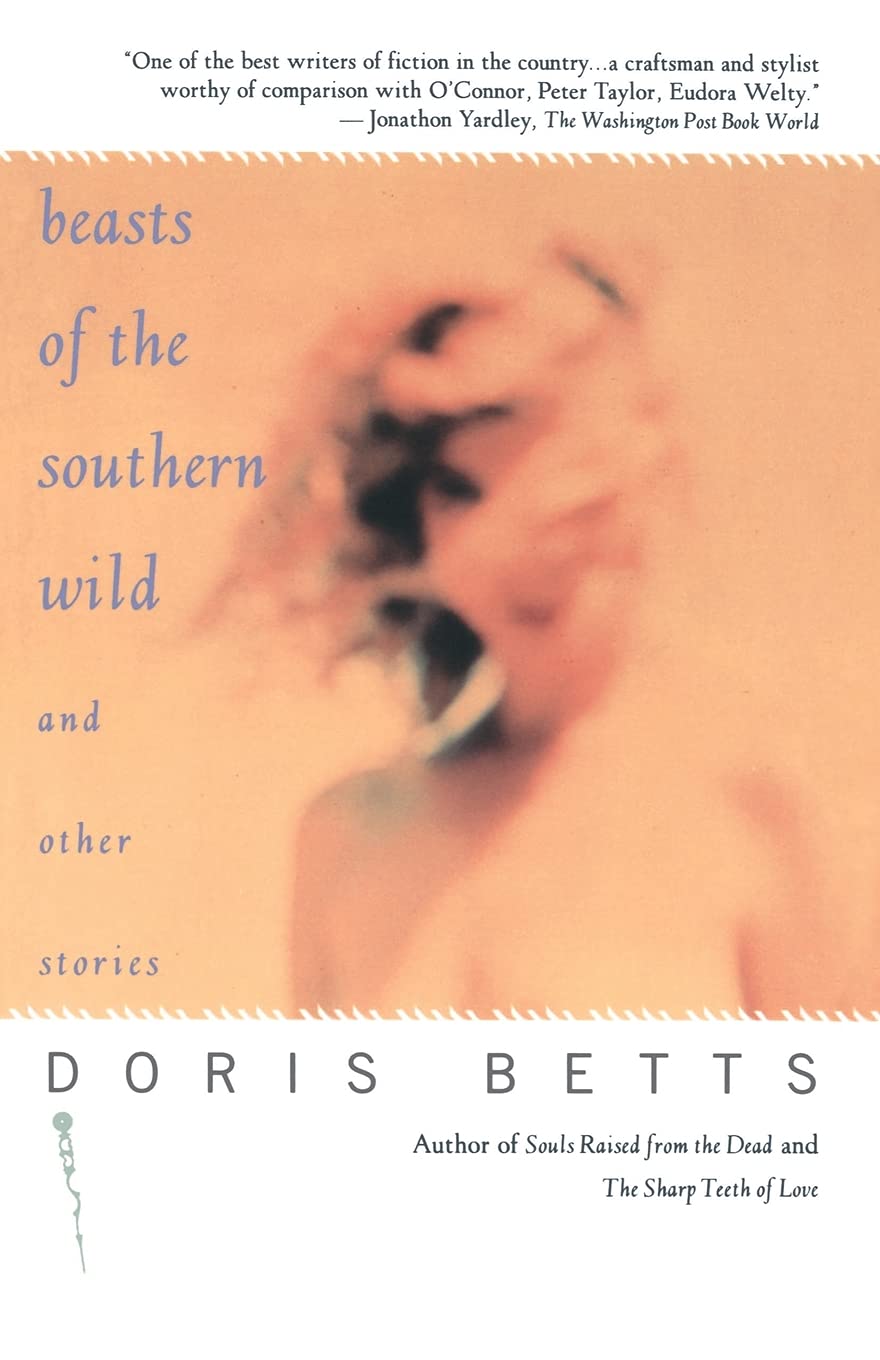



Back in print at last, the nine beautifully crafted tales in Beasts of the Southern Wild and Other Stories display Doris Betts at the top of her form: compassionate, witty, and unforgettable. "The Ugliest Pilgrim" takes you into the adventures and into the heart of a disfigured young woman who has run away from her life in search of a better one. This award-winning story is the basis for the musical Violet, which won the New York Drama Critics Circle Award. In "Hitchhiker," a wary secretary hitches a ride in a boat with a man hell-bent on saving fish; instead he saves her from the river -- and herself. And in the title story, Betts brilliantly captures the inner life of a teacher and writer struggling to control her classroom, her household, and her life. Robert Tallant The New York Times A master of the short story form. Clyde Edgerton Doris Betts is the only writer I know of, besides James Agee, who can make me feel as though I am touching what she is describing. Doris Betts is a short story writer, novelist, essayist and Alumni Distinguished Professor Emerita at University of North Carolina at Chapel Hill. She is the author of three short story collections and six novels. From "The Ugliest Pilgrim" I sit in the bus station, nipping chocolate peel off a Mounds candy bar with my teeth, then pasting the coconut filling to the roof of my mouth. The lump will dissolve there slowly and seep into me the way dew seeps into flowers. I like to separate flavors that way. Always I lick the salt off cracker tops before taking my first bite. Somebody sees me with my suitcase, paper sack, and a ticket in my lap. "You going someplace, Violet?" Stupid. People in Spruce Pine are dumb and, since I look dumb, say dumb things to me. I turn up my face as if to count those dead flies piled under the light bulb. He walks away -- a fat man, could be anybody. I stick out my tongue at his back; the candy oozes down. If I could stop swallowing, it would drip into my lung and I could breathe vanilla. Whoever it was, he won't glance back. People in Spruce Pine don't like to look at me, full face. A Greyhound bus pulls in, blows air; the driver stands by the door. He's black-headed, maybe part Cherokee, with heavy shoulders but a weak chest. He thinks well of himself -- I can tell that. I open my notebook and copy his name off the metal plate so I can call him by it when he drives me home again. And next week, won't Mr. Wallace Weatherman be surprised to see how well I'm looking! I choose the front seat behind Mr. Weatherman, settle my bag with the hat in it, then open the lined composition book again. Maybe it's half full of writing. Even the empty pages toward the back have one repeated entry, high, printed off Mama's torn catechism: GLORIFY GOD AND ENJOY HIM FOREVER. I finish Mr. Weatherman off in my book while he's running his motor and getting us onto the highway. His nose is too broad, his dark eyes too skimpy -- nothing in his face I want -- but the hair is nice. I write that down, "Black hair?" I'd want it to curl, though, and be soft as a baby's. Two others are on the bus, a nigger soldier and an old woman whose jaw sticks out like a shelf. There grow, on the backs of her hands, more veins than skin. One fat blue vessel, curling from wrist to knuckle, would be good; so on one page I draw a sample hand and let blood wind across it like a river. I write at the bottom: "Praise God, it is started. May 29, 1969," and turn to a new sheet. The paper's lumpy and I flip back to the thick envelope stuck there with adhesive tape. I can't lose that. We're driving now at the best speed Mr. Weatherman can make on these winding roads. On my side there is nothing out the bus window but granite rock, jagged and wet in patches. The old lady and the nigger can see red rhododendron on the slope of Roan Mountain. I'd like to own a tight dress that flower color, and breasts to go under it. I write in my notebook, very small, the word "breasts," and turn quickly to another page. AND ENJOY HIM FOREVER. The soldier bends as if to tie his shoes, but instead zips open a canvas bag and sticks both bands inside. When finally be sits back, one hand is clenched around something hard. He catches me watching. He yawns and scratches his ribs, but the right fist sets very lightly on his knee, and when I turn he drinks something out of its cup and throws his head quickly back like a bird or a chicken. You'd think I could smell it, big as my nose is. Across the aisle the old lady says, "You going far?" She shows me a set of tan, artificial teeth. "Oklahoma." "I never been there. I hear the trees give out." She pauses so I can ask politely where she's headed. "Im going to Nashville", she finally says. "The country-music capital of the world. My son lives there and works in the cellophane plant." I draw in my notebook a box and two arrows. I crisscross the box. "He's got three children not old enough to be in school yet." I