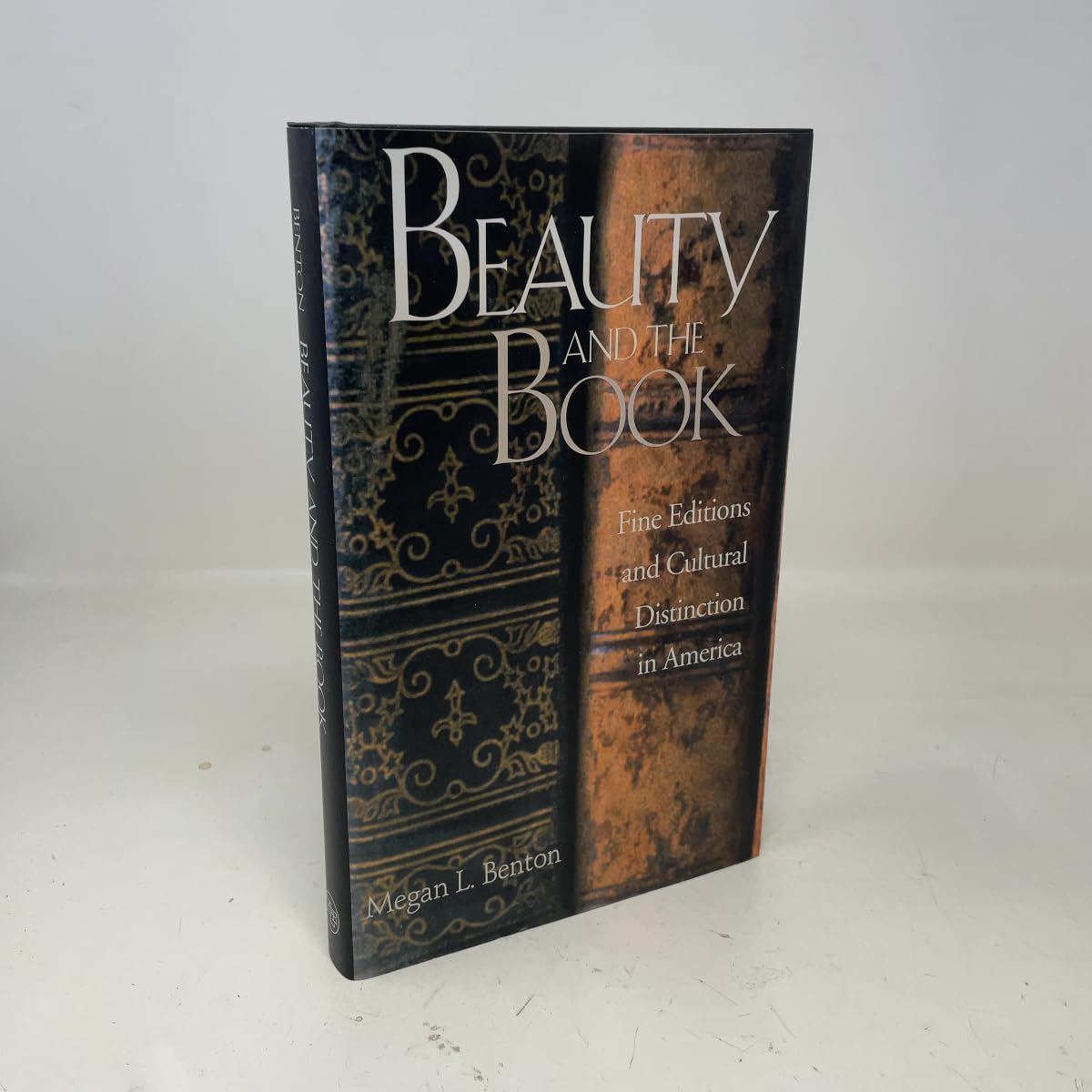
Beauty and the Book: Fine Editions and Cultural Distinction in America (Henry McBride Series in Modernism and Modernity)
$65.00
by Megan L. Benton



Beauty and the Book is a cultural history of the craze for fine books which began after WWI and ended with the Depression. Benton begins by describing the massive public demand for fine editions, and the anxieties about class, literacy and culture which this craze reflected. She goes on to tell the stories of a range of publishers (from Bennet Cerf at Random House to owners of small, private presses) who catered to this demand by producing absurdly expensive editions, whose prices were justified both by the materials used (vellum, gold leaf, etc.) and the labor intensive processes by which they were created. Ostensibly, these limited editions were an antidote to the rise of mass literacy, and the consequent decline in literary taste. Unlike cheap romances and magazines, these limited editions (usually of classic works) embodied a pre-industrial ideal of "high" culture. Using fine editions as a jumping off point, Benton highlights the many aspirations and investments that swirl around book reading and book buying. Particularly at time in which the book as physical object is being challenged by new technologies, Beauty and the Book describes an extreme version of the materialistic concerns and attachments that are always one aspect of book buying and reading. Benton (English/Pacific Lutheran Univ.) explores the clash between cultural purists and preying capitalists in the publishing worlds mad rush to create deluxe editions of distinguished authors during the 1920s and '30s. In this boom of fine editions of literary classics, was the goal of the post-WWI publishing industry to illuminate the darkened masses, to finesse the egos of a wealthy generation of parvenus, or to preserve the art of the word for a self-determined cultural elite? Benton answers this question by interrogating the historical record of the publishing world and the lives of the men and women who directed it in the early years of the 20th century. With witty anecdotes that enliven and sharpen her narrative, the publishing giants of yesteryear come alive, complete with the personality wrinkles which line their character. Firecracker Beatrice Ward, stodgy Porter Garnett (who made his employees work under a depiction of Gods eye), and mercenary Bennett Cerf, among others, participated in an unparalleled publishing phenomenon: the marketing of exquisitely handcrafted books, selling for outrageous sums to customers wealthy enough to afford them. Reacting to the mass industrialization of the world around them, these printers worked to create an artistic form for books that mirrored their delicious content. Noble objectives notwithstanding, filthy lucre never fully disappeared from the purity of the projectthis paradox reaching its height as publishers cashed in on the supposed anti-commercialism of their project to sell more and more titles. Bentons lucid prose exposes this fault line between vision and reality with good humor and rigid research, resulting in the most readable of scholarly tomes. A fine book about fine books, Bentons study will delight bibliophiles with its clever mix of history, anecdote, and analysis. -- Copyright ©2000, Kirkus Associates, LP. All rights reserved.