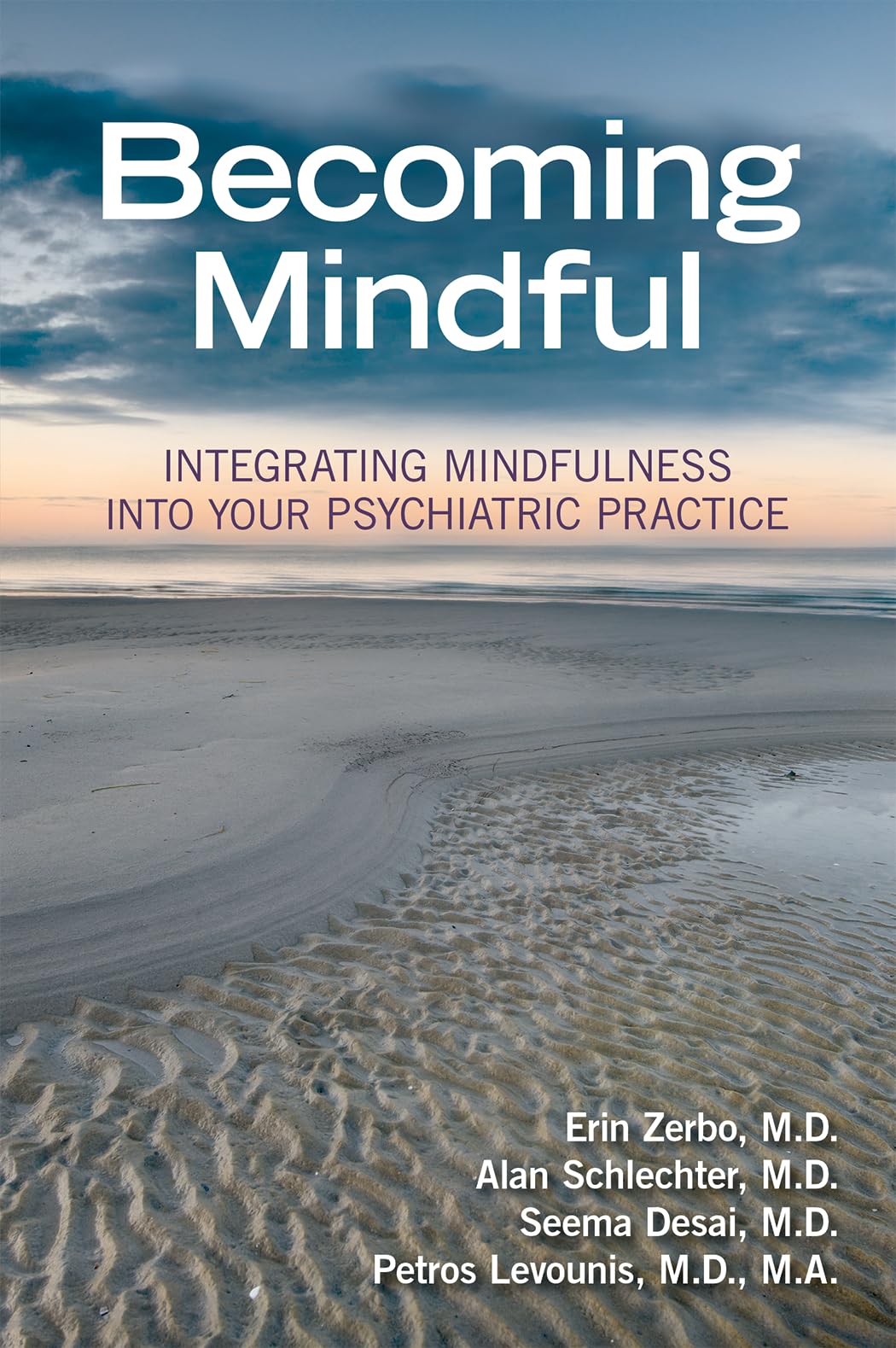
Becoming Mindful: Integrating Mindfulness into Your Psychiatric Practice
$55.00
by Erin Zerbo



According to a 2012 National Institutes of Health survey, 18 million adults in the United States -- 8% of the adult population -- practice some type of meditation. What are the possible applications of meditation -- and mindfulness in particular -- in psychotherapy and psychiatry? Becoming Mindful: Integrating Mindfulness Into Your Psychiatric Practice tackles this issue in a down-to-earth manner designed for immediate applicability. Whereas most other books on the topic focus on the benefits of mindfulness either for the clinician or for the patient, Becoming Mindful offers chapters on both, providing advice on how clinicians can establish a personal mindfulness practice and encourage their patients to do the same, both during sessions and at home. For clinician and patient alike, the handbook discusses the practical aspects of mindfulness, from the most effective postures to specific practices, and offers solutions for overcoming common obstacles, including restlessness and boredom, sleepiness, and sensory craving. Several chapters feature embedded exercises and guided meditations, and an appendix with audio guided meditations and a resource list provides psychiatrists, psychologists, psychiatric residents, social workers, counselors, and nurse practitioners, among others, with readily accessible tools to use in sessions with patients. Key takeaways summarize each chapter's content, making it easy for busy clinicians to quickly reference the information they need to most effectively treat patients, even those in special populations, including children and adolescents; patients battling substance addiction; and patients suffering from such disorders as depression, anxiety, posttraumatic stress disorder, and attention-deficit/hyperactivity disorder. With additional sections on mindful eating, mindfulness and technology, and the growing field of positive psychiatry, this book introduces readers to the full scope of benefits that mindfulness has to offer. With remarkable rapidity, meditation has transformed from a little-known practice to the psychotherapy with the most research, the widest array of demonstrated benefits, and proven ability to benefit both patients and therapists. We can all be grateful that this fine book so ably summarizes this practice and its benefits for the mental health community. --Roger Walsh M.D., Ph.D., Professor of Psychiatry, Philosophy, and Anthropology, University of California Medical School, Irvine, California Featuring embedded exercises and guided meditations -- as well as an appendix with audio guided meditations and a resource list -- Becoming Mindful: Integrating Mindfulness Into Your Psychiatric Practice provides clinicians with readily accessible tools to use in sessions with patients. With chapters that focus on the benefits of mindfulness for both the clinician and the patient, this guide discusses practical aspects and offers solutions for overcoming common obstacles, including restlessness and boredom, sleepiness, and sensory craving. Key takeaways summarize each chapter's content, making it easy for busy clinicians to quickly reference the information they need to most effectively treat patients, including children and adolescents; patients battling substance addiction; and patients suffering from such disorders as depression, posttraumatic stress disorder, and attention-deficit/hyperactivity disorder. With additional sections on mindful eating, mindfulness and technology, and the growing field of positive psychiatry, Becoming Mindful introduces readers to the full scope of benefits that mindfulness has to offer. Featuring embedded exercises and guided meditations--as well as an appendix with audio guided meditations and a resource list--Becoming Mindful: Integrating Mindfulness Into Your Psychiatric Practice provides clinicians with readily accessible tools to use in sessions with patients. With chapters that focus on the benefits of mindfulness for both the clinician and the patient, this guide discusses practical aspects and offers solutions for overcoming common obstacles, including restlessness and boredom, sleepiness, and sensory craving. Key takeaways summarize each chapter's content, making it easy for busy clinicians to quickly reference the information they need to most effectively treat patients, including children and adolescents; patients battling substance addiction; and patients suffering from such disorders as depression, posttraumatic stress disorder, and attention-deficit/hyperactivity disorder. With additional sections on mindful eating, mindfulness and technology, and the growing field of positive psychiatry, Becoming Mindful introduces readers to the full scope of benefits that mindfulness has to offer. Erin Zerbo, M.D., is Assistant Professor of Psychiatry at Rutgers New Jersey Medical School in Newark, New Jersey. Alan Schlechter, M.D., is Director of the Bellevue Child and Adolescent Outpatient Psychiatry Clinic and Clinical Assistant Profe