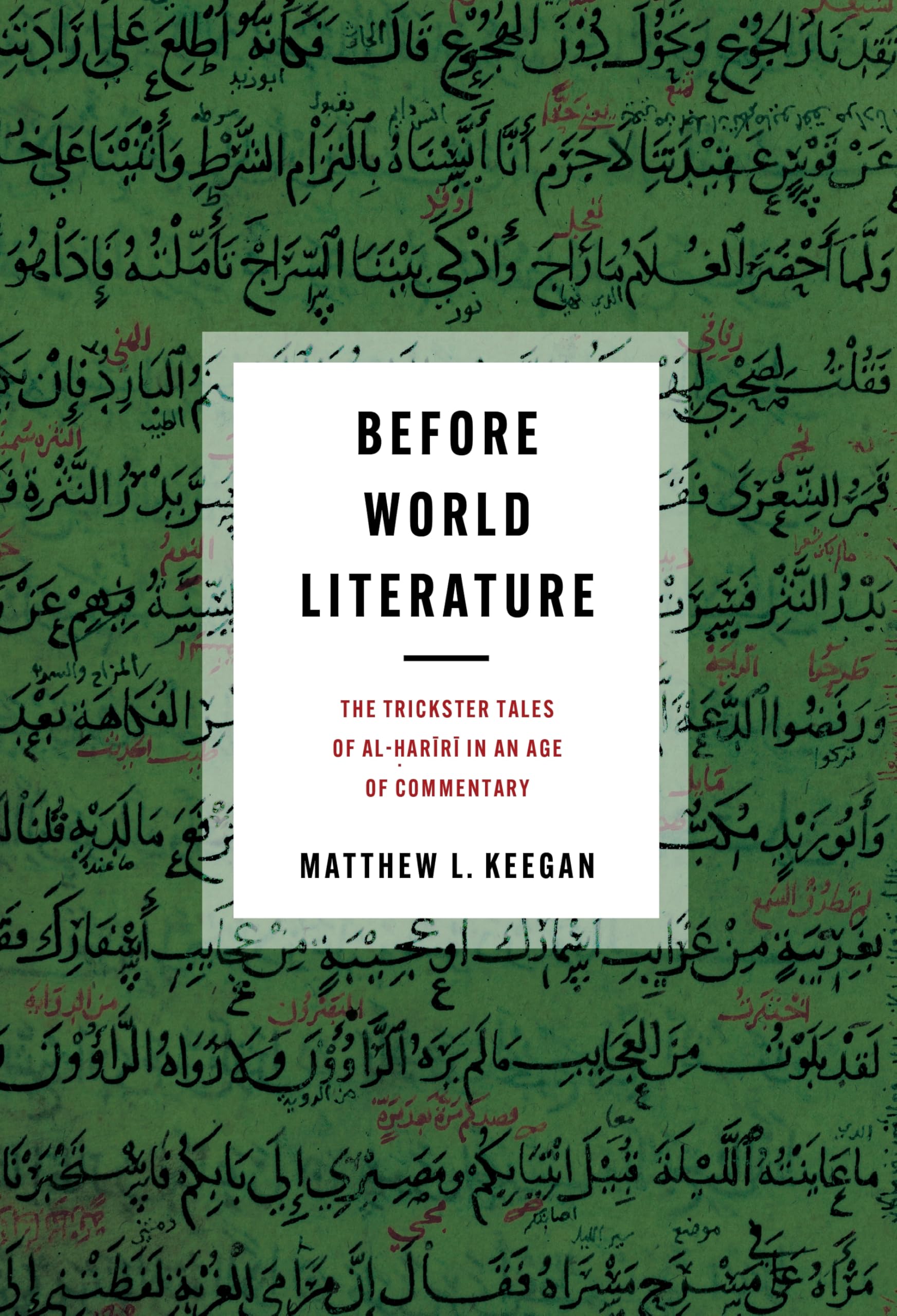
Before World Literature: The Trickster Tales of al-Ḥarīrī in an Age of Commentary
$49.95
by Matthew L. Keegan



An account of Arabic literary history through the lens of the reception of the Maq ā m ā t of al-Ḥarīrī, a twelfth-century collection of fifty trickster stories Before World Literature offers an account of Arabic literary history through the lens of the reception of one of the most widely read Arabic texts of the postclassical period: the Maq ā m ā t of al-Ḥarīrī, a twelfth-century collection of fifty trickster stories written in an elaborate and highly allusive form of prose. Innumerable Muslim scholars taught the text to new generations of students and wrote extensive commentaries on it. In the nineteenth century, however, the Maq ā m ā t fell rapidly out of favor, its elaborate style and its commentary tradition suddenly seen as symptoms of cultural decay. Matthew L. Keegan shows how the emergence of world literature as a literary critical paradigm led to a wholesale reformulation of literary tastes that sidelined elaborately referential texts like the Maq ā m ā t . Nineteenth-century European Orientalists and Arab reformist thinkers derided the Maq ā m ā t for being decadent and derivative, while assailing the entire postclassical Arabic intellectual tradition. The canon of Arabic poetry and prose was reshaped accordingly, favoring classical authors whose work was perceived to be more in line with modern, European literary aesthetics. Keegan looks to the flourishing commentary culture of the postclassical period to uncover the theories of reading and interpretation that informed engagement with Islamic texts in their own time. Tracing the social, material, and intellectual practices embedded in the commentaries on the Maq ā m ā t , he explores how generations of Muslims read and interpreted al-Ḥarīrī’s trickster stories, for edification and entertainment. Restoring the Maq ā m ā t to its place as the pinnacle of Arabic style and as an essential text of Islamic education for centuries, Before World Literature offers a model of how to read texts like the Maq ā m ā t on their own terms. "“This ambitious and thought-provoking book offers a bold reimagining of world literature, rejecting static, map-driven frameworks in favor of a historically grounded exploration of reading itself. Through an innovative comparative approach, it follows al-Ḥarīrī’s journey across interpretive traditions to grapple with the enduring question: What is literature? This rich engagement with commentary cultures connects world literature to its readers and charts a vision for the future of literary study." ― Michael Allan, author of In the Shadow of World Literature "“One of the most exciting and impressive works to come out in the field of classical Arabic literature in recent decades. This groundbreaking book takes seriously hitherto ignored commentaries and manuscripts of al-Ḥarīrī’s Maqāmāt , radically changing our understanding of the genre." ― Lara Harb, Princeton University Matthew L. Keegan is the Moinian Assistant Professor of Asian and Middle Eastern Cultures at Barnard College of Columbia University.