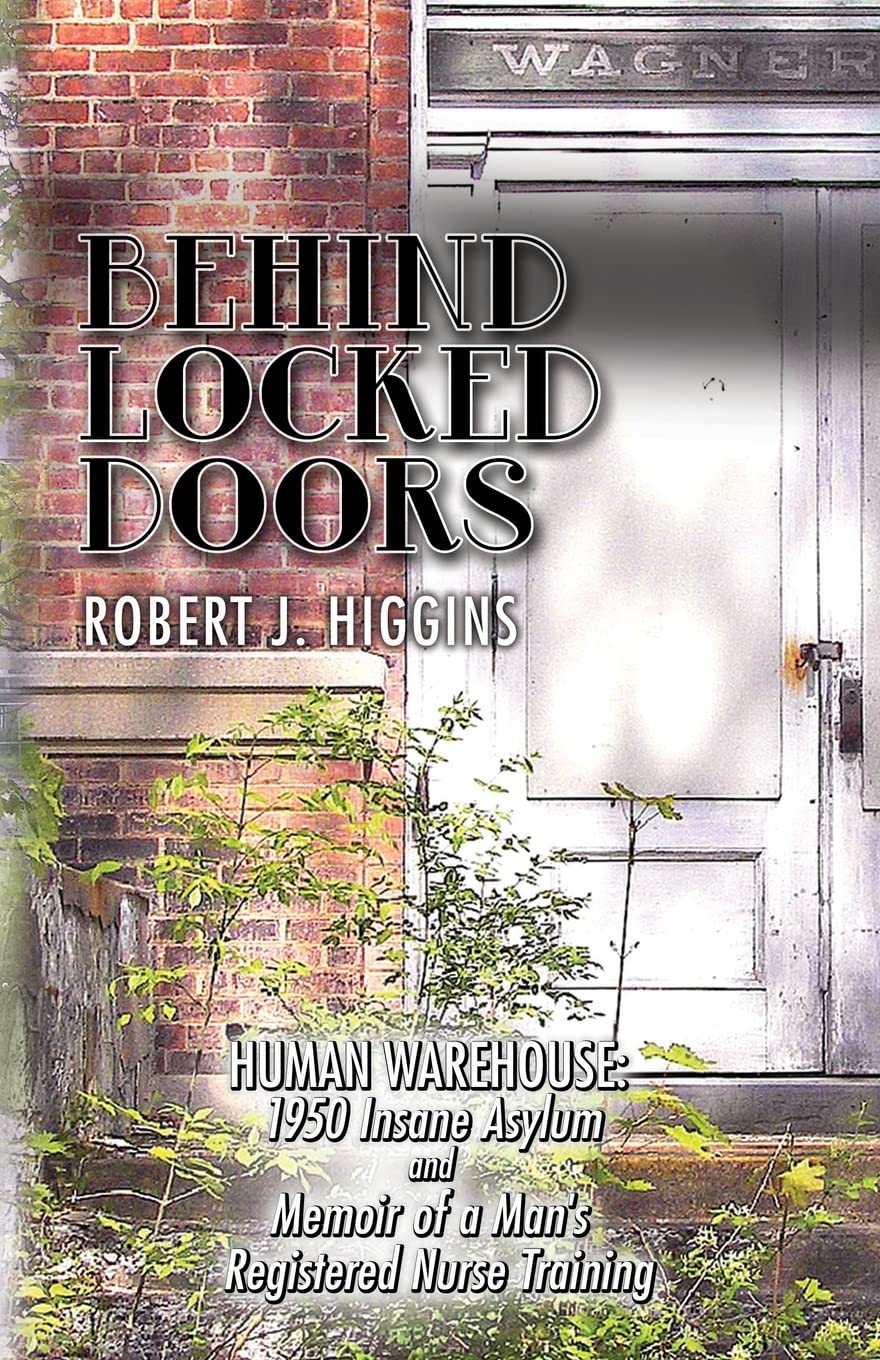
Behind Locked Doors: Human Warehouse: 1950 Insane Asylum and Memoir of a Man's Registered Nurse Training
$10.50
by Robert J Higgins



This engrossing memoir describes sweeping changes in psychiatric medicine and nursing education. Though only sixty years have passed, mental health care and nurse's training have changed radically since the middle of the last century. This easy-to-read book provides an absorbing picture of care in mental health institutions and Registered Nurse education in the not-too-distant past. In 1950, Bob Higgins began training to become a Registered Nurse. At the time, nurses were not educated in universities, but within hospitals. Until the mid-fifties, there were no effective medications for the seriously mentally ill. The care of psychotics was mainly restricted to maintaining order and isolating them BEHIND LOCKED DOORS. A mental hospital was, in effect, a human warehouse. Persons, especially the elderly, with dementia and chronic neurological diseases, were often committed to mental hospitals because skilled nursing facilities were nonexistent and the cost of private care was beyond the economic capabilities of families. This book relates Higgins’ experience in terms everyone can understand. He describes encounters that made him smile and others that showed the heartbreaking state of care at the time. He paints a vivid portrait of the state of psychiatric medicine in the 1950s and draws a crisp picture of his nurse's training. The information in this memoir will be of interest to practicing and retired nurses, medical students, and anyone interested in the history of mental health care. BEHIND LOCKED DOORS includes chapters on people being committed and autopsy....the two end points for many patients. Higgins describes shock therapies and lobotomy, once standard treatments for the mentally ill and the methods used to control patients. Finally, he explains the miracle of pharmaceuticals. The new medications that came into use in the mid-fifties would change the world of psychiatric treatment and eventually restore many patients to their families. Bob Higgins received his nursing education at Binghamton State Hospital and Bellevue in New York City. He worked in psychiatric nursing after graduation and saw the revolution in mental health care that new medicines brought. In 1955 he entered advanced training to become a Certified Registered Nurse Anesthetist (CRNA) in Rochester, New York. He practiced as a nurse anesthetist in Mississippi and Florida, retiring in 2000 to Binghamton where he currently lives.