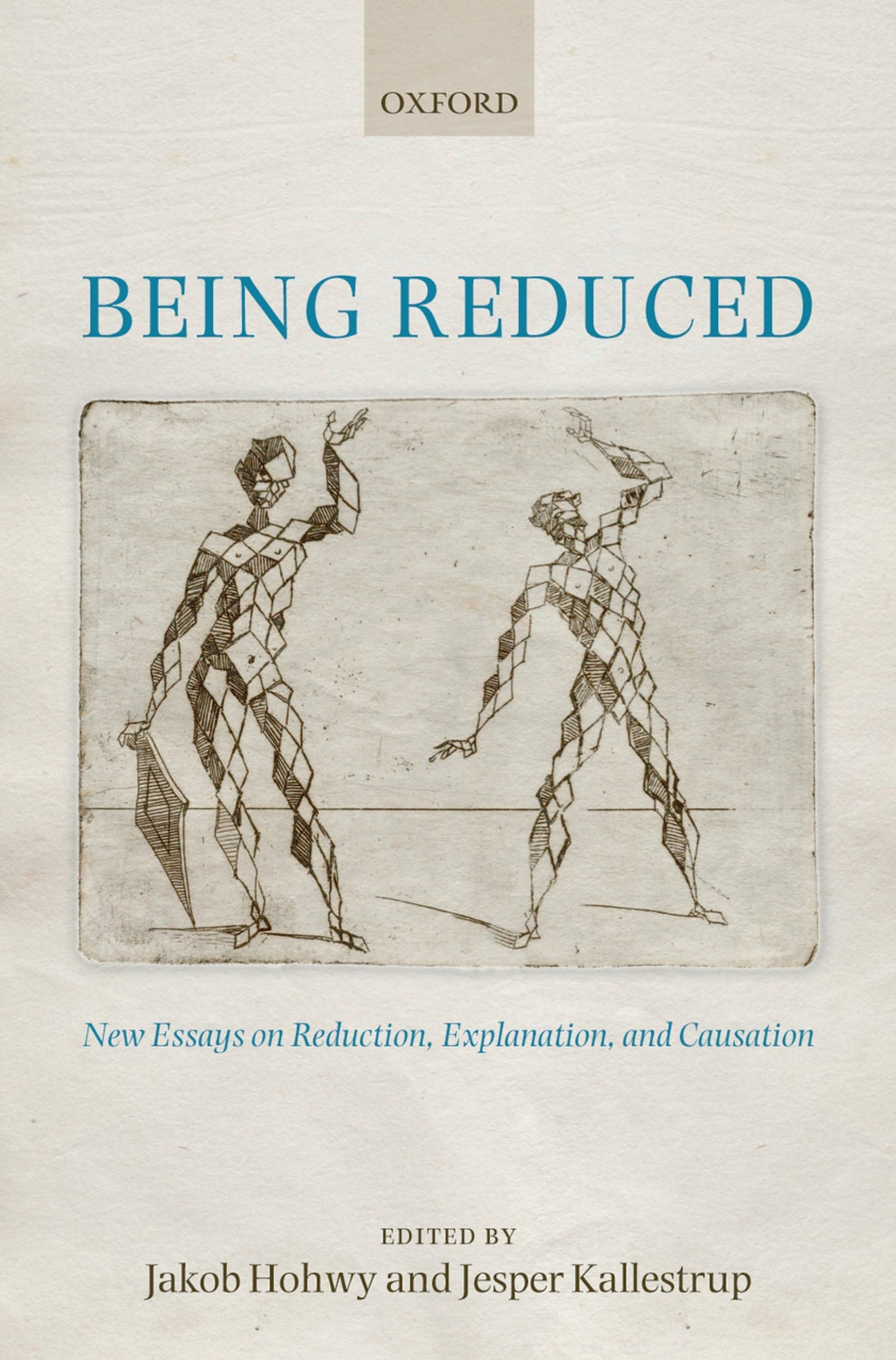



There are few more unsettling philosophical questions than this: What happens in attempts to reduce some properties to some other more fundamental properties? Reflection on this question inevitably touches on very deep issues about ourselves, our own interactions with the world and each other, and our very understanding of what there is and what goes on around us. If we cannot command a clear view of these deep issues, then very many other debates in contemporary philosophy seem to lose traction - think of causation, laws of nature, explanation, consciousness, personal identity, intentionality, normativity, freedom, responsibility, justice, and so on. Reduction can easily seem to unravel our world. Here, an eminent group of philosophers helps us answer this question. Their novel contributions comfortably span a number of current debates in philosophy and cognitive science: what is the nature of reduction, of reductive explanation, of mental causation? The contributions range from approaches in theoretical metaphysics, over philosophy of the special sciences and physics, to interdisciplinary studies in psychiatry and neurobiology. The authors connect strands in contemporary philosophy that are often treated separately and in combination the chapters allow the reader to see how issues of reduction, explanation and causation mutually constrain each other. The anthology therefore moves the debate further both at the level of contributions to specific debates and at the level of integrating insights from a number of debates. "...this is a very useful volume for professional philosophers, useful for both graduate seminars and advanced undergraduate courses in philosophy of mind, philosophy of science, and metaphysics.... Given the continuing influence of notions of 'reduction' in philosophy of mind, this book provides a welcome compilation of the current state of debates about both explanation and metaphysics.... The editors are to be commended for including articles representing what I have called 'hands-on' philosophy of science along with the more metaphysical articles."--Steven Horst, Notre Dame Philosophical Reviews Is the mind nothing but neural firings in the brain? Are we just a bunch of neurons? If the mind is just the brain, then how can we act as genuine, responsible agents in the world? Being Reduced attempts to understand these questions. Jakob Hohwy obtained his PhD from the Australian National University. He is a lecturer in philosophy at Monash University, Melbourne. Hohwy works on issues of reduction and explanation in science, and engages in interdisciplinary research with neuroscientists and psychiatrists. Jesper Kallestrup obtained his PhD from the University of St. Andrews. He is a lecturer in philosophy at the University of Edinburgh, and an associate fellow at Arché, the University of St. Andrews. Kallestrup works on issues of reduction, mental causation and the conceivability arguments in the philosophy of mind.