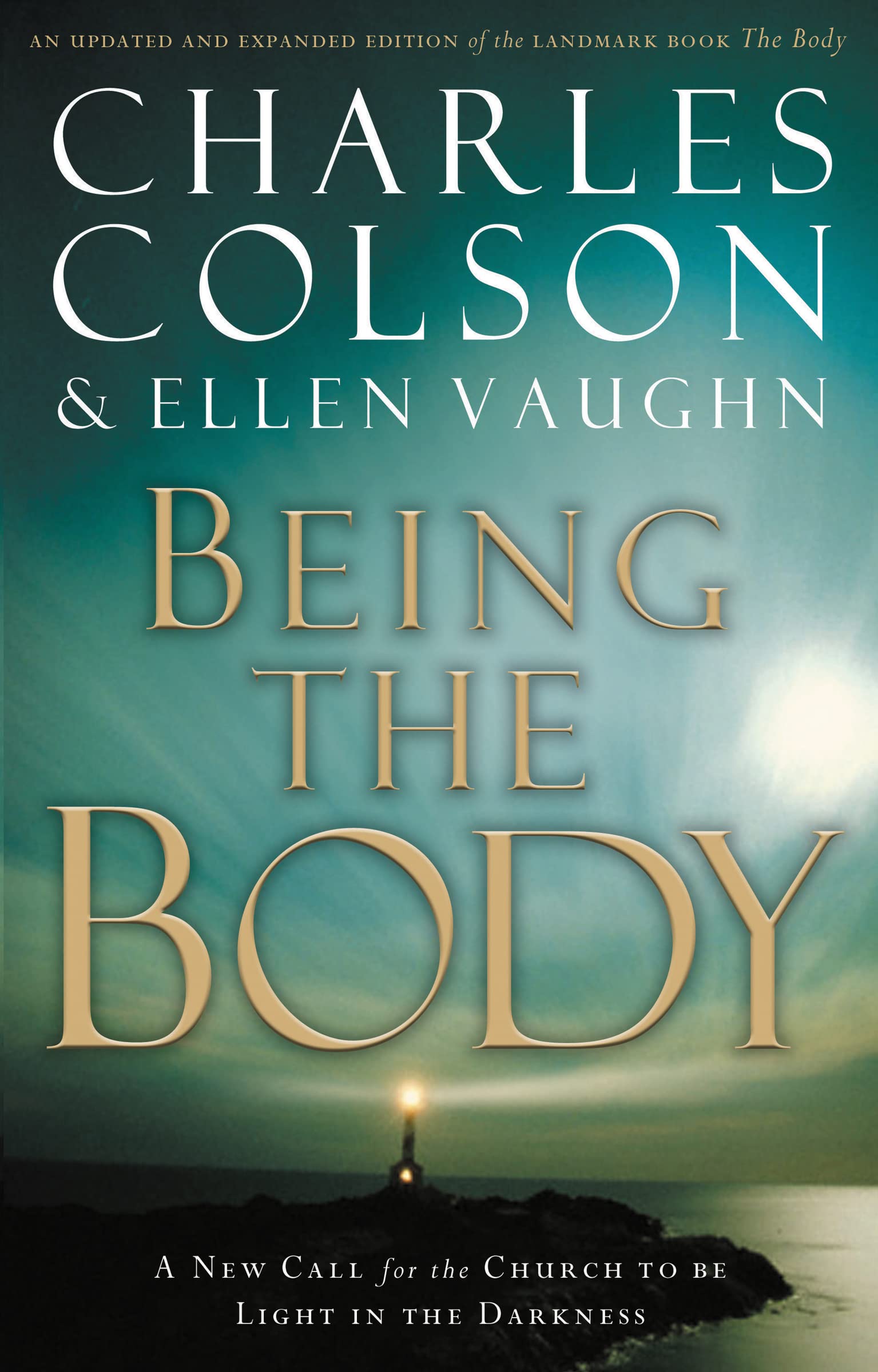



Charles Colson has been called, "one of the most important social reformers in a generation." Ten years ago in The Body , Colson turned his prophetic attention to the church and how it might break out of its cultural captivity and reassert its biblical identity. Today the book's classic truths have not changed. But the world we live in has. Christians in America have had their complacency shattered and their beliefs challenged. Around the world, the clash of world views has never been more strident. Before all of us, daily, are the realities of life and death, terror and hope, light and darkness, brokenness and healing. We cannot withdraw to the comfort of our sanctuaries...we must engage. For, if ever there was a time for Christians to be the Body of Christ in the world, it is now. In this new, revised and expanded edition of The Body , Charles Colson revisits the question, "What is the church and what is its relevance to contemporary culture at large?" Provocative and insightful, Being the Body inspires us to rise above a stunted "Jesus and me" faith to a nobler view of something bigger and grander than ourselves--the glorious, holy vision for which God created the church. Hardcover ISBN 0849917522 Chuck Colson was a popular and widely known author, speaker, and radio commentator. A former presidential aide to Richard Nixon and founder of the international ministry Prison Fellowship, he wrote several books that have shaped Christian thinking on a variety of subjects, including Born Again , L oving God , How Now Shall We Live? , The Good Life , and The Faith . His radio broadcast, BreakPoint, at one point aired to two million listeners. Chuck Colson donated all of his royalties, awards, and speaking fees to Prison Fellowship Ministries. Ellen Vaughn is an award-winning author whose works include The Strand and Gideon's Torch, co-authored with Charles Colson. Former vice president of executive communications for Prison Fellowship, Vaughn has also served as a speech writer and fund-raising consultant. She and her husband, Lee, live in Virginia with their three children. September 11. No matter how much time goes by or what has happened since, it still seems unbelievable. A dividing line in all our lives. Before and after. Whether we watched it unfold on television from far, far away, or knelt in the ash-strewn streets of Manhattan, or lost someone we loved in the fireball at the Pentagon or in the field in Pennsylvania, it is a universal touchstone of horror and violation. Catastrophe. C. S. Lewis said that in every human story, as in divine history, there are two catastrophes. The first is utter ruin: the catastrophe of disintegration and undoing, the end of life as we know it, light extinguished and death's dark triumph. The crucifixion. The second is the good catastrophe: the reintegrating and remaking, new hope rising out of the ashes-the good that would otherwise not be. The resurrection. Both catastrophes dwell in the unsought stories of September 11. We cannot begin to do them justice. We cannot capture the horror of evil's fiery day. Nor can we adequately portray the triumph of hope: every candle lit in a nation whose heart was broken, every selfless act of service to those who were hurt and bereaved, every pint of blood given, every fragile tie of community restored where it once was not. Like the unity of the heroes of Flight 93, who made sure their plane plunged into a Pennsylvania field rather than through the White House or the Capitol dome. They said farewell to their families on the phones. They prayed the Lord's Prayer and the Twenty-third Psalm, their hoarse voices rising together in the shadow of death. And then they took a last deep breath and rushed the plane's long aisle to the end-in order to save others. Just as we cannot do justice to September 11, we could not begin to detail all the ways that churches across our nation lived their faith in its wake. In the darkest hour, so many of the people of God stood as His church, doing what the church does best: being the community that brings hope and comfort to brokenness and pain. Think of that New York homeless shelter, a beacon for the weary and burdened, where cups of cool water were offered in Jesus' name. Or of the churches that helped widows and orphans in their distress . . . the essence of "true religion," as the book of James says. Or of the communities of believers gathering together in homes and churches across that great city-singing praises to God, bringing their pain to Jesus, and drawing their grieving neighbors to the love of Christ. Think, too, of the service at Washington's National Cathedral a few days after the disaster. Government leaders, foreign dignitaries, and four ex-presidents gathered for an extraordinary service of remembrance. Speaking with humility and power, Billy Graham laid out the gospel. "This cruel plot," he said, leads us to "confess our need for God. We've always needed God . . . many wh