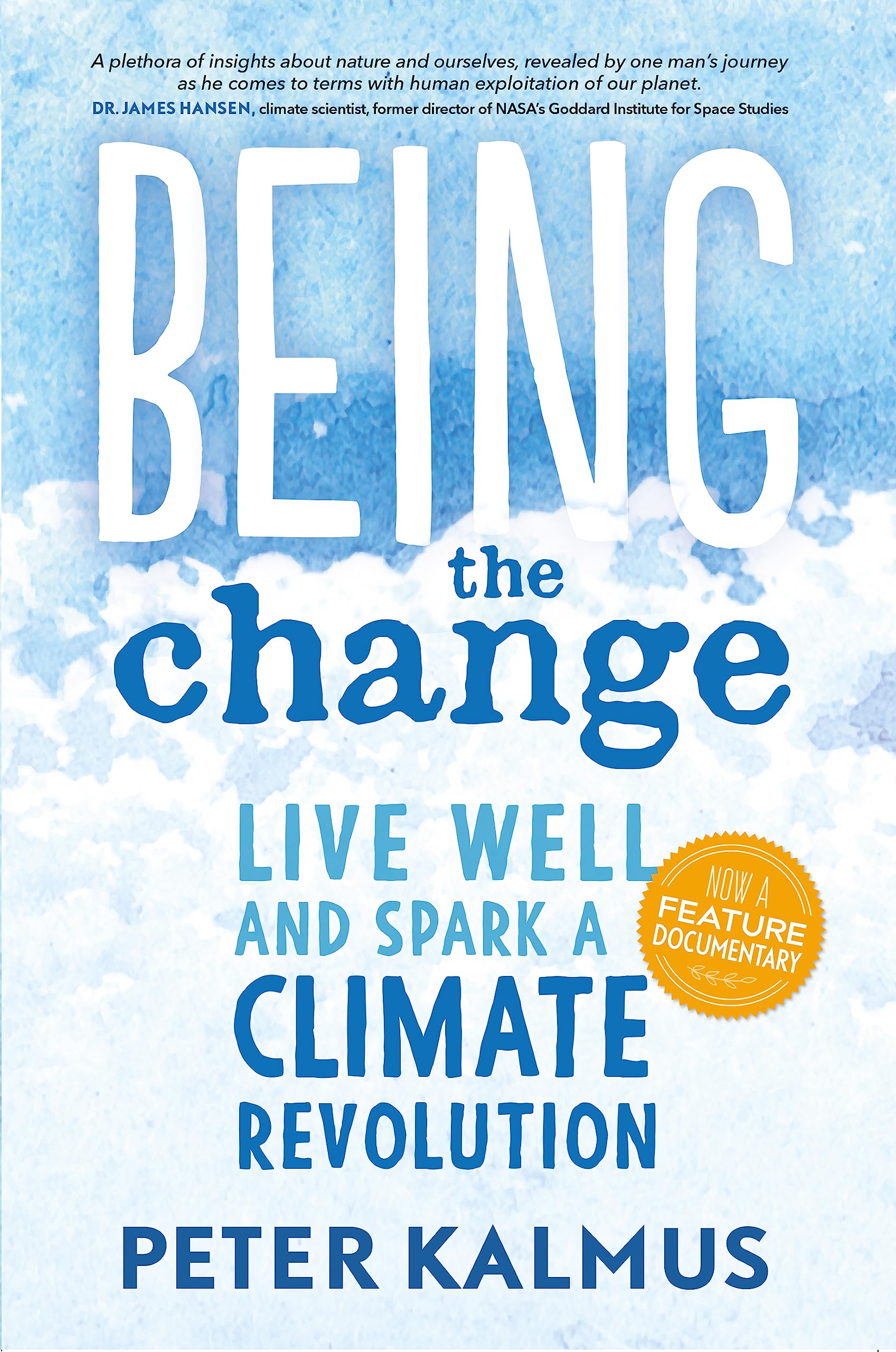



Life on 1/10th the fossil fuels turns out to be awesome. We all want to be happy. Yet as we consume ever more in a frantic bid for happiness, global warming worsens. Alarmed by drastic changes now occurring in the Earth's climate systems, the author, a climate scientist and suburban father of two, embarked on a journey to change his life and the world. He began by bicycling, growing food, meditating, and making other simple, fulfilling changes. Ultimately, he slashed his climate impact to under a tenth of the US average and became happier in the process. Being the Change explores the connections between our individual daily actions and our collective predicament. It merges science, spirituality, and practical action to develop a satisfying and appropriate response to global warming. Part one exposes our interconnected predicament: overpopulation, global warming, industrial agriculture, growth-addicted economics, a sold-out political system, and a mindset of separation from nature. It also includes a readable but authoritative overview of climate science. Part two offers a response at once obvious and unprecedented: mindfully opting out of this broken system and aligning our daily lives with the biosphere. The core message is deeply optimistic: living without fossil fuels is not only possible, it can be better. AWARDS GOLD (tie)
2017 IPPY Awards: Books Most Likely to Save the Planet - SILVER
2017 Nautilus Book Awards: Green Living / Sustainability - BRONZE
2017 Foreword INDIES: Ecology & Environment "A plethora of insights about nature and ourselves, revealed by one man's journey as he comes to terms with human exploitation of our planet." - Dr. James Hansen, climate scientist and former director of NASA's Goddard Institute for Space Studies "A powerful reminder that it is possible - and joyful - to move away from fossil fuels, even in a society still in the throes of addiction." - Bill McKibben, author, Eaarth: Making a Life on a Tough New Planet "A low-carbon world will not look like Star Trek, it will look mostly like it looks today, it's just that we will inhabit it differently. Peter Kalmus's brilliant book is about his deciding to start living that way today. He finds that (a) it's not that hard, and that (b) life improves. He becomes more skilled, connected, fulfilled, nourished. As will we all. Allow him to ease you over the threshold." - Rob Hopkins, founder of the Transition movement robhopkins.net. "Too many people say that personal action isn't enough to deal with the mess we've made of the global climate, and think that this means personal action isn't necessary. In this timely and provocative book, Peter Kalmus points out that changing the world has to start with changing our own lives. It's a crucial message that needs to be heard." - John Michael Greer, author of After Progress and The Retro Future "What does an astrophysicist do if he learns that civilization is on path toward oblivion? If he's Peter Kalmus, he meditates, examines his life, and makes significant changes to reduce his personal carbon output. Then he writes a book. The result is a humane and intelligent exploration of what anyone can do to reduce climate impact - and live a better life in the process." - Richard Heinberg, Senior Fellow, Post Carbon Institute "A low-emission lifestyle is empowering, happier, and strengthens our connection with community and our environment (plus yes, it saves us thousands of dollars). This is an important and valuable book, and recommended reading for anyone interested in a richer life or a safer climate (doubly so for those interested in both)." - John Cook, research assistant professor at George Mason University and founder of SkepticalScience.com "Kalmus is a respected atmospheric scientist and weighs in with authority when it comes to the topic of climate change. But he speaks to us as a person, sharing his experiences, concerns, and aspirations as a fellow human being combatting the existential threat of human-caused climate change. And he shares with us a vital message about how we can indeed be the change we need tosee in the world if we are to avert a climate catastrophe." - Michael E. Mann, Distinguished Professor of Atmospheric Science, Penn State University, and co-author, The Madhouse Effect: How Climate Change Denial is Threatening the Planet, Destroying our Politics, and Driving Us Crazy "A plethora of insights about nature and ourselves, revealed by one man's journey as he comes to terms with human exploitation of our planet." ― Dr. James Hansen, climate scientist and former director of NASA's Goddard Institute for Space Studies "A powerful reminder that it is possible ― and joyful ― to move away from fossil fuels, even in a society still in the throes of addiction." ― Bill McKibben, author, Eaarth: Making a Life on a Tough New Planet "A low-carbon world will not look like Star Trek, it will look mostly like it looks today, it's just that we will inhabit it differ
2017 IPPY Awards: Books Most Likely to Save the Planet - SILVER
2017 Nautilus Book Awards: Green Living / Sustainability - BRONZE
2017 Foreword INDIES: Ecology & Environment "A plethora of insights about nature and ourselves, revealed by one man's journey as he comes to terms with human exploitation of our planet." - Dr. James Hansen, climate scientist and former director of NASA's Goddard Institute for Space Studies "A powerful reminder that it is possible - and joyful - to move away from fossil fuels, even in a society still in the throes of addiction." - Bill McKibben, author, Eaarth: Making a Life on a Tough New Planet "A low-carbon world will not look like Star Trek, it will look mostly like it looks today, it's just that we will inhabit it differently. Peter Kalmus's brilliant book is about his deciding to start living that way today. He finds that (a) it's not that hard, and that (b) life improves. He becomes more skilled, connected, fulfilled, nourished. As will we all. Allow him to ease you over the threshold." - Rob Hopkins, founder of the Transition movement robhopkins.net. "Too many people say that personal action isn't enough to deal with the mess we've made of the global climate, and think that this means personal action isn't necessary. In this timely and provocative book, Peter Kalmus points out that changing the world has to start with changing our own lives. It's a crucial message that needs to be heard." - John Michael Greer, author of After Progress and The Retro Future "What does an astrophysicist do if he learns that civilization is on path toward oblivion? If he's Peter Kalmus, he meditates, examines his life, and makes significant changes to reduce his personal carbon output. Then he writes a book. The result is a humane and intelligent exploration of what anyone can do to reduce climate impact - and live a better life in the process." - Richard Heinberg, Senior Fellow, Post Carbon Institute "A low-emission lifestyle is empowering, happier, and strengthens our connection with community and our environment (plus yes, it saves us thousands of dollars). This is an important and valuable book, and recommended reading for anyone interested in a richer life or a safer climate (doubly so for those interested in both)." - John Cook, research assistant professor at George Mason University and founder of SkepticalScience.com "Kalmus is a respected atmospheric scientist and weighs in with authority when it comes to the topic of climate change. But he speaks to us as a person, sharing his experiences, concerns, and aspirations as a fellow human being combatting the existential threat of human-caused climate change. And he shares with us a vital message about how we can indeed be the change we need tosee in the world if we are to avert a climate catastrophe." - Michael E. Mann, Distinguished Professor of Atmospheric Science, Penn State University, and co-author, The Madhouse Effect: How Climate Change Denial is Threatening the Planet, Destroying our Politics, and Driving Us Crazy "A plethora of insights about nature and ourselves, revealed by one man's journey as he comes to terms with human exploitation of our planet." ― Dr. James Hansen, climate scientist and former director of NASA's Goddard Institute for Space Studies "A powerful reminder that it is possible ― and joyful ― to move away from fossil fuels, even in a society still in the throes of addiction." ― Bill McKibben, author, Eaarth: Making a Life on a Tough New Planet "A low-carbon world will not look like Star Trek, it will look mostly like it looks today, it's just that we will inhabit it differ