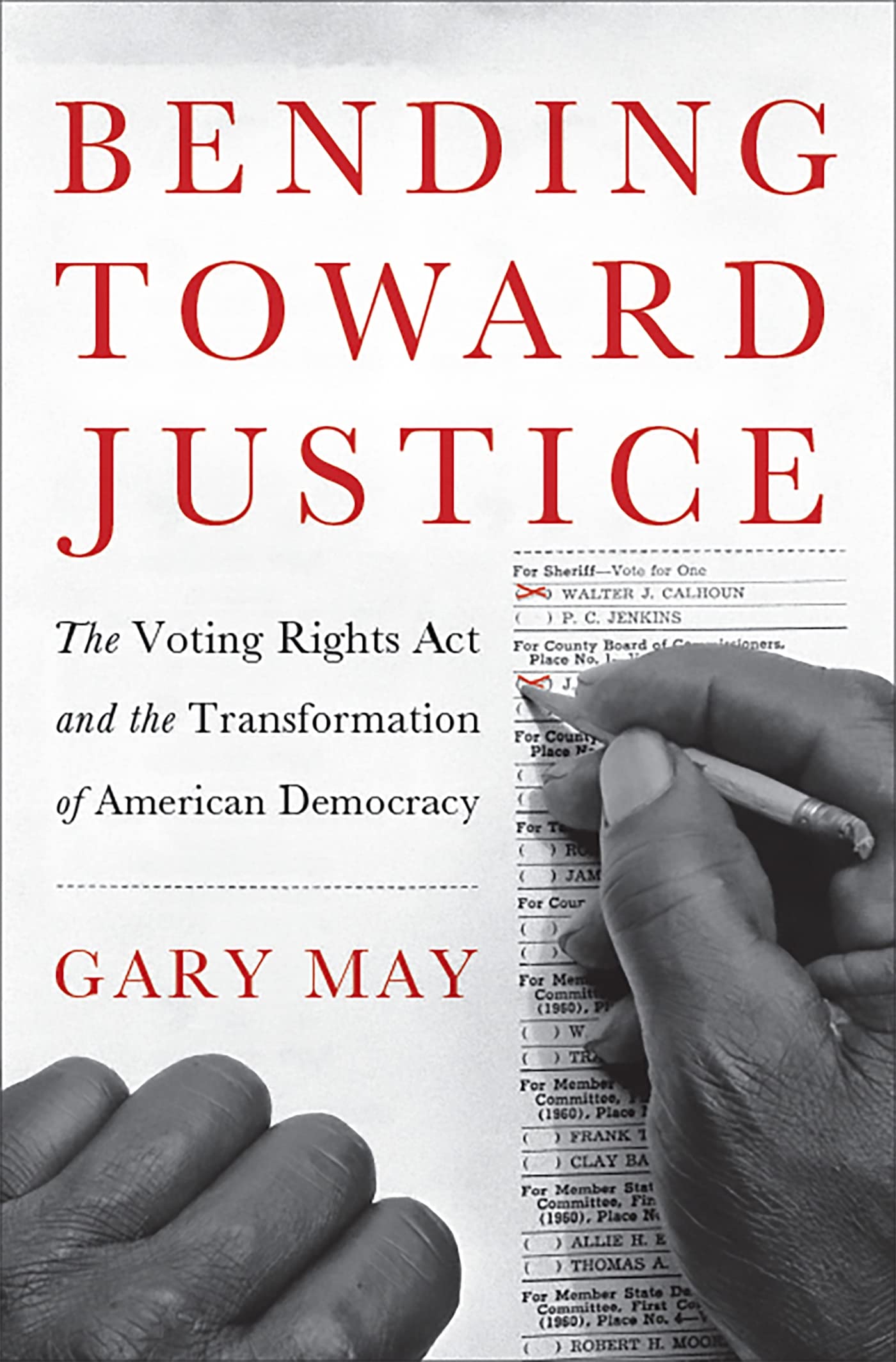



When the Fifteenth Amendment of 1870 granted African Americans the right to vote, it seemed as if a new era of political equality was at hand. Before long, however, white segregationists across the South counterattacked, driving their black countrymen from the polls through a combination of sheer terror and insidious devices such as complex literacy tests and expensive poll taxes. Most African Americans would remain voiceless for nearly a century more, citizens in name only until the passage of the 1965 Voting Rights Act secured their access to the ballot. In Bending Toward Justice , celebrated historian Gary May describes how black voters overcame centuries of bigotry to secure and preserve one of their most important rights as American citizens. The struggle that culminated in the passage of the Voting Rights Act was long and torturous, and only succeeded because of the courageous work of local freedom fighters and national civil rights leaders -- as well as, ironically, the opposition of Southern segregationists and law enforcement officials, who won public sympathy for the voting rights movement by brutally attacking peaceful demonstrators. But while the Voting Rights Act represented an unqualified victory over such forces of hate, May explains that its achievements remain in jeopardy. Many argue that the 2008 election of President Barack Obama rendered the act obsolete, yet recent years have seen renewed efforts to curb voting rights and deny minorities the act's hard-won protections. Legal challenges to key sections of the act may soon lead the Supreme Court to declare those protections unconstitutional. A vivid, fast-paced history of this landmark piece of civil rights legislation, Bending Toward Justice offers a dramatic, timely account of the struggle that finally won African Americans the ballot -- although, as May shows, the fight for voting rights is by no means over. The Supreme Court will soon consider Shelby County (AL) v. Holder, challenging the “pre-clearance” provision of the Voting Rights Act (which Congress extended for 25 years in 2006). For readers who don’t recall the era before the VRA’s hard-fought passage, in 1965, University of Delaware historian May offers an involving narrative of the law’s history and consequences. May’s prologue sketches African American voting rights from the Emancipation Proclamation to the early 1960s and spotlights national leaders (Rosa Parks, Thurgood Marshall, Charles Evers, John Lewis, James Farmer, Rev. Martin Luther King Jr.) present when Lyndon Johnson signed the bill into law. In the chapters that follow, however, he stresses the critical work of lesser-known activists, like Amelia and Sam Boynton, Bernard Lafayette, and James Forman, and the powerful impact they and their intransigent opponents, Sheriff Jim Clark and Alabama governor George Wallace, had on public and congressional attitudes. May then traces the bill’s dramatic legislative history, describes the results of its implementation, examines the issues in its four congressional reauthorizations, and outlines challenges it currently faces. An illuminating history of a law that remains all too relevant. --Mary Carroll Bending Toward Justice offers up a bracing reminder of what has changed since the civil rights era, and what hasn't. --Dahlia Lithwick Rick Valelly, Swarthmore College, author of The Two Reconstructions In this vivid and beautifully written page-turner, May brings the story of the Voting Right Act to life in an altogether new way by deftly drawing out the personal stories and voices of this epoch-making statute. At a time when the future of the Voting Rights Act is uncertain and up for debate, May's book could not be more timelyor more readable.” Nick Kotz, winner of the Pulitzer Prize and author of Judgment Days: Lyndon Baines Johnson, Martin Luther King Jr., and the Laws That Changed America Gary May's dramatic Bending Toward Justice brings alive the critical dynamic between grass roots advocacy and political leadership which produced the most significant advance in civil rights since the Emancipation Proclamation. How this victory was achieved provides vital lessons to any citizen concerned about the importance of voting rights protections and the dangers and challenges to those rights today.” Kirkus Reviews A meticulous, impassioned narrative.... May delivers a fascinating account of the legislative maneuvering required to corral enough Republican votes to shut down the inevitable filibuster by southern Democrats and bring about final passage
. Superb history.” Booklist An illuminating history of a law that remains all too relevant.” Library Journal Compelling.... This lucid investigation of the act's history relates its critical importance to American democracy.” Robert Dallek, author of John F. Kennedy: An Unfinished Life, 1917-1963 Gary May's compelling history of why and how the Voting Rights Act advanced the promise of American life