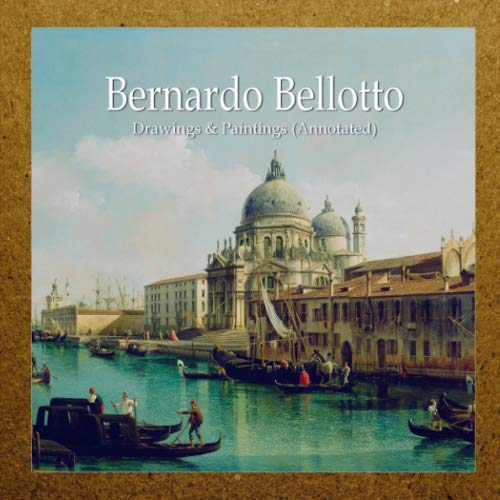



Bernardo Bellotto (Bellotti) (Venice, 30 January 1721 - Warsaw, 17 October 1780) was an Italian painter and engraver, a citizen of the Republic of Venice. He is also known by the name Canaletto, which he used at the suggestion of his uncle Antonio Canal, holder of the same pseudonym.The places he visited left an indelible trace in his canvases, which stand out for the accuracy of the details and the careful rendering of the characteristic luminosity.The close collaboration between the uncle and nephew makes it difficult to distinguish which works are of youth and which are considered to be works of his uncle. Bellotto's works differ from those of Canaletto in that they are colder in color, with a greater predominance of chiaroscuro and an even more exact precision of topographical realism.His main works, such as the 14 Vedute of Dresden and the View of Warsaw, show a quality similar to that of his uncle. His landscapes of European capitals are an important historical source because of their precision and fidelity to the original; so much so that they were used for the reconstruction of historical buildings in Dresden and Warsaw that had been damaged during the Second World War.Bellotto also painted on historical themes: "Coronation of Stanislav Augustus", "Visit in Rome by Jerzy Ossolinski in 1633". His paintings are kept in the Royal Castle and the National Museum.As a member of the Royal Commission, he worked on the decoration of the Ujazdowski Castle. In the east wing of the castle, he painted frescoes and fragments of ornament (in 1784 during the reconstruction of the castle these works did not survive). Together with his son Lorenzo he painted 14 paintings on the themes of ancient Rome.He was buried in the dungeon of the Church of the Assumption on in the church cemetery. The grave has not been preserved.