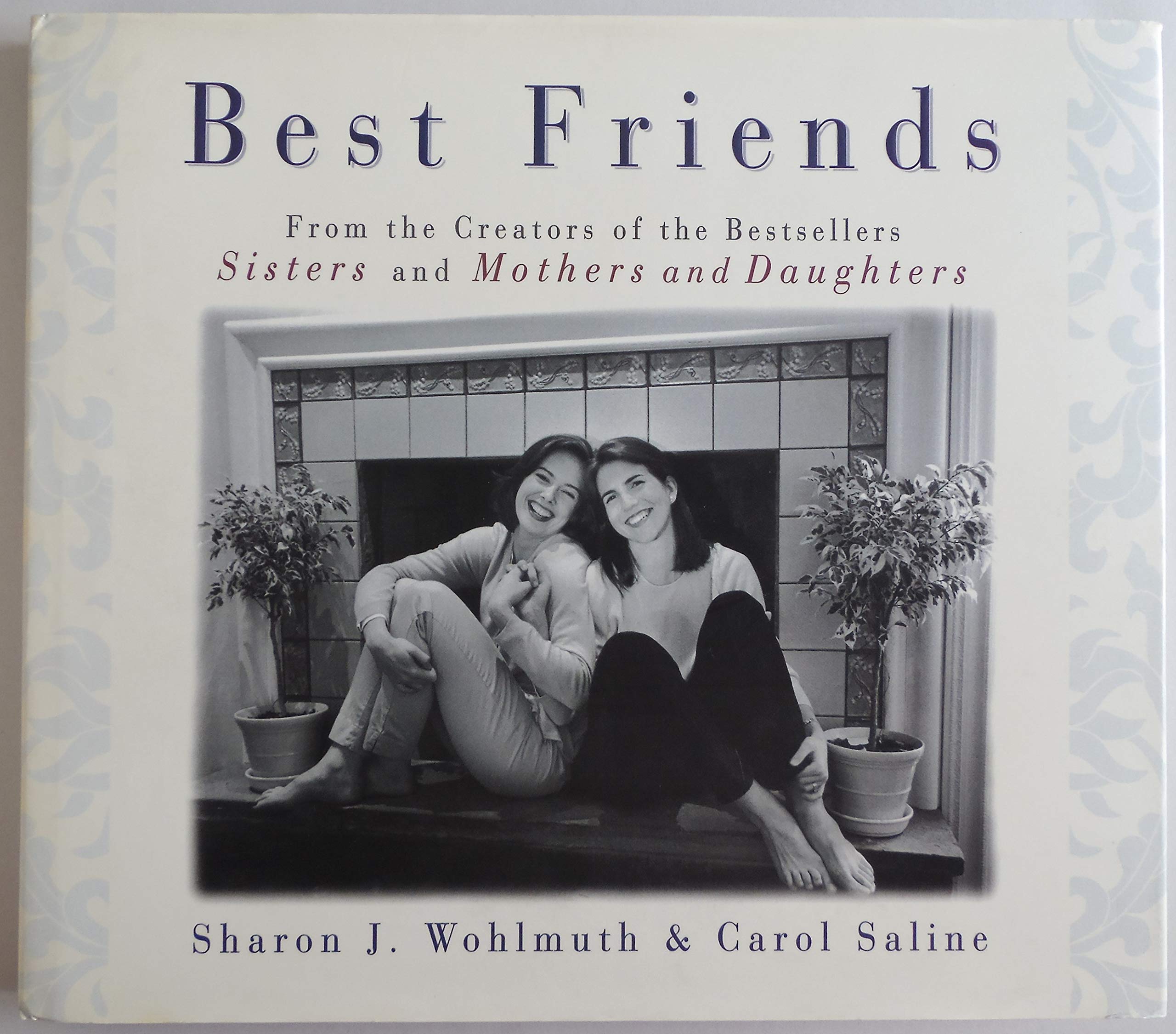



In thirty-four essays with photographs, best friends describe how they met and the qualities that make their relationships strong Photographer Wohlmuth and journalist Saline complete their projected trilogy of prose and photo portraits of good, intimate relationships by turning to those of the nonconsanguineous kind. Well, not all these friends are unrelated: the musicians Ahn--Lucia, Maria, and Angella--are genuine sisters, and John and Terri are father and daughter but, separated before her birth because she was immediately put out for adoption, they didn't meet until she was past 30, and then they found that "we just clicked right away," as Terri says, and that they could "cultivate an entirely different kind of closeness," Saline writes. The other, nonfamilial pals--about all of whom we learn heartwarming and often moving details similar to those relayed about the Ahns and John and Terri--met in childhood, by happenstance, while working together, at events both casual and consequential, etc. As in its two best-selling predecessors, sometimes one or more persons in a set here is famous: singer Patti LaBelle appears with her hairdresser-companion Norma Gordon, and nonfiction authors Gay Talese and A. E. Hotchner happen to be best friends. As before, Wohlmuth's photos catch the subjects looking relaxed and appealingly vulnerable. But, as the presence of John and of Talese and Hotchner betokens, this time Wohlmuth and Saline's purview includes men. A fine conclusion to a justly popular project. Ray Olson SHARON J. WOHLMUTH is a Pulitzer Prize-winning photojournalist and lecturer who has covered national and international assignments for the Philadelphia Inquirer since 1978. Her previous books are Mothers and Daughters and Sisters. She lives in Philadelphia with her husband, Lawrence Teacher. CAROL SALINE is a National Magazine Award-winning journalist, broadcaster, and public speaker. A senior writer at Philadelphia magazine and a Phi Beta Kappa graduate of Syracuse University, she lives in Philadelphia. Her previous books include Straight Talk, Dr. Snow, Sisters, and Mothers and Daughters. I know what it means to have best friends. My friendshipsseveral of thirty and forty years' duration--are the food and water that nourish my life. Once someone joins my intimate circle, I'm positively tenacious about keeping them in my loving grip. Oh yes, I know what it means to have best friends. Let me tell you about Roz and Elaine. "Ra Rut," as I used to call her, came into my life when I was three years old and her family moved into the identical row house directly across the street. One day she pushed me off my tricycle. I immediately forgave her. We've been best friends ever since. As children we talked about linking our houses with tin cans and string, but we never bothered because the only time we were apart was while we slept. Our one and only major fight occurred when I lost the election for president of our high school sorority--and Roz won. I was utterly devastated that my best friend would oppose me. Friends aren't supposed to do that! But within a few days, something in my adolescent anguish realized that being friends with Roz mattered more to me than being angry with her. At some unspoken level, I think I recognized that if she wanted something as badly as I did, we both had the right to go for it. There had always been a subtle competition between us. Wherever one of us set the bar, the other strove to match the standard. But rather than creating friction, our rivalry stimulated our personal growth. We are a living history of each other's lives. Fortunately, our interests and lifestyles have developed along similar lines. One reason our friendship has remained vibrant for so long is that we never outgrew each other. We have grieved together for the loss of parents, and celebrated every joyous occasion from our own fourth birthdays to the fourth birthdays of our grandchildren. Roz is not my family--but she might as well be. The last thirty-something years of our friendship have included Elaine, who slipped in with us when she and Roz became neighbors in 1962. We leaned on each other as we muddled through child rearing, adjusted to the demands of marriage and tried to figure out what to do with our college-educated dreams. In the year we all turned fifty, Elaine was stricken with a brain tumor, which, thank God, turned out to be benign. Roz and I convinced the doctor to allow us into the recovery room when she came out of anesthesia. As we stood by her bed, placing ice chips in her mouth and mopping her brow with compresses, we recognized that we were as committed in our devotion to each other as any bride and groom reciting their marriage vows. While we three don't have childhood memories in common, we have weathered the critical years of adulthood in an inextricable intimacy. No one knows my secrets like they do, and no one's advice has been more caring or valuable. Because of them, my wonderf