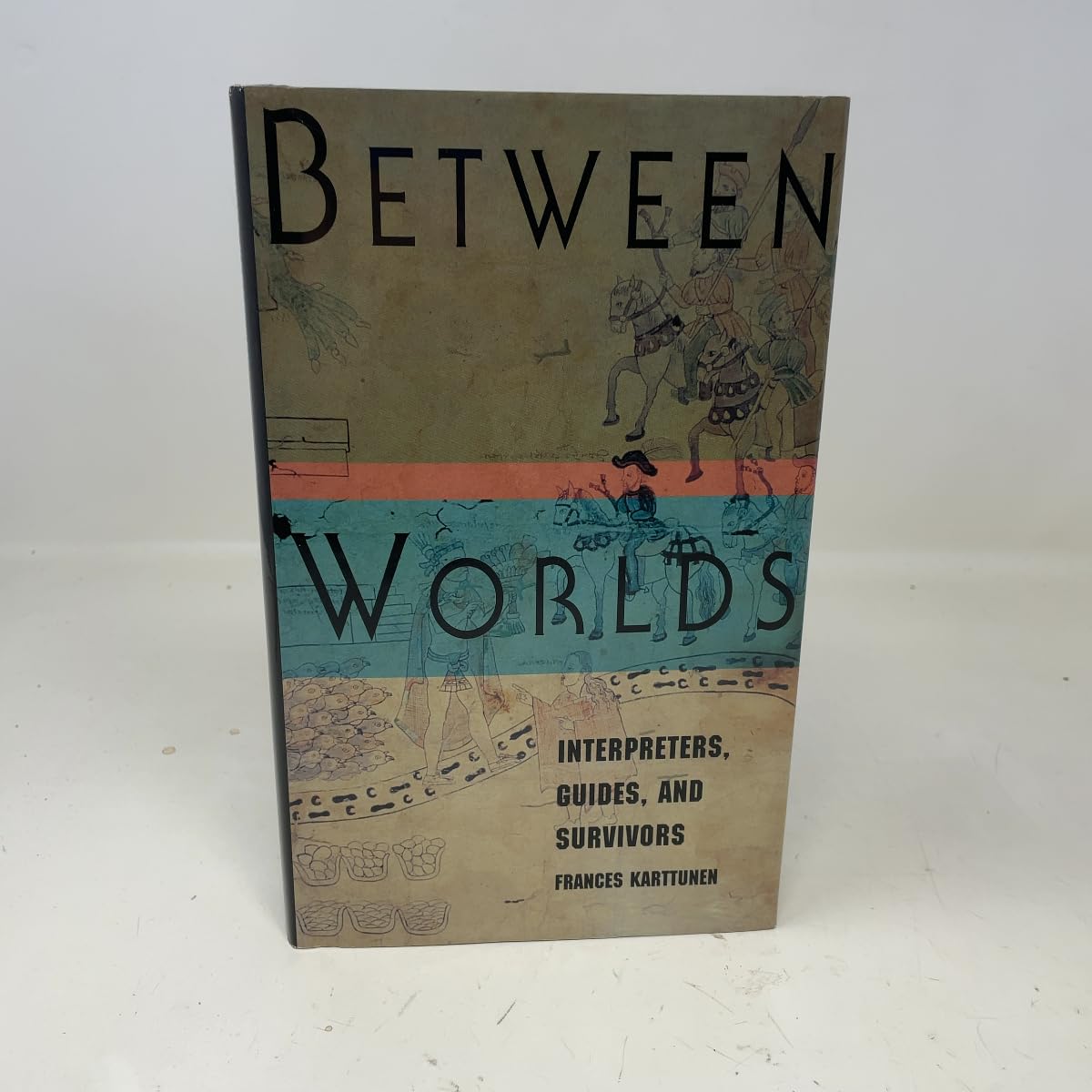



Spanning the globe and the centuries, Frances Karttunen tells the stories of sixteen men and women who served as interpreters and guides to conquerors, missionaries, explorers, soldiers, and anthropologists. These interpreters acted as uncomfortable bridges between two worlds; their own marginality, the fact that they belonged to neither world,underscores the complexity and tension between cultures meeting for the first time. The interpreters include: o Do–a Marina (La Malinche), who interpreted for Cortes in the conquest of Mexico o Sacajawea, who accompanied Lewis and Clark on their expedition o Sarah Winnemucca, a U.S. army scout and Washington lobbyist for the Northern Paiutes o Gaspar Antonio Chi, Maya Interpreter General for Yucatan o Guaman Poma de Ayala, eyewitness reporter of the destruction of Inca culture o Charles Eastman, a Sioux physician at Wounded Knee o Larin Paraske, an informant for Finnish ethnographers o Do–a Luz Jimenez, Diego Rivera’s model and a native informant to anthropologists o Mar’a Sabina, the Mazatec mushroom shaman who became a celebrity in the drug culture of the 1960s o Ishi, the last surviving Yahi Indian. Karttunen (anthropology, Univ. of Texas Linguistics Research Ctr.) describes the lives of 16 men and women who acted as guides and interpreters for explorers, missionaries, and anthropologists. Included are Dona Marina, who interpreted for Cortes; Sacajawea, who traveled with Lewis and Clark; and Charles Eastman, who was a Sioux physician at Wounded Knee. Karttunen provides succinct biographies of the selected individuals and a final chapter of her own analysis. Her primary focus is exploring how each interpreter lived on the margins of two societies. She is particularly sensitive to gender and ethnic issues but does not address the linguistics of the work that these interpreters did. Recommended as a useful addition to history and diversity collections but not for linguistics collections. - Lynne Branche Brown, Pennsylvania State Univ., University Park Copyright 1994 Reed Business Information, Inc. Karttunen profiles a group of uncommon people who worked as interpreters and guides for conquerors, explorers, and anthropologists. These men and women did more than translate language; they decoded culture and behavior and provided safe passage for men who were often more captor than employer. Do{¤}na Marina, called La Malinche, for example, served as Cortes' interpreter and spy, and even bore him a son, as he slashed his way across Mexico. Sacajawea not only interpreted for Lewis and Clark, but guided them through the wilderness and kept them alive with her skill in locating edible roots and berries. Karttunen also recounts the stories of Mayan interpreter Gaspar Antonio Chi; Larin Paraske,a Finnish folksinger who worked with anthropologists; Do{¤}na Luz Jim{}enez, a child of the Mexican Revolution who posed for muralist Diego Rivera and photographers Toni Moditti and Edward Weston; and Mar{¡}ia Sabina, who was exploited by a researcher for her knowledge of sacred mushrooms. As Karttunen profiles each of these extraordinary individuals, she emphasizes the ambivalent, if not treasonous, aspect of their role as go-between as well as their unusual intelligence and ability to function "as conduits through which information flowed between worlds in collision." Donna Seaman Karttunen (Anthropology/Linguistic Research Center, Univ. of Texas) has identified a fascinating topic in the lives and roles of interpreters, guides, and informants to missionaries, explorers, soldiers: world-bridging mediators, the ultimate aliens. Using the languages she knows and works that have survived, Karttunen presents not theory or symbols but life stories, nine in detail, seven more briefly. Dividing these into three major groups- -the guides, the civil servants, and the informants or wordsmiths- -she ranges from the earliest explorers to contemporary drug culture: the familiar Ishi, the last surviving Yahi Indian; Do¤a Marina, interpreter for Cortes in his conquest of Mexico; Sacajawea, who guided Lewis and Clark over the Continental Divide; Sarah Winnemucca, who started as a US Army Scout in the 19th century and became a lobbyist for her Native American tribe; Gaspar Antonio Chi, a 16th-century Inca who recorded the destruction of his culture; and Charles Eastman, the Sioux physician at Wounded Knee whose legacy is in the ceremonies of the Boy Scouts and the Campfire Girls. The three major native informants are especially interesting, though hardly representative of their cultures: Larin Paraske, a pitiful 19th-century migrant Finnish poet; Do¤a Luz Jimenez, model for Diego Rivera, who embodied the spirit of Mexico in his paintings and murals; and Maria Sabina, the Mazatec mushroom shaman exploited by the drug cults of the 60's. Though the book is never overtly moralistic, exploitation is its theme--the terrible price these unusual figures played for being the messengers, the spoke