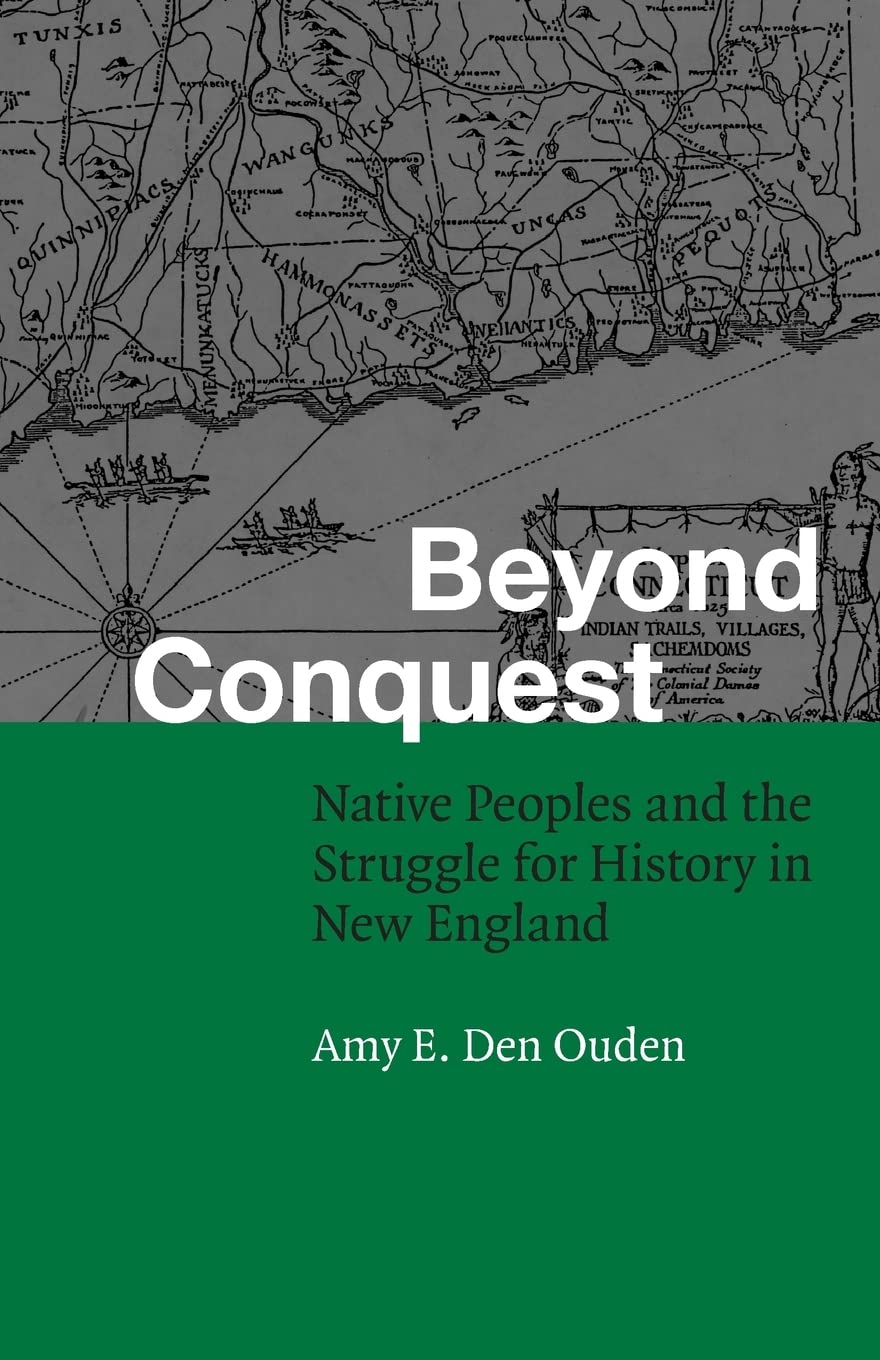
Beyond Conquest: Native Peoples and the Struggle for History in New England (Fourth World Rising)
$21.02
by Amy E. Den Ouden



By focusing on the complex cultural and political facets of Native resistance to encroachment on reservation lands during the eighteenth century in southern New England, Beyond Conquest reconceptualizes indigenous histories and debates over Native land rights. As Amy E. Den Ouden demonstrates, Mohegans, Pequots, and Niantics living on reservations in New London County, Connecticut—where the largest indigenous population in the colony resided—were under siege by colonists who employed various means to expropriate reserved lands. Natives were also subjected to the policies of a colonial government that sought to strictly control them and that undermined Native land rights by depicting reservation populations as culturally and politically illegitimate. Although colonial tactics of rule sometimes incited internal disputes among Native women and men, reservation communities and their leaders engaged in subtle and sometimes overt acts of resistance to dispossession, thus demonstrating the power of historical consciousness, cultural connections to land, and ties to local kin. The Mohegans, for example, boldly challenged colonial authority and its land encroachment policies in 1736 by holding a “great dance,” during which they publicly affirmed the leadership of Mahomet and, with the support of their Pequot and Niantic allies, articulated their intent to continue their legal case against the colony. Beyond Conquest demonstrates how the current Euroamerican scrutiny and denial of local Indian identities is a practice with a long history in southern New England, one linked to colonial notions of cultural—and ultimately “racial”—illegitimacy that emerged in the context of eighteenth-century disputes regarding Native land rights. Amy E. Den Ouden is an assistant professor of anthropology at the University of Massachusetts–Boston. Beyond Conquest Native Peoples and the Struggle for History in New England By Amy E. Den Ouden University of Nebraska Press Copyright © 2005 University of Nebraska Press All right reserved. ISBN: 978-0-8032-6658-2 Chapter One Dilemmas of Conquest Recovering Histories of Struggle In September of 1736 Mohegans held a ceremony on their reserved land to name a new leader. This land, where perhaps three hundred or more Mohegans were known to "dwell and plant" (Connecticut Archives, "Indians" [hereafter IND], 1st ser., vol. 1:122), was engulfed by the town of New London and was the remaining fragment of what had been a much larger reservation, long known to Connecticut officials as the "sequestered lands" (1:89) or the "Mohegan fields" (1:122). Three decades prior to this leadership ceremony, Mohegans initiated what became a lengthy and complex legal dispute with the colony of Connecticut in an effort to protect their reserved planting and hunting lands. In 1704 Mohegan sachem Owaneco petitioned the English Crown to complain against dispossession at the hands of the Connecticut government; by 1705 an imperial commission determined that the lands in question had been unjustly appropriated and should be restored to Mohegans. In setting this order before the colony, the decision described Mohegans as " a considerable tribe or people ... [who] cannot subsist without their lands" ( Governor and Company of Connecticut, and Mohegan Indians, by their Guardians: Certified Copy of Book of Proceedings before Commissioners of Review, 1769 [hereafter Proc. ] 1769:29, emphasis in original). This notion that the presumably conquered Indians in their midst existed as distinct political entities - as peoples who possessed an inherent and enduring right to their reserved lands - was to become a gnarly bone of contention for the Connecticut government. Indeed, in eighteenth-century Connecticut disputes over Native rights to reservation land, and reservation communities' tenacious struggles to preserve these lands, posed a challenge to colonial authority and called into question colonial notions about conquest itself. As Native women and men resisted colonial encroachment on their reserved lands, so too did they argue for the future of their communities and their collective rights to their remaining lands. Their efforts to resist dispossession in the era following the devastation wrought by European disease, the major "Indian Wars" of southern New England, and the extensive expropriation of indigenous lands during the seventeenth century were in no sense a flight of fancy. The eighteenth-century struggles of reservation communities were grounded in and produced by their own knowledge of the past and of the colonial world in which they were enmeshed. This book examines these histories of struggle and the cultural and political facets of colonial relations of domination beyond the period of military conquest. Native women and men defending their reservations against encroachers and colonial pillaging of their ever-diminishing economic resources well understood the tenuousness