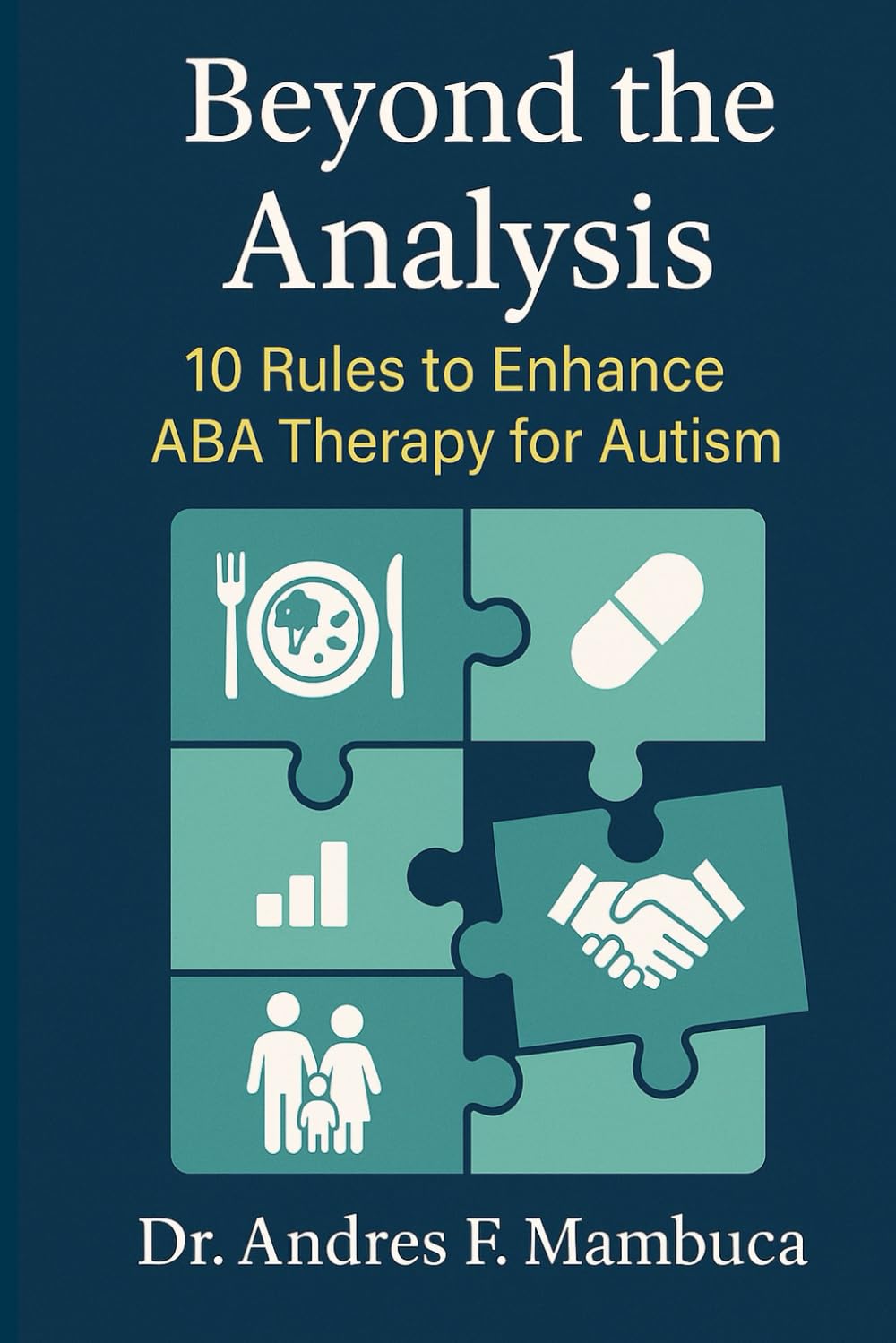
Beyond the Analysis: 10 Rules to Enhance ABA Therapy for Autism
$14.99
by Dr. Andres F. Mambuca



Autism is not merely a neurological condition—it is a unique way of being in the world. It is a different way of feeling, processing, learning, and relating to reality. In the face of this neurocognitive diversity, clinical interventions must be not only effective, but also deeply respectful, humane, and adaptive. Applied Behavior Analysis (ABA) has, for decades, been one of the most empirically supported interventions in the treatment of autism spectrum disorder. However, its successful implementation does not rely solely on following protocols or applying techniques, but on understanding the child as a whole: their body, their context, their family, their biological rhythms, and their emotional interests. This book emerges at the crossroads of science and everyday clinical practice—between evidence and empathy. Here, you will find ten essential rules that complement and expand ABA treatment by integrating often-overlooked factors such as nutrition, supplementation, family involvement, the sensory environment, rest, and autonomy. Each chapter combines theoretical foundations, clinical examples, and practical tools. It is written for professionals, caregivers, and therapists who seek a more humane, flexible, and adaptive approach—those who wish to intervene without imposing, to guide without controlling, and to teach without suppressing the child’s uniqueness. Beyond the analysis, there are real children—with bodies that feel, families that fight, and therapists that accompany. This book is an invitation to listen more carefully, to measure more meaningfully, to intervene ethically, and above all, to transform treatment into a shared path of growth and understanding.