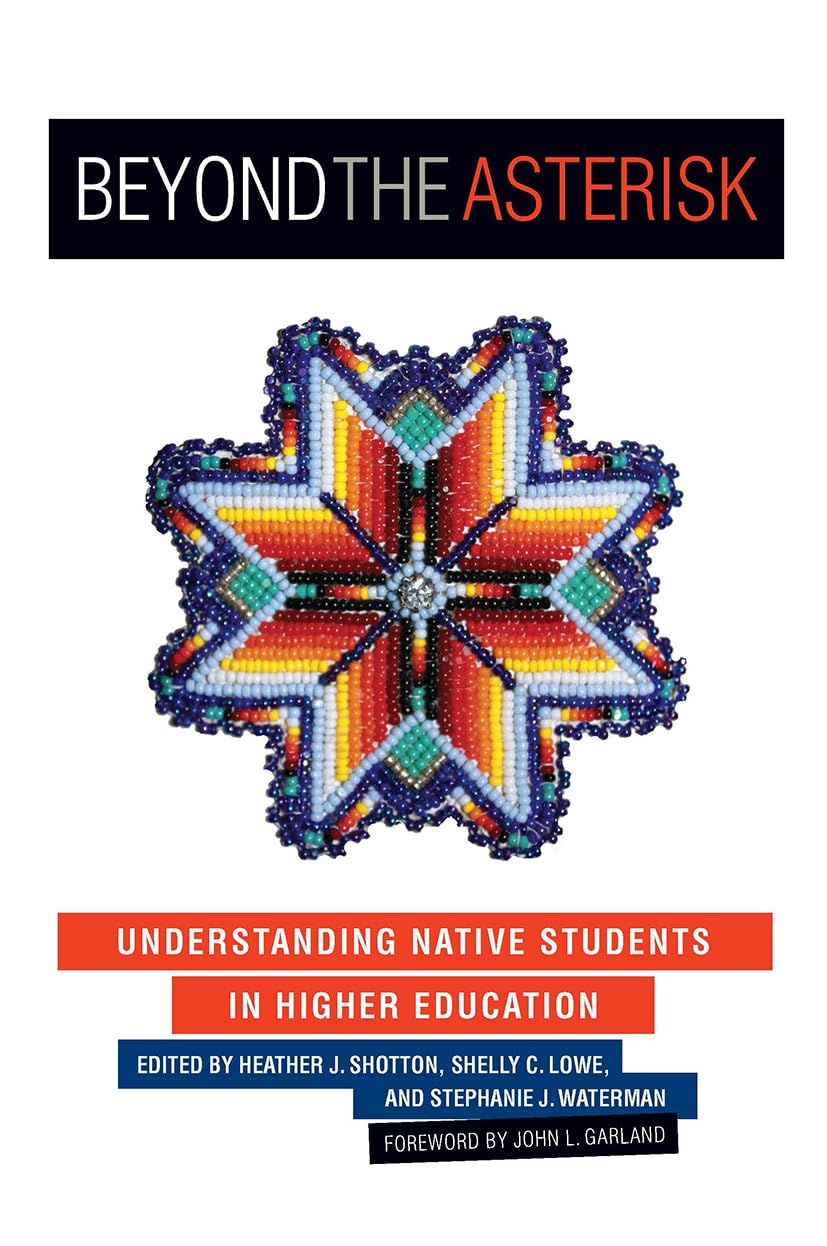
Beyond the Asterisk: Understanding Native Students in Higher Education
$42.39
by Heather J. Shotton



A Choice Outstanding Academic Title for 2013While the success of higher education and student affairs is predicated on understanding the students we serve, the reality is, where the Native American population is concerned, that this knowledge is generally lacking. This lack may be attributed to this population’s invisibility within the academy – it is often excluded from institutional data and reporting, and frequently noted as not statistically significant – and its relegation to what is referred to as the “American Indian research asterisk.”The purpose of this book is to move beyond the asterisk in an effort to better understand Native students, challenge the status quo, and provide an informed base for leaders in student and academic affairs, and administrators concerned with the success of students on their campuses.The authors of this book share their understanding of Native epistemologies, culture, and social structures, offering student affairs professionals and institutions a richer array of options, resources, and culturally-relevant and inclusive models to better serve this population. The book begins by providing insights into Native student experiences, presenting the first-year experience from a Native perspective, illustrating the role of a Native living/learning community in student retention, and discussing the importance of incorporating culture into student programming for Native students as well as the role of Native fraternities and sororities.The authors then consider administrative issues, such as the importance of outreach to tribal nations, the role of Tribal Colleges and Universities and opportunities for collaborations, and the development of Native American Student Services Units..The book concludes with recommendations for how institutions can better serve Native students in graduate programs, the role that Indigenous faculty play in student success, and how professional associations can assist student affairs professionals with fulfilling their role of supporting the success of Native American students, staff, and faculty. This book moves beyond the asterisk to provide important insights from Native American higher education leaders and non-Native practitioners who have made Native students a priority in their work.While predominantly addressed to the student affairs profession – providing an understanding of the needs of the Native students it serves, describing the multi-faceted and unique issues, characteristics and experiences of this population, and sharing proven approaches to developing appropriate services – it also covers issues of broader administrative concern, such as collaboration with tribal colleges; as well academic issues, such as graduate and professional education. The book covers new material, as well as expanding on topics previously addressed in the literature, including Native American Greek organizations, incorporating Native culture into student programming, and the role of Native American Special Advisors. The contributors are themselves products of colleges and universities where Native students are too often invisible, and who succeeded despite the odds. Their insights and the examples they provide add richness to this book. It will provide a catalyst for new higher education practices that lead to direct, and increased support for, Native Americans and others who are working to remove the Native American asterisk from research and practice. “Beyond the Asterisk is conceptualized as a tool for action in that it provides examples of successful student support practices and illustrations of responsive programming for Native American/Alaska Native/Indigenous students in higher education. Beyond the Asterisk is much needed for moving with intentionality to action that addressed the challenges and problems that currently exist for these students in higher education. “Readers will feel invited by these Native scholars to witness or engage in the issues from a Native perspective and will even be tutored in that way of seeing and doing by the unapologetic use of concepts and language. “I found this approach necessary if non-Native educators like me are to begin to reframe issues and dilemmas in culturally appropriate ways. If so, then Native/Indigenous students’ dilemmas and issues might then be addressed by non-Native educators in a multiculturally competent manner.” The Review of Higher Education, The Journal of the Association for the Study of Higher Education "Editors Shotton, Lowe, and Waterman accomplish their goal of moving Native American college Students "beyond the asterisk." This must-read text challenges academicians to go beyond the "American Indian research asterisk": exclusion from institutional data and reporting, omission from the curriculum, and nonexistence in research and literature. No longer should Native students be invisible in the academy. The contributors explore ways in which higher education professionals and institutions can serve