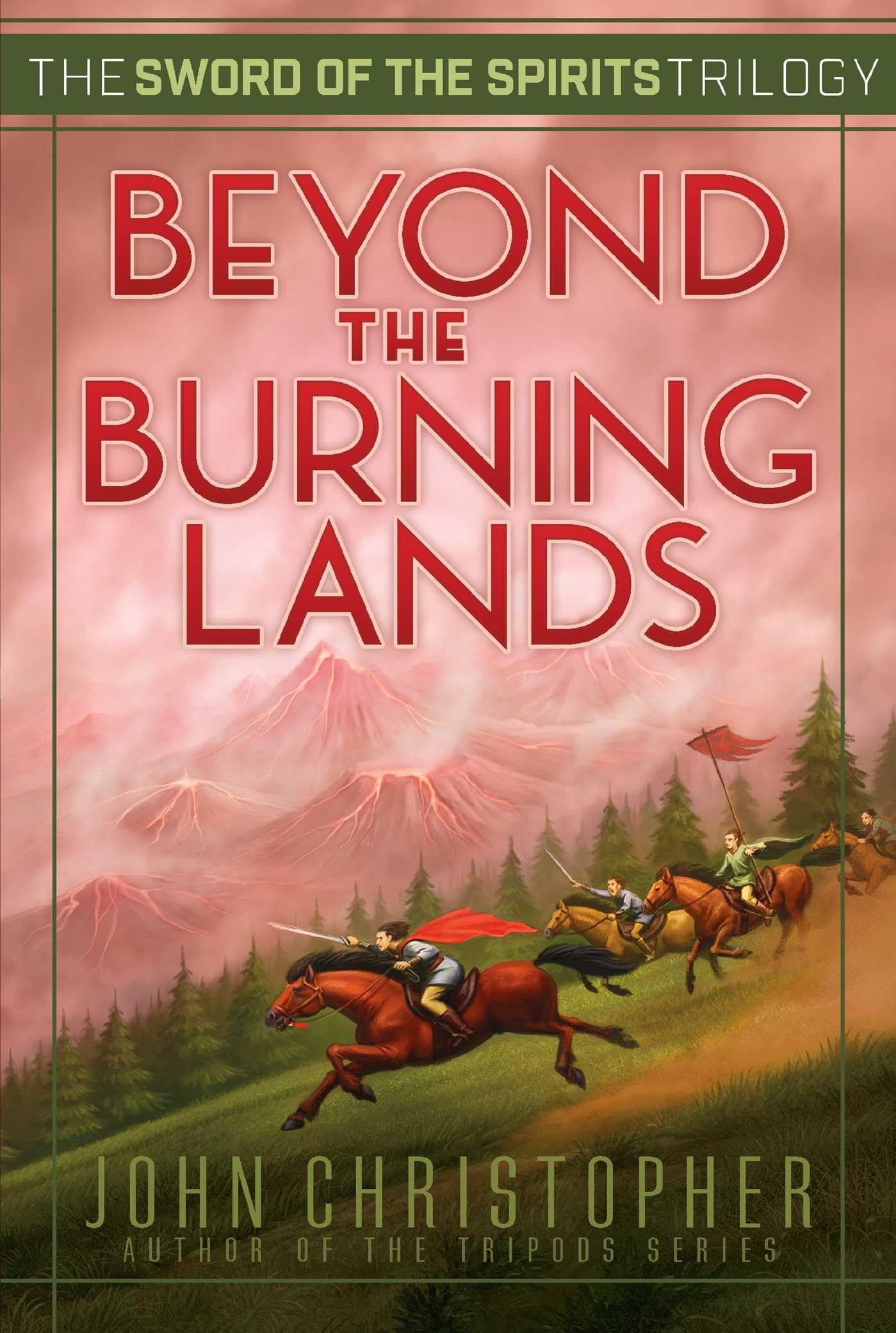



Luke encounters rage, treachery, and revenge in the second book in the post-apocalyptic Sword of the Spirits trilogy from the author of The Tripods series. As the Prince in Waiting, Luke has been protected by the High Seers since his father’s murder and his half-brother’s ascension to the throne of Winchester. But after hiding for months in the underground Sanctuary, Luke discovers a shocking secret: in a world where mechanical devices have been forbidden, the Seers themselves are secret technologists. Now restless, Luke seizes the chance to explore the world around him. His quest leads him to unimaginable dangers and unexpected delights...but the most dangerous part of his journey awaits him at home. John Christopher was the pseudonym of Samuel Youd, who was born in Lancashire, England, in 1922. He was the author of more than fifty novels and novellas, as well as numerous short stories. His most famous books include The Death of Grass , the Tripods trilogy, The Lotus Caves , and The Guardians . Beyond the Burning Lands ONE OUT OF SANCTUARY THE SANCTUARY ITSELF LAY IN empty downland; ordinary men did not dare approach such a holy place. The nearest habitation was at Amesbury in the Avon Valley, three miles to the east, and it was there that the white horses were kept, on which the High Seers, when they had reason to travel abroad, would ride forth. The horses were housed in the stables of the Seer of Amesbury, who at the proper time gave orders to the grooms to have them saddled and made ready for the journey. To the townspeople this was evidence of the magic of the Spirits which was at the Seer’s command. For how, except by magic, could the Seer of Amesbury know when the High Seers required their mounts? No messenger had come across the empty land to the west, and the Seer had no pigeons. Plainly the Spirits had brought him word in the hushed darkness of the Seance Hall where the Seer and his Acolytes conducted their devotions. Such was the townspeople’s belief and the Seers were happy to encourage it. In fact communication was by radio. The main transmitter was underground in the Sanctuary, with a cunningly concealed wire leading to an aerial on top of one of the huge monoliths that stood in a broken circle above. The subsidiary set was in a heavily locked room in the Seer’s House to which only the Seer and his chief Acolyte had the key. Because radios, of course, were machines, and machines were forbidden by the Spirits, anyone building or using one was punishable by death. This was by the command of the Seers themselves. My initial shock at learning the truth about the Seers had been great, but during the months in which I had lived in the Sanctuary I had grown accustomed to it. I had come there from Winchester where, following my father’s treacherous murder by the Prince of Romsey, my half-brother Peter had won back the city and claimed the title of Prince. It was I, Luke, who, though younger, had been my father’s heir, named as Prince in Waiting by the Spirits and promised great glory when the time came for me to rule. The blow of learning that the Spirits, since they did not exist, could not keep their promises had been bitter. Instead the High Seers unfolded what was, they said, a higher mission. We lived in the ruins of a world that had once been great. Men thought our ancestors had shattered the planet with the machines which were now forbidden. This was not so. The disaster that took place had been a natural one. The earth had heaved itself up in earthquakes and volcanoes and at the same time the sun had poured forth radiations which altered the pattern of living things, creating strange plants and animals—polybeasts—and often causing men and women to be born misshapen. In civilized lands beasts and plants were destroyed if they did not breed true. Human children were permitted to live but, if they were not true men, were called dwarf or polymuf. The dwarfs were a breed apart and respected as craftsmen. Polymufs might have any manner of deformity; they lived as servants and could hold no property. Spiritism had sprung up in the dark days after the world crashed into ruins. Those who survived had turned against machines, and the science which had produced them, thinking them responsible for the Disaster. The Seers had taken over the trappings of Spiritism, finding men’s belief in the Spirits and in the strange happenings that took place in the darkened Seance Halls a useful means of controlling them, and the revulsion against machines was part of this. For the present it had to be accepted. But the time in which a change might be made was growing short. Recovery even to a primitive form of civilized life had been precarious. The concentration of volcanic dust in the air made winters longer and harder, and brought more pressure from savages in outlying lands. The little which had been regained could easily be lost. It seemed to the Seers that the first and essential need was t