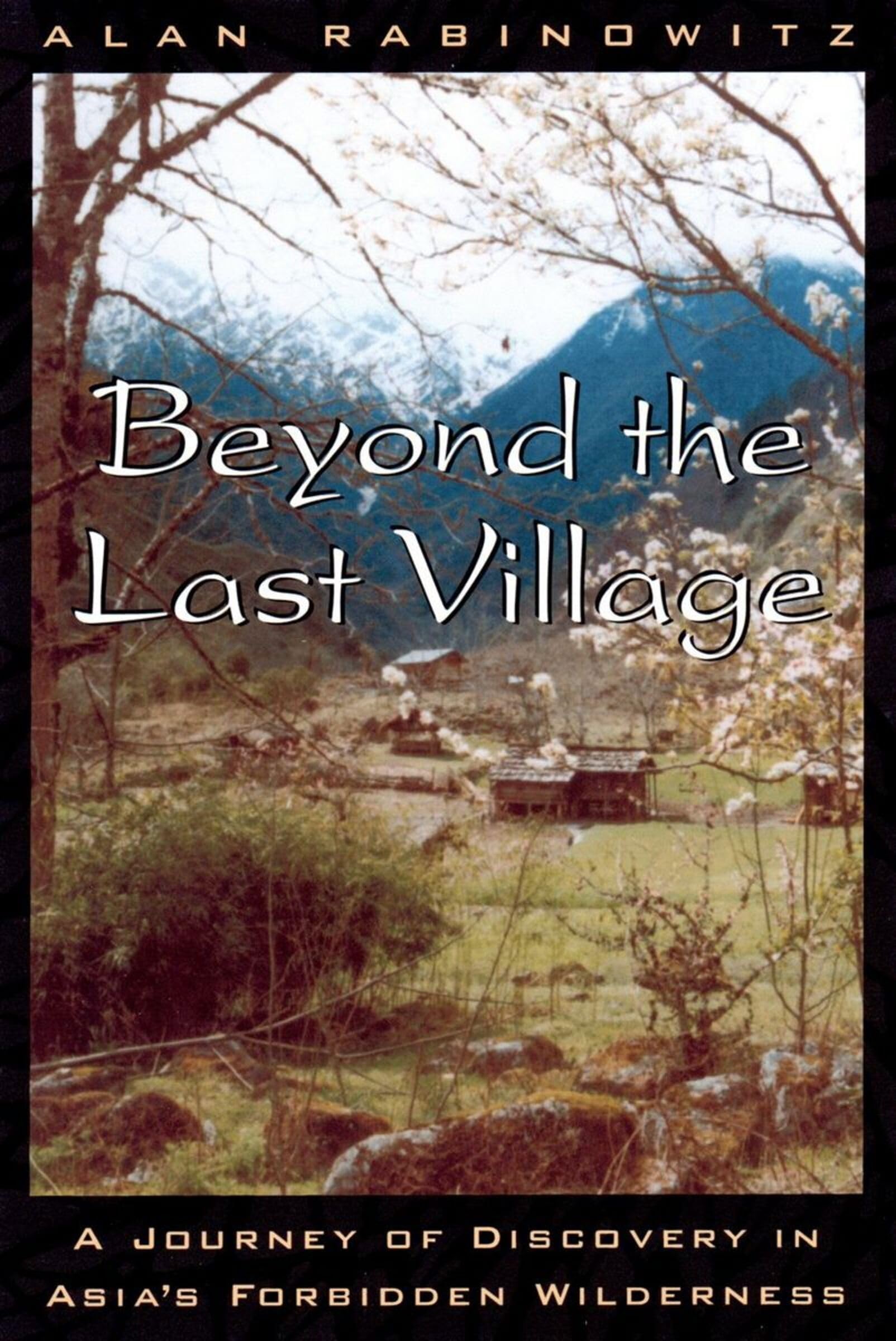
Beyond the Last Village: A Journey Of Discovery In Asia's Forbidden Wilderness
$15.26
by Alan Rabinowitz



In 1993, Alan Rabinowitz, called "the Indiana Jones" of wildlife science by The New York Times , arrived for the first time in the country of Myanmar, known until 1989 as Burma, uncertain of what to expect. Working under the auspices of the Wildlife Conservation Society, his goal was to establish a wildlife research and conservation program and to survey the country's wildlife. He succeeded beyond all expectations, not only discovering a species of primitive deer completely new to science but also playing a vital role in the creation of Hkakabo Razi National Park, now one of Southeast Asia's largest protected areas. Beyond the Last Village takes the reader on a journey of exploration, danger, and discovery in this remote corner of the planet at the southeast edge of the Himalayas where tropical rain forest and snow-covered mountains meet. As we travel through this "lost world" -- a mysterious and forbidding region isolated by ancient geologic forces -- we meet the Rawang, a former slave group, the Taron, a solitary enclave of the world's only pygmies of Asian ancestry, and Myanmar Tibetans living in the furthest reaches of the mountains. We enter the territories of strange, majestic-looking beasts that few people have ever heard of and fewer have ever seen -- golden takin, red goral, blue sheep, black barking deer. The survival of these ancient species is now threatened, not by natural forces but by hunters with snares and crossbows, trading body parts for basic household necessities. The powerful landscape and unique people the author befriends help him come to grips with the traumas and difficulties of his past and emerge a man ready to embrace the world anew. Interwoven with his scientific expedition in Myanmar, and helping to inform his understanding of the people he met and the situations he encountered, is this more personal journey of discovery. "...often reads like a dispatch not just from a distant place but from a distant time, a letter home from the Age of Discovery that was somehow delayed in transit for a couple of centuries." ― The New York Times Book Review "It feels like Conrad's Heart of Darkness in reverse, as he escapes the 'civilisation' of a brutal military regime to find peace and light in the farthest lands." ― The Guardian Alan Rabinowitz is CEO of Panthera Foundation. Educated at the University of Tennessee, with degrees in zoology and wildlife ecology, Dr. Rabinowitz has traveled the world on behalf of wildlife conservation and has studied jaguars, clouded leopards, Asiatic leopards, tigers, Sumatran rhinos, bears, leopard cats, raccoons, and civets. His work in Belize resulted in the world’s first jaguar sanctuary; his work in Taiwan resulted in the establishment of that country’s largest protected area, its last piece of intact lowland forest; his work in Thailand generated the first field research on Indochinese tigers, Asiatic leopards, and leopard cats, in what was to become the region’s first World Heritage Site; and his work in Myanmar has led to the creation of five new protected areas there: the country’s first marine national park, the country’s first and largest Himalayan national park, the country's largest wildlife sanctuary, and the world’s largest tiger reserve. Dr. Rabinowitz has authored nearly eighty scientific and popular articles and six books, including Jaguar: One Man’s Struggle to Establish the First Jaguar Preserve (1986/2000), Chasing the Dragon’s Tail: The Struggle to Save Thailand’s Wild Cats (1991/2002), and Beyond the Last Village: A Journey of Discovery in Asia’s Forbidden Wilderness New York Times, National Geographic Adventure Magazine, Outside Magazine, Scientific American , Men’s Fitness, GEO, Natural History , and Audubon . He has been featured in television specials by the National Geographic Society and the BBC, and recently consulted on an IMAX film project about tigers in the Sundarbans of Bangladesh and India. Excerpt As soon as I entered the hut, the man sitting by the fire turned away from me.He had known I was coming. Two Taron women, his older and younger sisters, stoodbeside him. As Khaing worked with the translator to ask the women questions, Isat down beside the man, sipping tea and looking into the fire. Out of thecorner of my eye, I saw him cast furtive glances toward me. I waited. I reached for the teapot sitting in the fire, forgetting that my hands were notas work-hardened as those of the villagers whom I'd watched do this many times."Yow!" I hollered, dropping the pot, spilling the tea, and spraying myself withhot ashes. "Damn," I said, pounding out the smoking embers that were burningholes in my clothes. Suddenly, I heard the strangest sound and turned. The Taronman was now facing me, rocking back and forth, cackling with high-pitchedlaughter. Unwittingly, I had broken the ice between us. His name was Dawi and, at 39, this stocky, impish-looking man was the youngestof the surviving Taron in Myanmar. He an