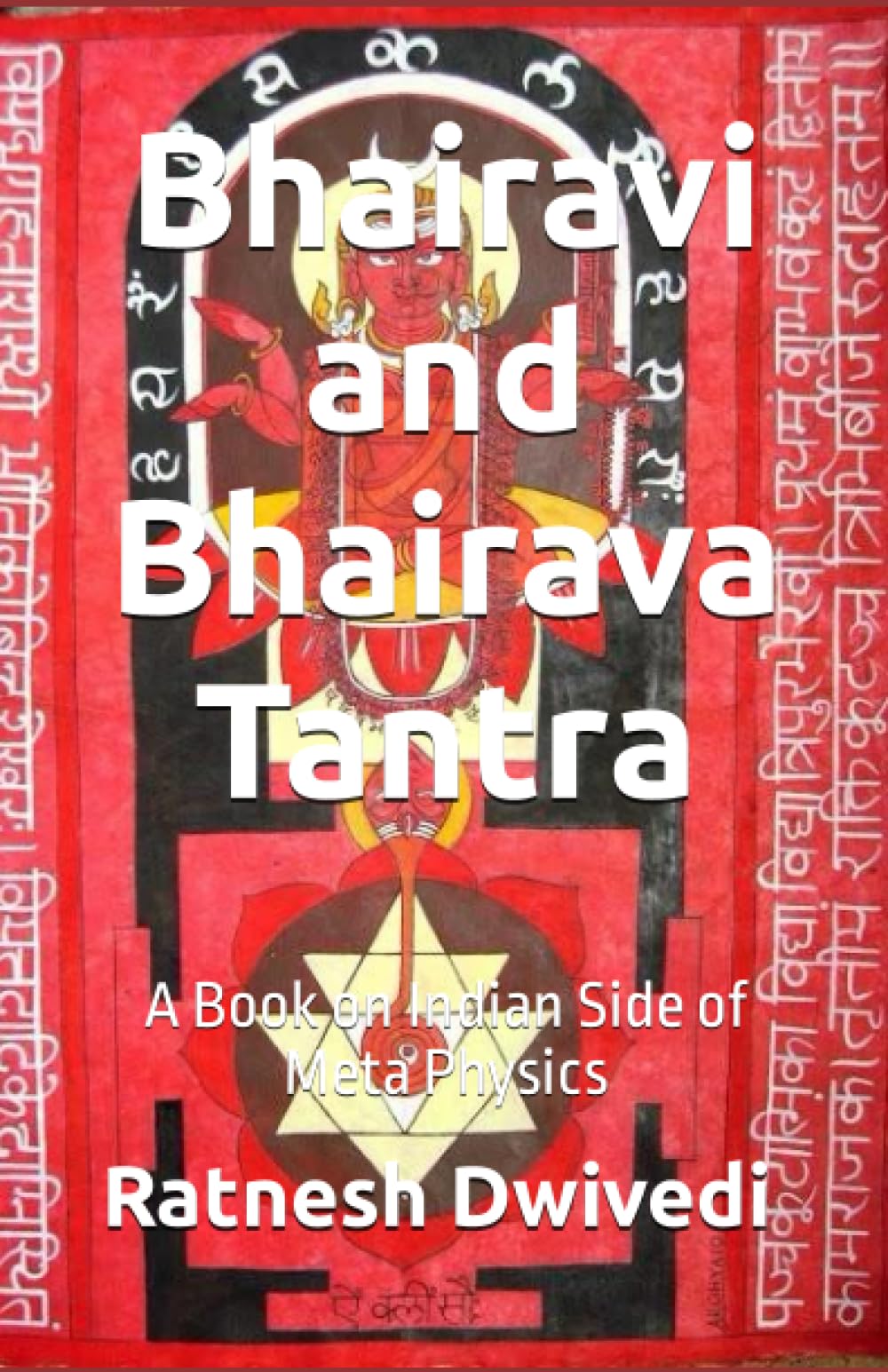
Bhairavi and Bhairava Tantra: A Book on Indian Side of Meta Physics
$7.00
by Ratnesh Dwivedi



As Sundari resides in the three paras, or planes of awareness, existence and bliss, so does Bhairavi„ The difference lies only in the different spectral region of the sound one concentrates on. Bhairavi is the low frequency vibrations and currents felt rather than heard, and the revelations flowing from awareness there in. These low frequency currents which are like the ebb and tide of the ocean, can be felt in the loins. Muladhar, the ejaculatory nerve bundle in the male and the cervix in the female are the centres where awareness has to be, for Bhairavi upasana. In Kali upasana, the focus is on anger. In Sundari upasana, the focus is switching between knowledge, affection and action. In Bhairavi upasana, there is only one centre and one mood. The centre is muladhar and the mood is enjoyment, ananda, rasa of coitus. In Sundari, manolaya takes place at Brahmarandhra. Bhairavi, elimination of the mind takes place at Muladhar. Her mantra is - Hsraim Hsklrim Hsrsauh Just as in Sundari, the three parts of the mantra are called respectively -the vagbhava, kamaraja and sakti kutams. This is the mantra used in invoking Sundari in prana pratishta. There is no difference between Sundari and Bhairavi except in their centering.