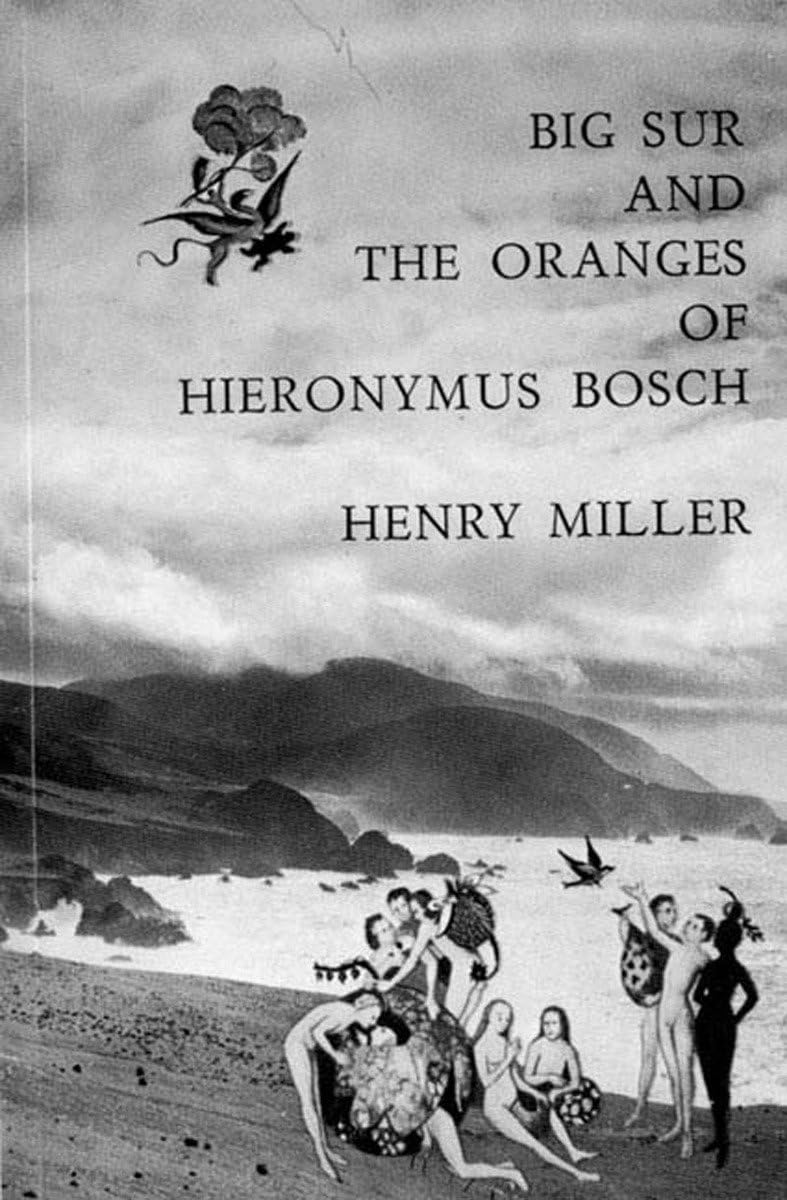



In his great triptych “The Millennium,” Bosch used oranges and other fruits to symbolize the delights of Paradise. Whence Henry Miller’s title for this, one of his most appealing books; first published in 1957, it tells the story of Miller’s life on the Big Sur, a section of the California coast where he lived for fifteen years. Big Sur is the portrait of a place―one of the most colorful in the United States―and of the extraordinary people Miller knew there: writers (and writers who did not write), mystics seeking truth in meditation (and the not-so-saintly looking for sex-cults or celebrity), sophisticated children and adult innocents; geniuses, cranks and the unclassifiable, like Conrad Moricand, the “Devil in Paradise” who is one of Miller’s greatest character studies. Henry Miller writes with a buoyancy and brimming energy that are infectious. He has a fine touch for comedy. But this is also a serious book―the testament of a free spirit who has broken through the restraints and clichés of modern life to find within himself his own kind of paradise. "The only imaginative prose-writer of the slightest value who has appeared among the English-speaking races for some years past." ― George Orwell "American literature today begins and ends with the meaning of what Miller has done." ― Lawrence Durrell "[A] large scale book written with the skill in essay/fictional writing that will help it remain a classic for years to come." ― Innovative Fiction Magazine Henry Miller (1891―1980) was one of the most controversial American novelists during his lifetime. His book, The Tropic of Cancer , was banned in the some U.S. states before being overruled by the Supreme Court. New Directions publishes several of his books. trade paperback