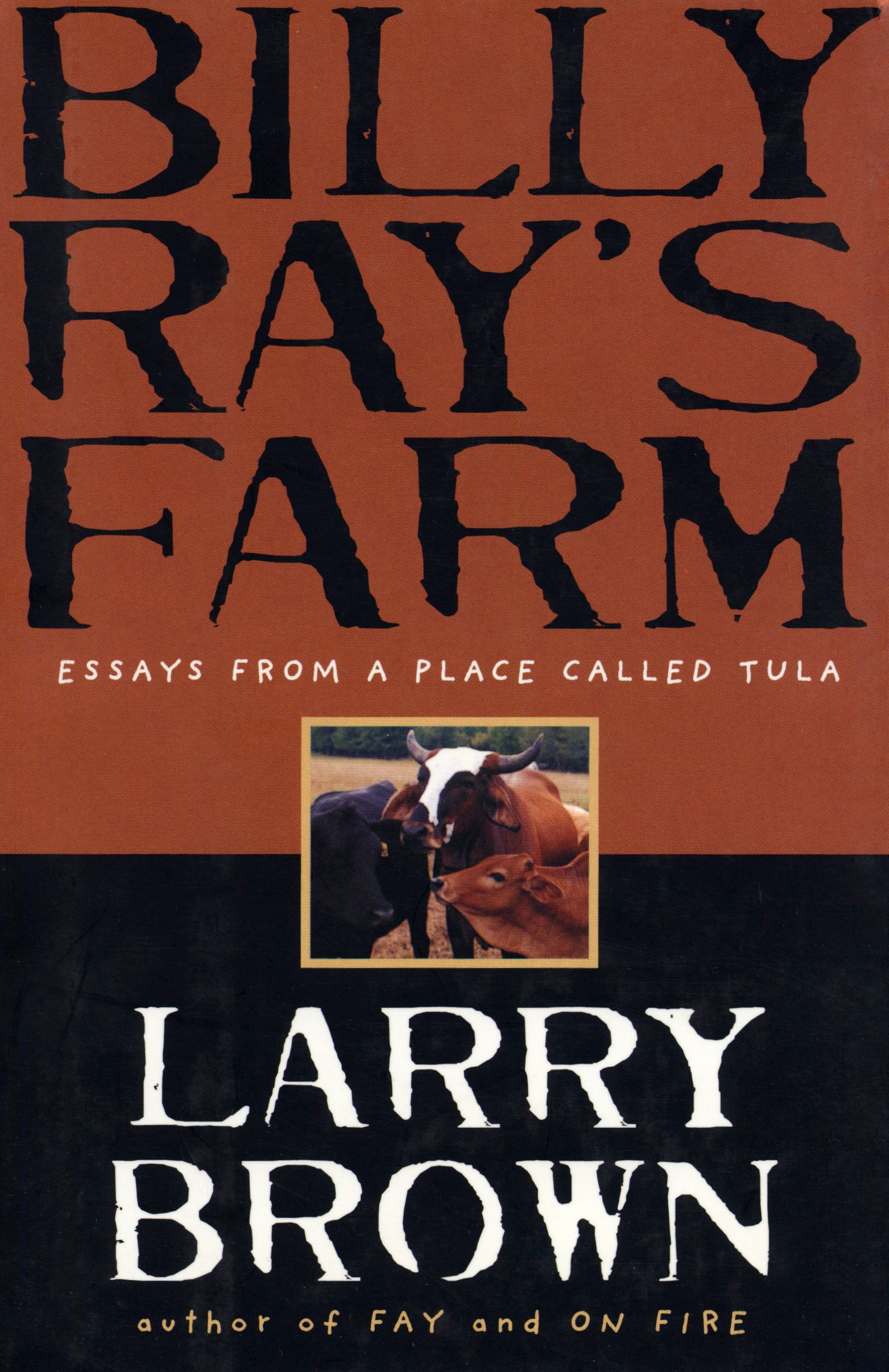



In his first work of nonfiction since the acclaimed On Fire , Brown aims for nothing short of ruthlessly capturing the truth of the world in which he has always lived. In the prologue to the book, he tells what it's like to be constantly compared with William Faulkner, a writer with whom he shares inspiration from the Mississippi land. The essays that follow show that influence as undeniable. Here is the pond Larry reclaims and restocks on his place in Tula. Here is the Oxford bar crowd on a wild goose chase to a fabled fishing event. And here is the literary sensation trying to outsmart a wily coyote intent on killing the farm's baby goats. Woven in are intimate reflections on the Southern musicians and writers whose work has inspired Brown's and the thrill of his first literary recognition. But the centerpiece of this book is the title essay which embodies every element of Larry Brown's most emotional attachments-to the family, the land, the animals. This is a book for every Larry Brown fan. It is also an invaluable book for every reader interested in how a great writer responds, both personally and artistically, to the patch of land he lives on. In the prolog to this collection of essays, Brown (Fay, On Fire, Big Bad Love) states, "You can't pick where you're born or raised. You take what you're given, whether it's the cornfields of the Midwest or the coal mines of West Virginia, and you make your fiction out of it. It's all you have. And somehow, wherever you are, it always seems to be enough." His essays underscore this sense of place with descriptions of life on his land near Oxford, MI. These essays read much like good fiction. They offer intrigue (will he get the free fish as part of the big deal on the spillway at Enid Reservoir or bag the coyote that has torn open the throats of their baby goats?), humor (holding the tail of his son's young Holstein bull while they try to get it into the pasture at Billy Ray's farm), and experience (with mentors, literary conferences, and book-signing tours). Recommended for all libraries. Sue Samson, Univ. of Montana Lib., Missoula Copyright 2001 Reed Business Information, Inc. Brown, an ex-marine and ex-fireman who hails from Faulkner's hometown of Oxford, Mississippi, brings a somewhat different voice to modern southern writing, which is exemplified in this latest collection of essays. Like his fiction, the author's essays are often startling, maybe a bit brusque, yet his smooth narrative style keeps the reader's attention until the end. Whether the subject is a heifer giving birth or something more mundane, such as a book signing, Brown's take on the subject is unique and highly readable. As the author of seven previous books and the recipient of many awards, he has been garnering a lot of press lately, so librarians may want to have a copy or two on hand. Kathleen Hughes Copyright © American Library Association. All rights reserved "Brown is the real thing." -- The Washington Post "Brown makes us care about these rural days and nights - and the people who pass through them." -- Southern Living "Brown's muscular sentences hold us in the intensity of the moment...forceful description with unexpected tenderness." -- Atlanta Journal Constitution "Equal parts Henry David Thoreau and long-suffering Job." -- Minneapolis Star Tribune "Like his novels, Brown's essays are built out of small, often raw details." -- USA Today "Read this book. Read it for its emotional honesty and humor..." -- The Roanoke Times Here, in nine stunning pieces, Larry Brown aims for nothing short of ruthlessly capturing the truth of the geography that shaped him and his art. He tells what it's like to be constantly compared with William Faulkner, a writer whom he shares the undeniable inspiration of the Mississippi land. Here is the pond Larry reclaims and restocks on his place in Tula. Here is the Oxford bar crowd on a wild goose chase t a fabled fishing event. Here is the literary sensation trying to outsmart a wily coyote intent on killing the farm's baby goats. And here, overlooking the pond, is the writing cabin built with the writer's own hands. Woven in are intimate reflections on the Southern musicians and writers whose work has inspired Brown's and the thrill of his first literary recognition. But the centerpiece of this book is the long title essay, which embodies every element of Larry Brown's most emotional attachments - to the family, the land, the animals. It is a beautiful and important expression of the mysterious sources of a writer's motivation. This is an invaluable book for every reader interested in how a great writer responds, both personally and artistically, to the patch of land he lives on. Here, in nine stunning pieces, Larry Brown aims for nothing short of ruthlessly capturing the truth of the geography that shaped him and his art. He tells what it's like to be constantly compared with William Faulkner, a writer whom he shares the unde