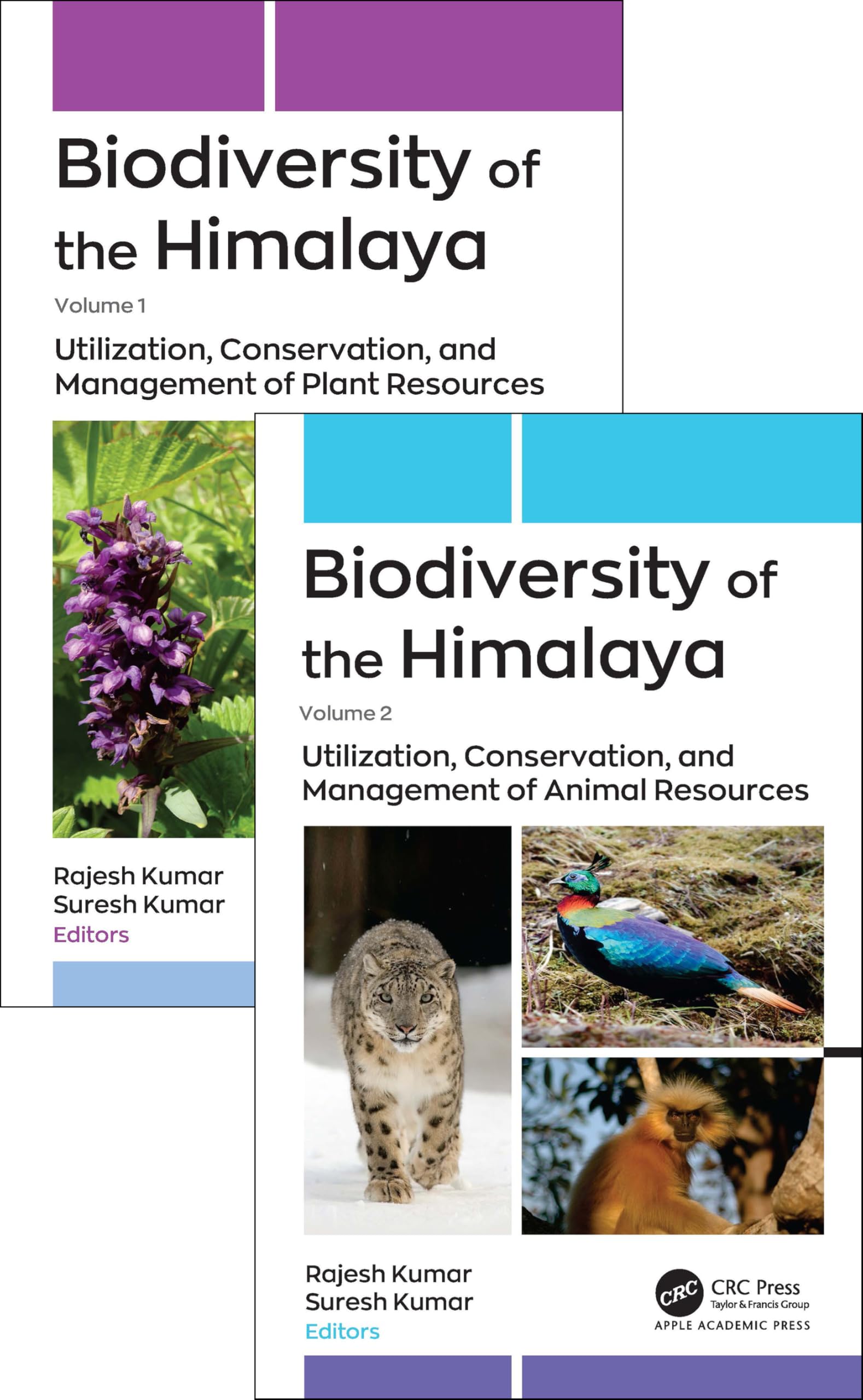



This new two-volume set pays tribute to the incredibly diversified Himalaya. It presents and assesses the various threats and challenges to Himalayan biodiversity while also documenting the multifaceted approaches for conservation and sustainable management of biological resources in the Himalayan region. Volume 1: Utilization, Conservation, and Management of Plant Resources focuses on the flora of the area, exploring the diversity, distribution, utilization, threat status, and conservation of medicinal, edible, and other economic plant resources of the region. The chapters consider the impact of traditional as well as scientific knowledge on the conservation of floral wealth in the region and recognizes the importance of maintaining and preserving the plant diversity. The chapters cover diverse topics, including the traditional medicinal uses, pharmacological activity, and phytochemistry of selected plants and mushrooms. The book also proposes several biotechnological interventions and propagation strategies for some endangered plants. The threats posed by non-native invasive plants to the region’s diverse biodiversity are examined as well, as is the very real and destructive impact of climate change. Conservation and management strategies for endangered plants of the Himalaya are also covered. Volume 2 focuses on the utilization, conservation, and management of animal resources in the Himalayan region. Chapters cover traditional knowledge of insects and animals for food and medicinal purposes. The rich faunal biodiversity of the region is vulnerable to a number of threats. Discussed in the volume are adverse changing climatic conditions; the overuse of chemical and synthetic pesticides; eco-tourism, wildlife tourism, and hunting tourism; radiation from cell phone towers; invasive/alien animal and plant species; habitat destruction; etc., and how they impact the region. Sustainable mitigation and conservation strategies are described as well, offering hope for preservation of the rich biodiversity of the Himalaya. The information in these volumes will be an invaluable asset for economic botanists, horticulturists, plant breeders, ethnobotanists, biotechnologists, environmentalists, policy planners, and laymen alike interested in understanding and preserving the abundant biodiversity of the Himalaya. “Rich and diverse in content . . . presents an extensive range of chapters on different key aspects associated with Himalayan plant diversity . . . considering the rich floristic diversity, high endemism, and vulnerability to the emerging threats to these ecologically fragile and sensitive ecosystems . . . A detailed account on existing studies with reference to floristics, ecology of habitats, the status of medicinal and threatened species . . . A wonderful endeavor.” ―From the Foreword by Anil Prakash Joshi, PhD , Founder, Himalayan Environmental Studies and Conservation Organization (HESCO), Dehradun, India Rajesh Kumar, PhD , is an Assistant Professor in the Department of Biosciences at Himachal Pradesh University, Summerhill, Shimla, India. With over 10 years of experience in teaching and research, Dr. Kumar has been teaching animal physiology and applied zoology to postgraduate students and also supervises PhD, MPhil, and MSc students for their research work. His own research activities also include environmental toxicology, waste management, and the impact of environmental degradation on animal physiology. He is an expert lecturer at beekeeping training/extension activities. Dr. Kumar has successfully completed two major research projects and two startup projects sponsored by government agencies and has published many research articles, book chapters, abstracts, and conference papers as well as several books and monographs. He has successfully organized about 20 seminars and conferences and delivered more than 30 invited talks and extension lectures in different institutions. He has received a fellowship for the year 2009-2011 from the University Grants Commission for working on honey/honeybees. He is a life member of the Indian Science Congress, National Bee Board, Applied Zoologists Research Association, and Society for Science & Environmental Excellence, and an affiliate member of the International Society of Zoological Sciences. Dr. Kumar is a fellow of Himalayan Science and Technology. He has earned 12 awards for his excellent research in honeybees/physiology to date. Dr. Kumar is also a reviewer of several journals of national and international repute. Dr. Kumar earned his master’s degree and PhD in Zoology at Jiwaji University, India. Suresh Kumar, PhD , is presently working as an Associate Professor in the Department of Bio-Sciences, H.P. University, Shimla, India. He has more than 12 years of experience in teaching as well as research. His thrust areas include floristics, ethnobotany, and biodiversity. Dr. Kumar has published 10 books and more than 20 research papers in various journals of nat