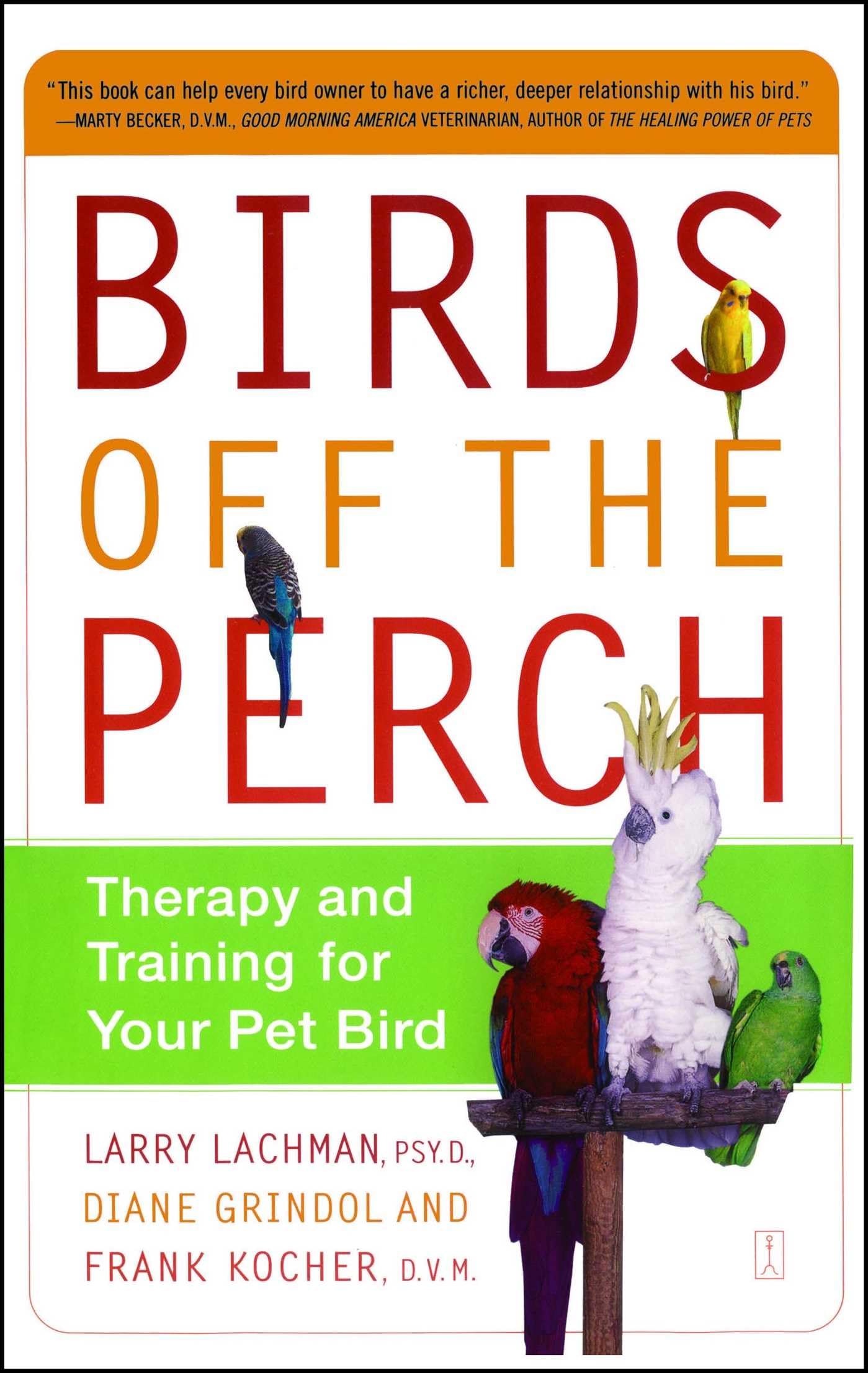



You love your pet bird, even when he misbehaves, but how can you train him with compassion? Birds off the Perch proves that rewarding good behavior is kinder and more effective than traditional discipline through punishment. This revolutionary approach combines the expertise of an animal behaviorist, a companion parrot consultant and a veterinarian who use "family therapy techniques" -- such as learning to respect the bird's boundaries and viewing sibling rivalry in a broad, environmental context -- to help you change the mischievous behavior of domesticated birds, including: Biting or aggression Screaming Sibling/bird rivalry Jealousy toward its human flock members, and Feather plucking With additional chapters on choosing the right species for your family, breeding behavior and the appropriate medical care for your bird, Birds off the Perch is the only guide you'll need to keep your pet birds healthy and happy. Marty Becker, D.V.M. Good Morning America Veterinarian, author of The Healing Power of Pets This book can help every bird owner to have a richer, deeper relationship with his bird. Laura Pasten, D.V.M. veterinarian to Morris, the 9-Lives cat, author of Tarantula Whisperer Bird lovers should flock to this book...a must-have for all who treat, sell or are guardian to a bird. Susan Marino, R.N. founder of Angels Gate Hospice and Rehabilitation Center for Animals Lachman, Grindol and Kocher are a winning combination, addressing the issues of body, mind and spirit of companion birds...a must-read. Larry Lachman, PsyD, is an animal behavior consultant specializing in dog, cat, and pet bird behavior. He was the Social Cat Columnist for Cat Fancy and lives in Monterey, California. Chapter One Birds of a Feather Fly Together Picking the Right Bird for You So live that you wouldn't be ashamed to sell the family parrot to the town gossip. -- WILL ROGERS So you're thinking of getting a companion bird? Or you're adding to your flock? It makes a difference in your happiness if you are living with a species of bird compatible with your lifestyle and personality. In addition to examining the family system, you should also consider your individual personality type and your pet bird's natural temperament. But a word of warning before we do this: Any individual bird may differ from the temperament generaliza- tions customarily assigned to its species as a group. The following descriptions that we provide are merely to serve as pointers, a place to start if you are considering what kind of bird to get. Matching Your Personality with the Right Bird In both of his earlier books, Dogs on the Couch and Cats on the Counter, Dr. Larry emphasized the importance of matching your personality style with the right breed of dog or cat. The same applies to selecting the bird species best suited for you and your family. Dr. Larry uses the concepts of "personality types" developed by analytic psychologist Dr. Carl Jung, who once served as a protégé of Sigmund Freud, along with two personality tests designed to assess these personality types: the Myers-Briggs Type Indicator and the Keirsey Temperament Sorter Test. Using these concepts and tests, Dr. Larry describes four "base" temperament types for people. You can be an "SP" type (Sensation/Perceiving), who needs to be free to act on impulse and yearns for action and fun. You can be an "SJ" type (Sensation/Judging), who needs to be useful to society, to belong and be appreciated by your social group for doing hard work. You can be an "NT" type (Intuitive/Thinking), who needs to be in control, likes organization, and seeks competence. Or you can be an "NF" type (Intuitive/Feeling), who needs to be in the moment, to be authentic, and has to "feel" things out first. By taking either the Myers-Briggs or the Keirsey Temperament Sorter (www.keirsey.com), you can come up with your "base" type and then know what personality temperament you are and match the right species of bird to that temperament style. In addition, some species of pet birds also demonstrate SP, SJ, NT or NF-like characteristics (see the following chapter for more details). Assessing both your own personality temperament and the temperament of your prospective pet bird is an important preventive measure against ending up with a severe mismatch, which can lead to a serious behavior problem and/or having to adopt out your fine feathered friend. The Most Popular Companion Bird Despite the allure of the largest parrots, in reality it is a few species of small birds that are most commonly kept as pets in the U.S. These include cockatiels, budgies, lovebirds, canaries, zebra finches and doves. Cockatiels, the "NFs" of the bird world, are small, crested parrots originally native to Australia. They are related to the much larger cockatoos and have characteristics that many people look for in a companion parrot. Cockatiels deserve their popularity. They like to be he