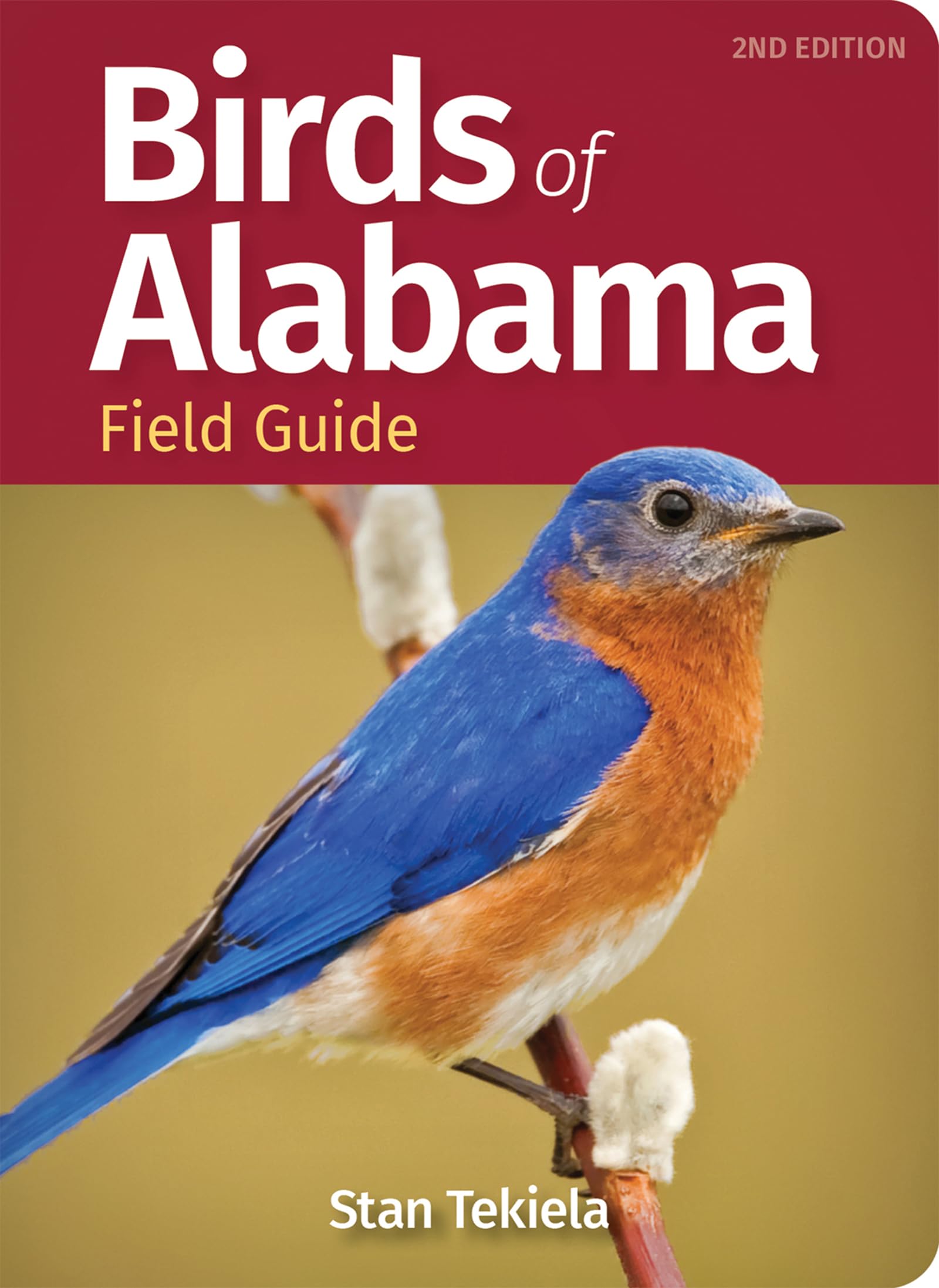



Get the New Edition of Alabama’s Best-Selling Bird Guide Learn to identify birds in Alabama, and make bird-watching even more enjoyable. With Stan Tekiela’s famous field guide, bird identification is simple and informative. There’s no need to look through dozens of photos of birds that don’t live in your area. This book features 146 species of Alabama birds organized by color for ease of use. Do you see a yellow bird and don’t know what it is? Go to the yellow section to find out. Book Features: 146 species: Only Alabama birds - Simple color guide: See a yellow bird? Go to the yellow section - Compare feature: Decide between look-alikes - Stan’s Notes: Naturalist tidbits and facts - Professional photos: Crisp, stunning full-page images This new edition includes more species, updated photographs and range maps, revised information, and even more of Stan’s expert insights. So grab Birds of Alabama Field Guide for your next birding adventure—to help ensure that you positively identify the birds that you see. Naturalist, wildlife photographer and writer Stan Tekiela is the author of more than 190 field guides, nature books, children’s books, wildlife audio CDs, puzzles and playing cards, presenting many species of birds, mammals, reptiles, amphibians, trees, wildflowers and cacti in the United States. With a Bachelor of Science degree in Natural History from the University of Minnesota and as an active professional naturalist for more than 30 years, Stan studies and photographs wildlife throughout the United States and Canada. He has received various national and regional awards for his books and photographs. Also a well-known columnist and radio personality, his syndicated column appears in more than 25 newspapers and his wildlife programs are broadcast on a number of Midwest radio stations. American Goldfinch Spinus tristis Size: 5" (13 cm) Male: A perky yellow bird with a black patch on forehead. Black tail with conspicuous white rump. Black wings with white wing bars. No marking on the chest. Dramatic change in color during winter, similar to female. Female: dull olive yellow without a black forehead, with brown wings and white rump Juvenile: same as female Nest: cup; female builds; 1 brood per year Eggs: 4-6; pale blue without markings Incubation: 10-12 days; female incubates Fledging: 11-17 days; female and male feed young Migration: partial migrator to non-migrator; flocks of up to 20 birds move around North America Food: seeds, insects, will come to seed feeders Compare: The male Yellow Warbler (pg. 327) is yellow with orange streaks on the chest. Pine Siskin (pg. 99) has streaked chest and belly and yellow wing bars. The female House Finch (pg. 101) and Purple Finch (pg. 115) have heavily streaked chests. Stan’s Notes: Most often found in open fields, scrubby areas and woodlands. Often called Wild Canary. A feeder bird that enjoys Nyjer seed. Late summer nesting, uses the silky down from wild thistle for nest. Appears roller-coaster-like in flight. Listen for it to twitter during flight. Almost always in small flocks.