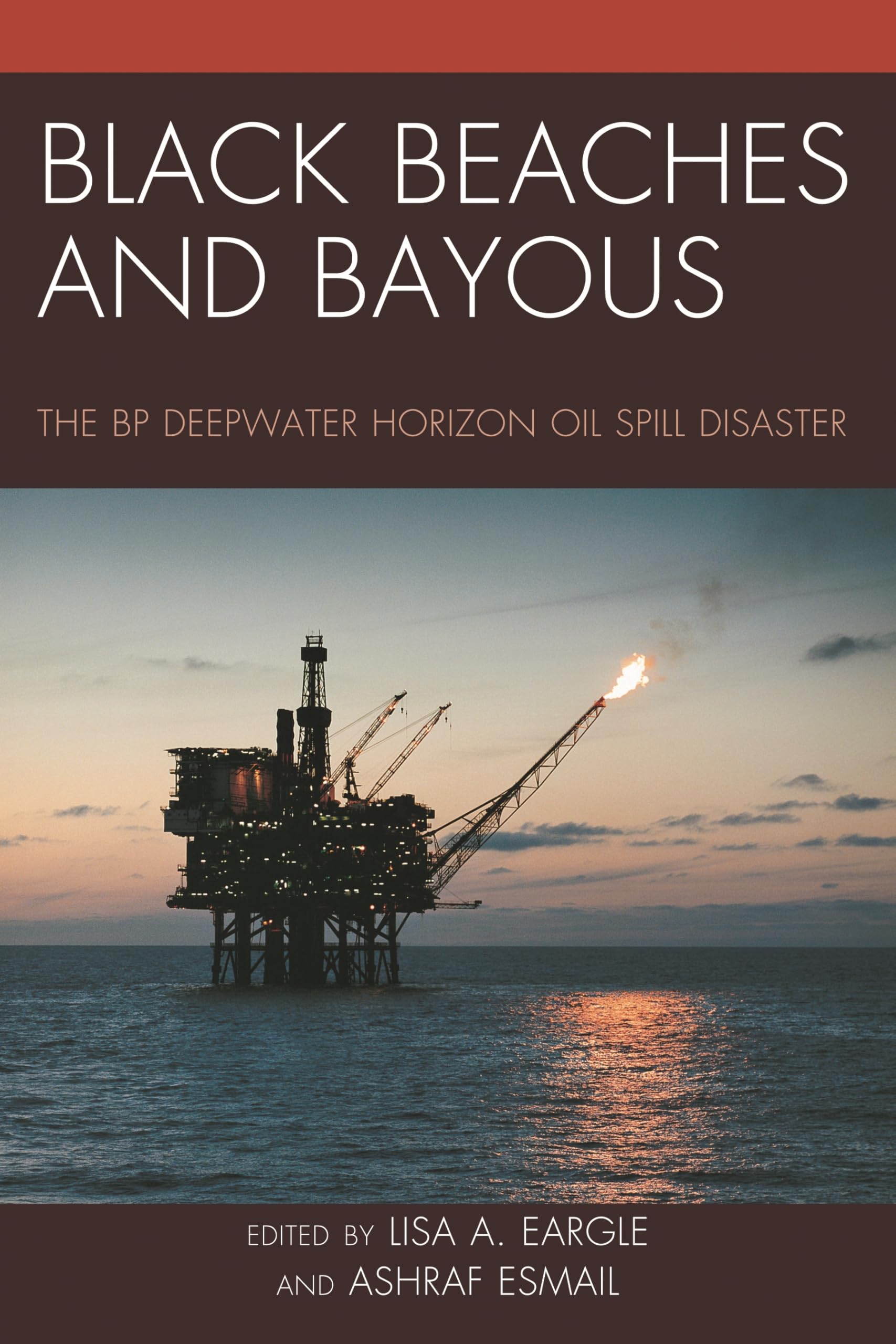
Black Beaches and Bayous: The B.P. Deepwater Horizon Oil Spill Disaster
$55.99
by Lisa A. Eargle



Black Beaches and Bayous: The B.P. Deepwater Horizon Oil Spill Disaster provides a multidisciplinary, international perspective on one of the major disaster events within the United States during the last ten years. Scholars from various disciplines including sociology, political science, ecology, psychology, and criminal justice investigate the different components and issues associated with this event. The contributors address topics such as the social and historical context of fossil fuel use, steps within the technological disaster process, and similarities and differences between this disaster and other technological disasters. They also discuss the social and psychological impacts on Gulf Coast residents, the transformation of natural ecological systems, changes in risk assessment, and media portrayals of the Obama administration and its response to this disaster. “The solid research presented in Black Beaches and Bayous not only helps us understand the dynamics of ‘na-tech’ disasters, but more importantly, it can help us prepare for what inevitably will be the next one.” ―Gregory D. Squires, professor of sociology and public policy & public administration, George Washington University “When ecological disasters or catastrophes occur, like those of Hurricanes Katrina and Rita and the Deepwater Horizon explosion, everyday people are left to question how their actions or inactions helped to facilitate the problem. In the case of the BP oil spill, the authors of this text have astutely drawn connections between the norms of oil use, the risks associated with technological progress, how disasters of this magnitude change the rules of everyday life, and how catastrophes of this nature have both regional and global ramifications. Clearly, social scientists and social actors have been in need of a book of this depth and breadth. This text provides members of society with tools to deconstruct socio-ecological events and to consider avenues for resistance and change―a way to have agency in the face of social institutions (like corporations) that they would otherwise feel defenseless against.” ―Sandra E. Weissinger, assistant professor of sociology, Southern University at New Orleans Ashraf Esmail is associate professor of criminal justice and director of the Center for Racial Justice at Dillard University. Used Book in Good Condition