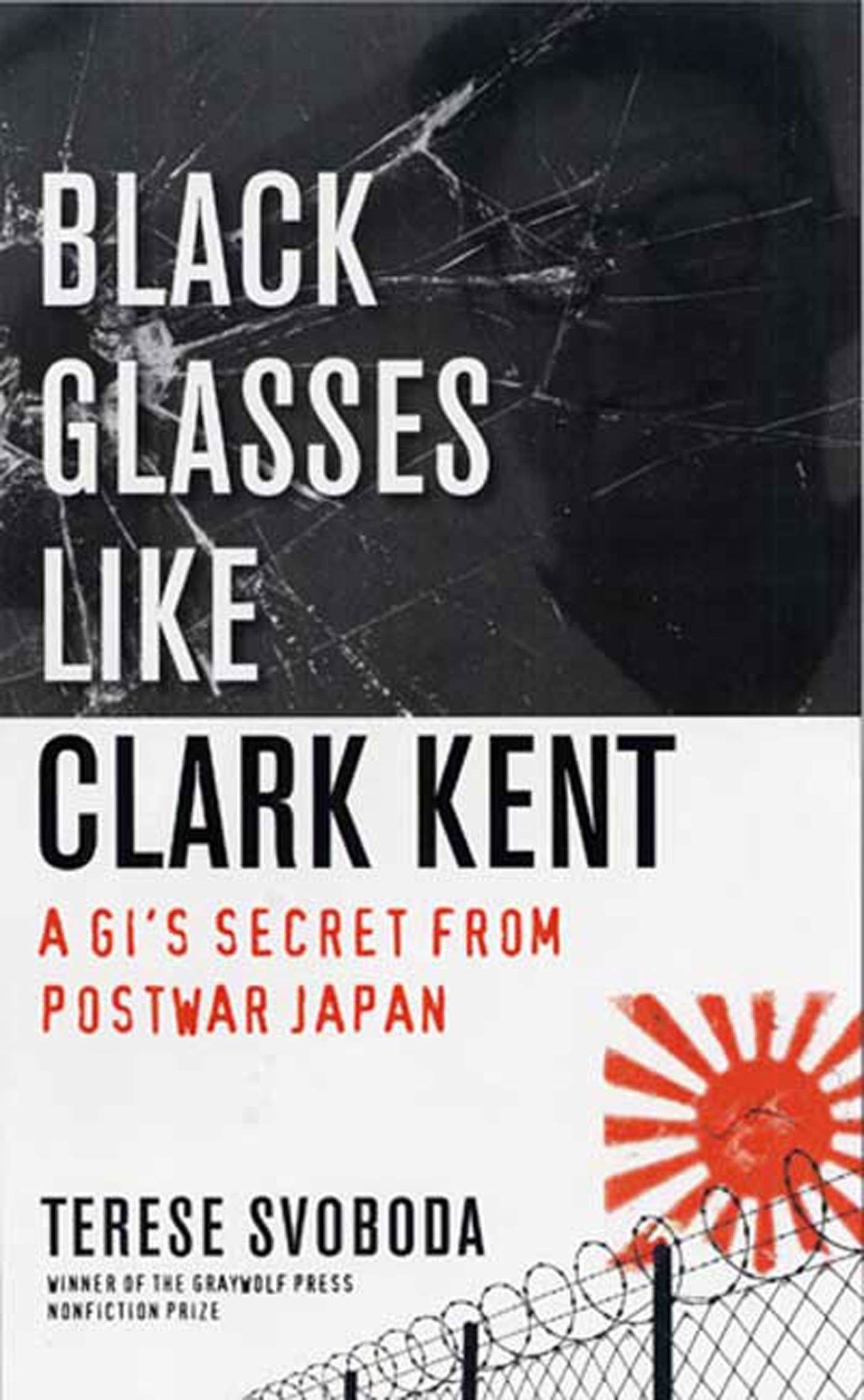



After her Uncle's suicide, Terese Svoboda investigates his stunning claim that MPs may have executed their own men during the occupation of Japan after World war II [Our captain] commended us for being good soldiers and doing our job well and having a minimum of problems. Then he dropped a bomb. He said the prison was getting overcrowded, terribly overcrowded. As a child Terese Svoboda thought of her uncle as Superman, with "Black Clark Kent glasses, grapefruit-sized biceps." At eighty, he could still boast a washboard stomach, but in March 2004, he became seriously depressed. Svoboda investigates his terrifying story of what happened during his time as an MP, interviewing dozens of elderly ex-GIs and visiting Japan to try to discover the truth. In Black Glasses Like Clark Kent , winner of the Graywolf Nonfiction Prize, Svoboda offers a striking and carefully wrought personal account of an often painful search for information. She intersperses excerpts of her uncle's recordings and letters to his wife with her own research, and shows how the vagaries of military justice can allow the worst to happen and then be buried by time and protocol “A sense of urgency pervades all of [Svoboda's] work, giving the words a pulse, making her language race with insistence.” ― Poets & Writers The Graywolf Press Nonfiction Prize is funded in part by endowed gifts from the Arsham Ohanessian Charitable Remainder Unitrust and the Ruth Easton Fund of the Edelstein Family Foundation. "Delving into the past, in this wonderful, singularly wry memoir, turns up enough guilt to go around for everyone. And yet, such is the honesty, humor and literary skill of Terese Svoboda that she manages to turn this sad story into a triumph of compassion and insight." --Phillip Lopate, author of The Art of the Personal Essay According to the National Center for Post-Traumatic Stress Disorder (PTSD), World War II veterans were expected to "put [their memories] behind them, forget the war, and get on with their lives." Triggered by various things, including deaths of loved ones, deteriorating health, or in the case of Terese Svoboda's uncle, the news of prison abuse at Abu Ghraib, PTSD can emerge after great expanses of time has passed. Soon after the Abu Ghraib scandal emerged in the media, Don Svoboda plunged into an uncharacteristic depression that led to his eventual suicide. Before his death, however, he furiously recorded tapes describing his duty as an MP in guarding prisoners in postwar Japan and sent them to Terese, the writer in the family. Intrigued by her uncle's implications of foul play at the prison, Terese Svoboda embarks on a journey to uncover the source of her uncle's depression. She confronts the silence that the Greatest Generation is known for, spotty records at the National Archives, and memories of a prison unit that many would rather leave in the past. "When Terese Svoboda agrees to write the war story of her uncle, who served in the American military police in Japan in the aftermath of World War II, she enters a nightmarish world of secrets and irretrievable truths. Lucid, self-knowing and artful, her memoir about getting the story will resonate for readers of every generation." --Alice Kaplan, author of The Interpreter Terese Svoboda has published nine books of prose and poetry, most recently Tin God , and her writing has been featured in The New Yorker , The New York Times , The Atlantic Monthly, and The Paris Review . She lives in New York. Used Book in Good Condition