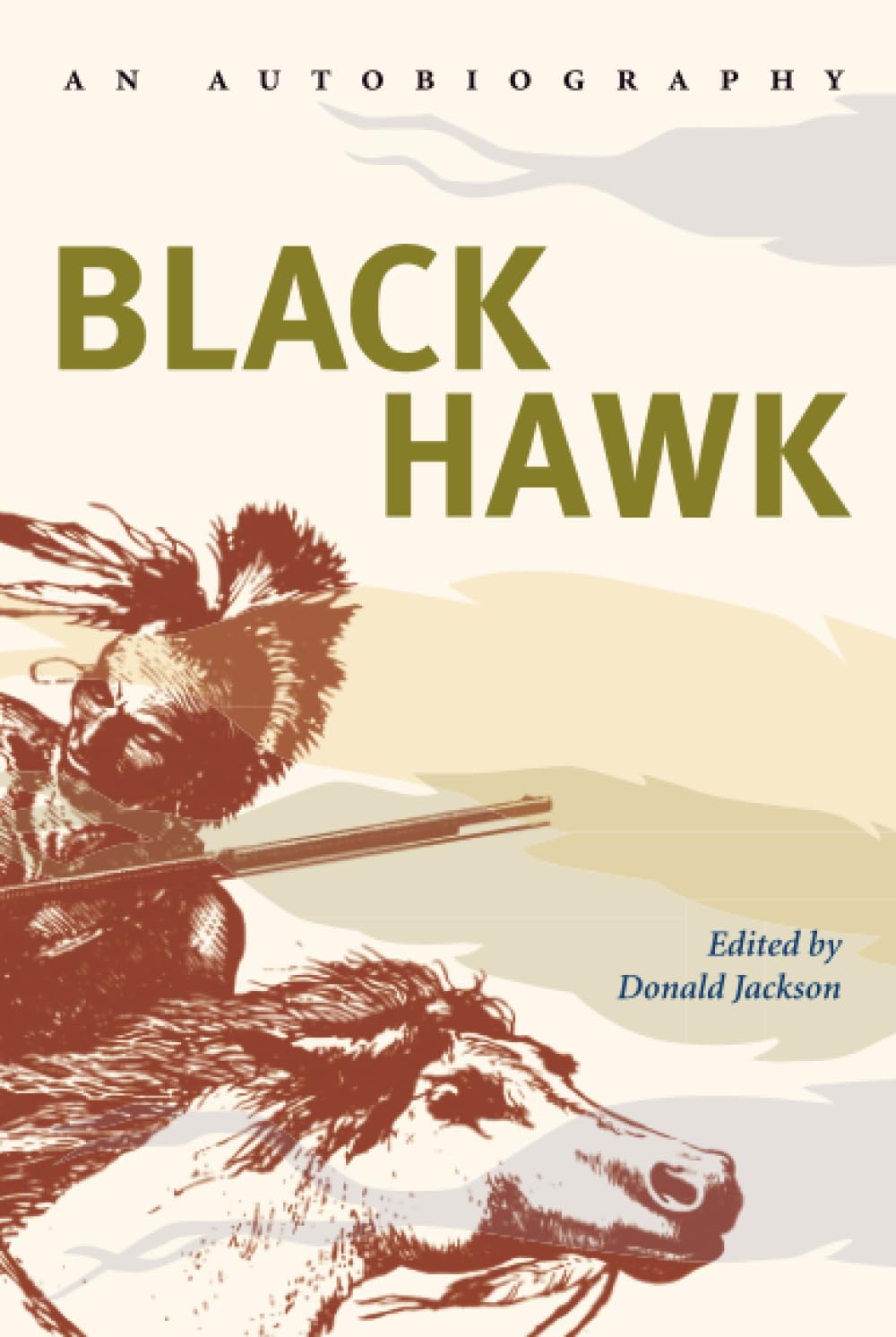



A classic of Native American literature and US history, the autobiography of the Sauk warrior Black Hawk (Ma-Ka-Tai-Me-She-Kia-Kiak in the Sauk language) offers an eyewitness account of the conflict between Indigenous peoples and white colonists on the Illinois frontier. But it also provides one of the most vivid Native descriptions of Indigenous life and beliefs before and during colonization of the Mississippi Valley. The University of Illinois Press edition is the definitive 1833 text edited by Donald Jackson. A foundational document, Black Hawk: An Autobiography is both an unsparing record of America's genocide against Native American peoples and the moving self-portrait of an extraordinary man. "This new edition of a stirring autobiography is not only an American classic but is one of the relatively few accounts of American-Indian relations as they appeared to a leader of the Indians."-- Americana "A classic of midwestern literature, a remarkable self-portrait by a complex individual who identified closely with the heritage of his tribe. At a time when [Native Americans] were being removed by government policy, it made the Indian perspective a part of the national consciousness. . . . The best edition of the 1833 text is by Donald Jackson."--John E. Hallwas, in Illinois Literature: The Nineteenth Century "If any historical study deserves to be characterized as definitive, this edition of Black Hawk's narrative does." --Milo M. Quaife, author of Chicago and the Old Northwest, 1673-1835, The Development of Chicago, 1674-1914 Ma-Ka-Tai-Me-She-Kia-Kiak , also known as Black Hawk (1767-1838), dictated his autobiography in 1833 while in custody at Jefferson Barracks in Missouri.