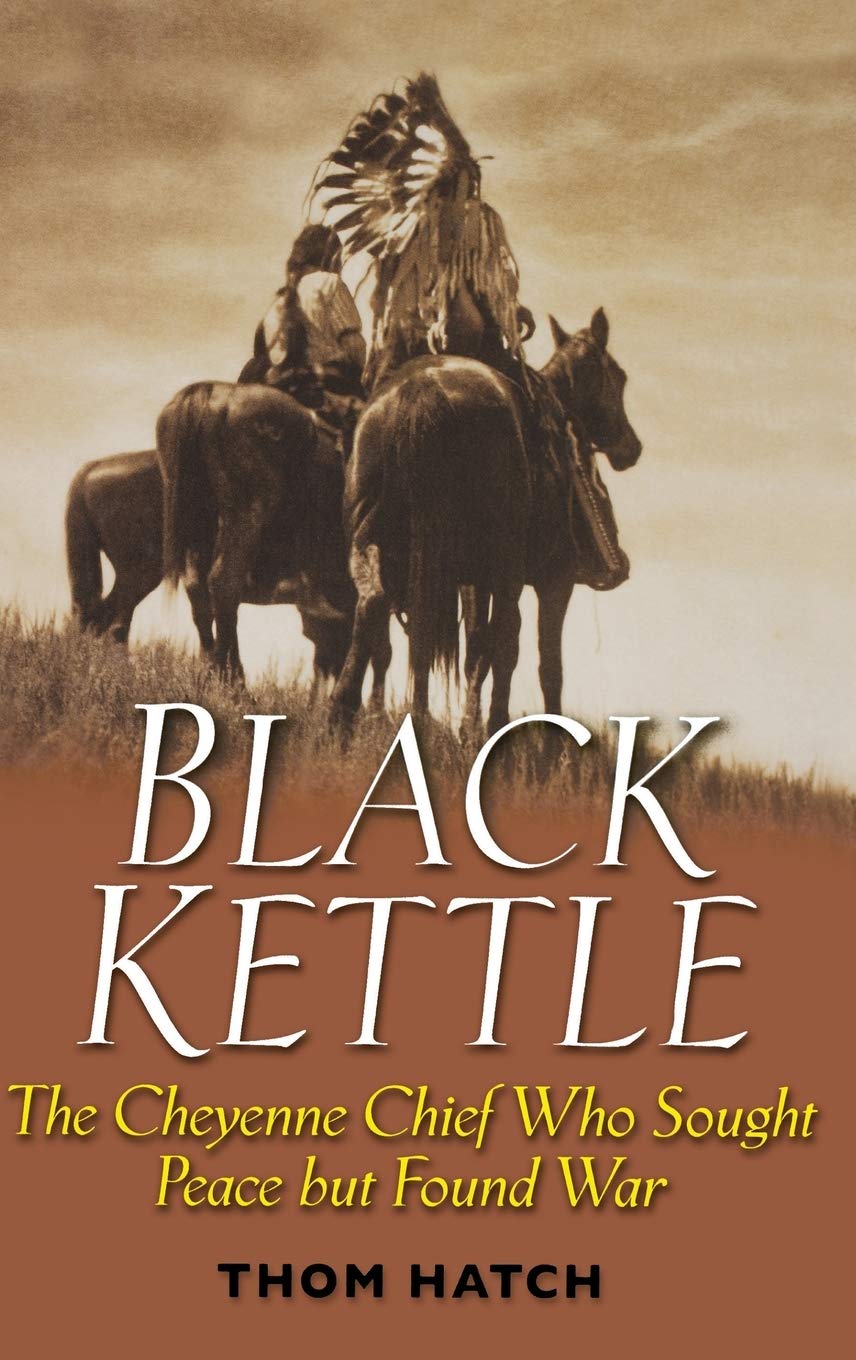



The Compelling, Tragic Story of a Great Cheyenne Chief As white settlers poured into the west during the nineteenth century, many famous Indian chiefs fought to stop them, including Sitting Bull, Crazy Horse, and Geronimo. But one great Cheyenne chief, Black Kettle, understood that the whites could not be stopped. To save his people, he worked unceasingly to establish peace and avoid bloodshed. Yet despite his heroic efforts, the Cheyennes were repeatedly betrayed and would become the victims of two notorious massacres, the second of which cost Black Kettle his life. In this first biography of black Kettle, historian Thom Hatch at last gives us the full story of this illustrious Native American leader, offering an unforgettable portrait of a chief who sought peace but found war. Praise For Thom Hatch The Blue, the Gray, and the Red "Clear and even-handed. . . . This popular history recounts grim, bloody, lesser-known events of the Civil War. . . . The slaughter of Black Kettle's Cheyennes at Sand Creek . . . forms a devastating chapter." -Publishers Weekly The Custer Companion "Highly recommended . . . a reliable and impartial guide to the subject and literature." -Library Journal Custer and the Battle of Little Bighorn "A work that is readable by itself, meticulously researched and clearly written." -The Tulsa World Hatch, a former reporter, offers a fresh and comprehensive reassessment of Black Kettle, a charismatic nineteenth-century Cheyenne chief who advocated for peace with white Americans. A member of the Bowstring Society (a warrior caste), Black Kettle negotiated for tribal land protection and lessons in farming. Why did this particular warrior recognize that peace was the only way for his people to survive? Hatch tentatively suggests that Black Kettle regarded himself as a prophet and was motivated by more than military concerns. In spite of repeated betrayals by the U.S. Army--including the 1864 massacre at Sand Creek, in which one-third of Black Kettle's group were killed--the elder statesman continued to pursue a nonviolent compromise. But in 1868 Black Kettle and many of his fellow villagers were killed by George Armstrong Custer's 7th Cavalry in the Washita River massacre. Although not as skillfully written as titles by Dee Brown, this biography is a welcome addition to studies of the American West. Rebecca Maksel Copyright © American Library Association. All rights reserved Sitting Bull, Crazy Horse, Geronimo. Their names ring down through history as symbols of noble defiance against overwhelming odds. These great warrior chiefs challenged the might of the U.S. Army in desperate and doomed attempts to end white encroachment on their land and preserve their traditional ways of life. We honor their memories not for their success, but for their courage. There was another great chief, no less courageous, who believed that the only way to save his people was by waging peace instead of war. His name was Black Kettle. This is the first biography of one of the most intriguing figures in the history of the American West. It traces the life of Black Kettle from the days of his youth, when he proved his courage and leadership skills in battles against enemy tribes, through his elevation to chief of the Cheyennes and his realization that, for the good of his people, he must become a statesman rather than a warrior. It documents his ceaseless efforts to achieve just treaties with the United States, even in the face of death threats from members of his own tribe, and describes his ultimate betrayal by the very authorities with whom he struggled to make peace. Black Kettle survived one betrayal, the notorious Sand Creek Massacre, but the controversial battle at Washita Creek four years later cost him his life. This fascinating journey through the life of Black Kettle and the early days of the Cheyennes explores the social, political, cultural, and historical factors that shaped every interaction between the Cheyennes and white settlers. Author Thom Hatch analyzes important treaties, examines race relations in the nineteenth-century American West, and recreates the battles and the massacres that marked the Cheyennes rise and fall. He also takes a fascinating look at tribal histories and customs and presents a memorable cast of characters, both famous and lesser-known, who played a role in shaping the frontier at this crucial time in history. Complete with sixteen stunning period photos and more than a dozen helpful maps of Cheyenne territory, Black Kettle tells a compelling and tragic story that is essential to understanding the history of the Plains Indians and the truth about how the West was lost by Native American tribes. The Compelling, Tragic Story of a Great Cheyenne Chief As white settlers poured into the west during the nineteenth century, many famous Indian chiefs fought to stop them, including Sitting Bull, Crazy Horse, and Geronimo. But one great Cheyenne chief, B