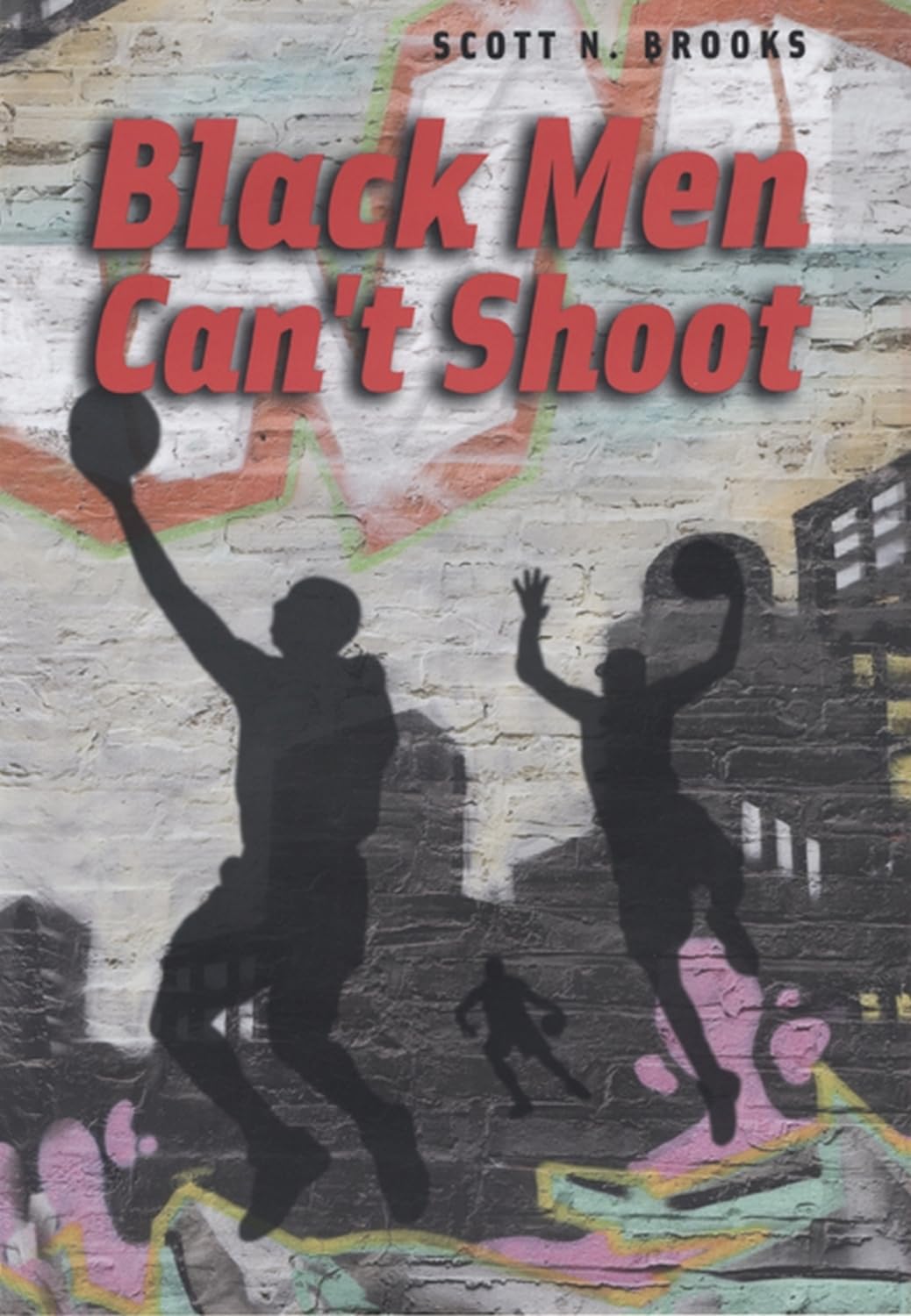



The myth of the natural black athlete is widespread, though it’s usually talked about only when a sports commentator or celebrity embarrasses himself by bringing it up in public. Those gaffes are swiftly decried as racist, but apart from their link to the long history of ugly racial stereotypes about black people―especially men―they are also harmful because they obscure very real, hard-fought accomplishments. As Black Men Can’t Shoot demonstrates, such successes on the basketball court don’t happen just because of natural gifts―instead, they grow out of the long, tough, and unpredictable process of becoming a known player. Scott Norman Brooks spent four years coaching summer league basketball in Philadelphia. And what he saw, heard, and felt working with the young black men on his team tells us much about how some kids are able to make the extraordinary journey from the ghetto to the NCAA. He tells the story of two young men, Jermaine and Ray, following them through their high school years and chronicling their breakthroughs and frustrations on the court as well as their troubles at home. Black Men Can’t Shoot is a moving coming-of-age story that counters the belief that basketball only exploits kids and lures them into following empty dreams―and shows us that by playing ball, some of these young black men have already begun their education even before they get to college. Brooks (sociology, Univ. of California at Riverside), having studied under and been inspired by the highly esteemed Elijah Anderson at the University of Pennsylvania, provides an ethnographic description of recreational basketball in South Philadelphia. A self-professed frustrated former high school basketball player (he blames himself and his former coach for his shortcomings), the author looks at the hopes and dreams of young inner-city black men he coached who aspired to play ball professionally. In true sociological tradition, he presents detailed information on members of the famed Blade Rodgers Neighborhood Development League, based on interviews with these athletes, their families, coaches, and other locals. While focusing on two athletes in particular, Brooks educates readers about a number of "street" realities (e.g., the daily struggle for survival and basketball viewed as a way out of the ghetto). Demystifying certain racial stereotypes, Brooks explains that even God-given skills must be developed through hard work and dedication. His book is a worthy ethnographic text and is recommended especially for students of sports sociology.—Tim Delaney, SUNY at Oswego Copyright © Reed Business Information, a division of Reed Elsevier Inc. All rights reserved. “Scott was an average high school basketball player, but Black Men Can’t Shoot is an all-star book. I couldn’t put it down. It cracked me up, put me on edge, and reminded me why I love this game—Chuck, Jermaine, and Ray, the old heads and the young bulls. It’s about the people.” -- Jason Kidd, nine-time NBA All-Star “This is a smart and authentic book. It not only captures the feel of Philadelphia high school basketball; it provides acute and accurate insight into the minds of players. Although I’m on the other side, I learned something. Most importantly, it’s a moving story that stays with you.” -- Fran Dunphy, Head Coach, Temple University “Brooks makes clear how contingent the fate of these young men is on the step-by-step negotiation of multiple career steps and how many ways there are to fail. But he also offers a bright note to counter the endless tales of misery from the ghetto by showing us how many second and third and fourth chances there are to recover what seemed to be lost. Black Men Can’t Shoot is compelling—you really want to know what will happen next, and I don’t think anyone who starts to read this book will put it down until they get to the end.” -- Howard S. Becker, author of Outsiders “ Black Men Can’t Shoot is carefully observed, ethnographically rich, and conceptually sophisticated—an original work of importance that provides a powerful eye on the world of black ghetto youth today. A must read for anyone wishing to understand.” -- Elijah Anderson, author of Streetwise “Brooks represents Philly well. It’s clear that he not only sat on the bench—he learned some things. His writing is right on the money. It took me back to my playing days and the relationships I’ve developed through basketball. From the gym to the playgrounds and uptown, Brooks lets you know what Philly ball is all about.” -- Lionel Simmons, third all-time leading NCAA scorer “In this vivid depiction of the urban reality of grassroots basketball, Scott Brooks exhibits an insider’s passion for the game, broad and deep knowledge of the local history and social context, and a real feel for the significance of basketball in Philly’s black community. Along with offering important ideas about the relationship between race and sports, Black Men Can’t Shoot is packed wi