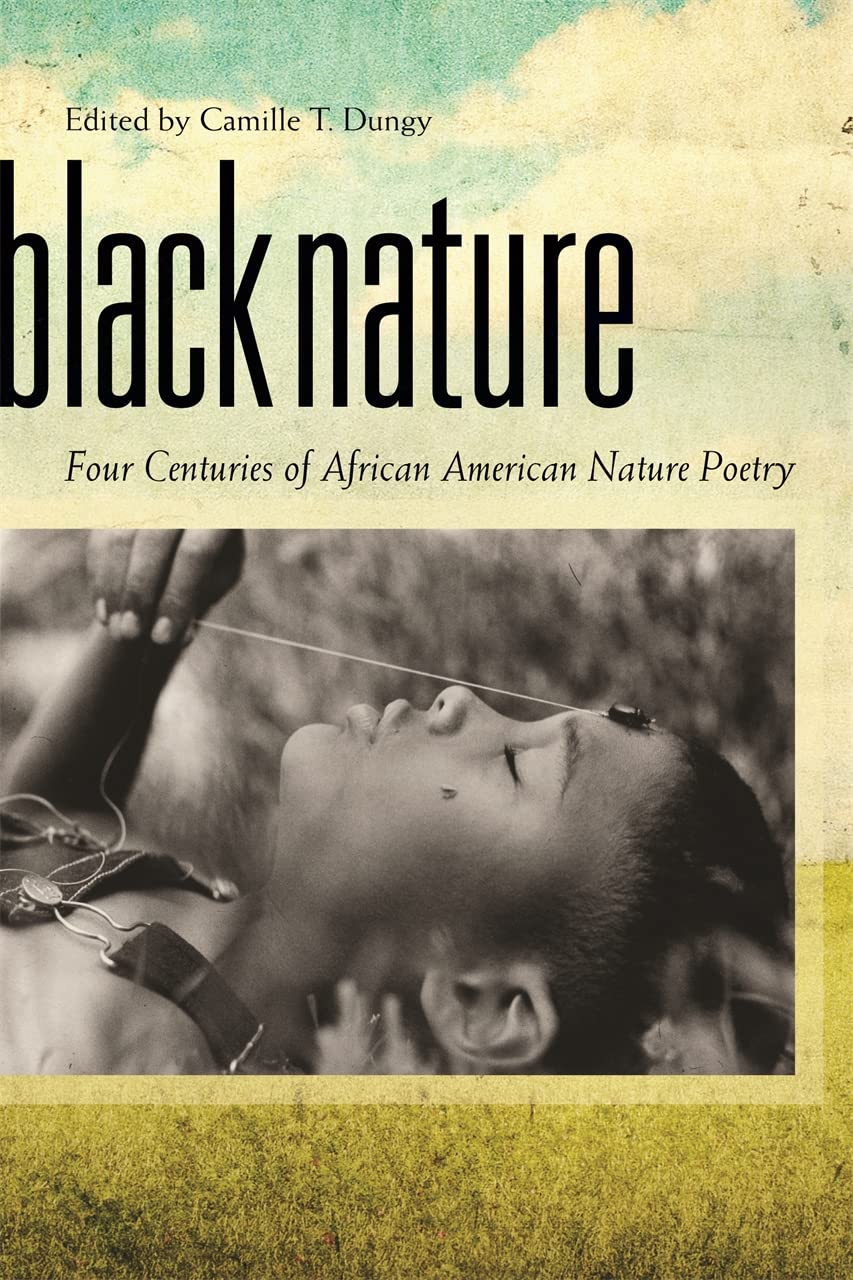



Black Nature is the first anthology to focus on nature writing by African American poets, a genre that until now has not commonly been counted as one in which African American poets have participated. Black poets have a long tradition of incorporating treatments of the natural world into their work, but it is often read as political, historical, or protest poetry―anything but nature poetry. This is particularly true when the definition of what constitutes nature writing is limited to work about the pastoral or the wild. Camille T. Dungy has selected 180 poems from 93 poets that provide unique perspectives on American social and literary history to broaden our concept of nature poetry and African American poetics. This collection features major writers such as Phillis Wheatley, Rita Dove, Yusef Komunyakaa, Gwendolyn Brooks, Sterling Brown, Robert Hayden, Wanda Coleman, Natasha Trethewey, and Melvin B. Tolson as well as newer talents such as Douglas Kearney, Major Jackson, and Janice Harrington. Included are poets writing out of slavery, Reconstruction, the Harlem Renaissance, the Black Arts Movement, and late twentieth- and early twenty-first-century African American poetic movements. Black Nature brings to the fore a neglected and vital means of considering poetry by African Americans and nature-related poetry as a whole. A Friends Fund Publication. *Starred Review* Just as nature is too often defined as wilderness when, in fact, nature is everywhere we are, our nature poetry is too often defined by Anglo-American perspectives, even though poets of all backgrounds write about the living world. By creating an anthology of nature poetry by African American writers, poet and editor Dungy enlarges our understanding of the nexus between nature and culture, and introduces a “new way of thinking about nature writing and writing by black Americans.” African American poets describe the need for practical knowledge of the wild to survive, the toil of working the land, and moments of spiritual communion with nature’s countless manifestations. Dungy provides an arresting introductory overview of 180 poems by 93 poets, and incisive essays accompany each thematic grouping. This analysis is dynamic and crucial, but the poems, beginning with Lucille Clifton’s “the earth is a living thing,” are ravishing. Dungy’s unique, enlightening, and heart-opening anthology embraces George Moses Horton, who lived as a slave, and today’s award-winning Cyrus Cassells, haiku by Richard Wright, and poems funny, smart, sexy, devastating, and exquisite by Nikki Giovanni, Janice N. Harrington, Yusef Komunyakaa, Carl Phillips, and their many resounding peers, each expressing provocative perceptions of the great tide of existence. --Donna Seaman No pleasures are more aesthetic than poetry and nature, so it is only natural that the two should unite. Editor Dungy here merges the worlds in a satisfying compilation that features over 100 poems by 93 African American poets, including celebrated writers June Jordan and Yusef Komunyakaa as well as newer artists like Remica L. Bingham and Indigo Moor. ― Library Journal Just as nature is too often defined as wilderness when, in fact, nature is everywhere we are, our nature poetry is too often defined by Anglo-American perspectives, even though poets of all backgrounds write about the living world. . . . Dungy enlarges our understanding of the nexus between nature and culture, and introduces a 'new way of thinking about nature writing and writing by black Americans.' ― Booklist One of the few anthologies that can be picked up and read like a novel cover to cover without metaphor overload. Black Nature is well thought out, well edited, and timed. ― Phati'tude Literary Magazine Camille Dungy believes that white and black poets look differently at nature, with whites primarily noticing its beauty and blacks seeing its harshness. The view, Dungy says, is intensified by the black experience of slavery. An edgy mix of pastoral and political, her anthology, Black Nature , testifies to her point. ― Baltimore Sun Dungy has compiled what might have taken a lifetime to assemble, yet here it is at this moment when our culture is assessing both its relationship to the natural world and its relationship with its black citizens. The timing could not be better for such a comprehensive look at what black poets have contributed to our understanding of nature. What excites about this anthology is that it is not only the richest and most comprehensive collection of poems by black poets I have read, it is the richest and most comprehensive collection of poems about nature that I have read. I believe the book should be widely read, taught, and talked about. -- Alison Hawthorne Deming ― author of Rope Black Nature is the most exciting anthology of poetry I've read in years. In part this reflects the superb quality and remarkable range of Camille Dungy's selections. But it also comes from her