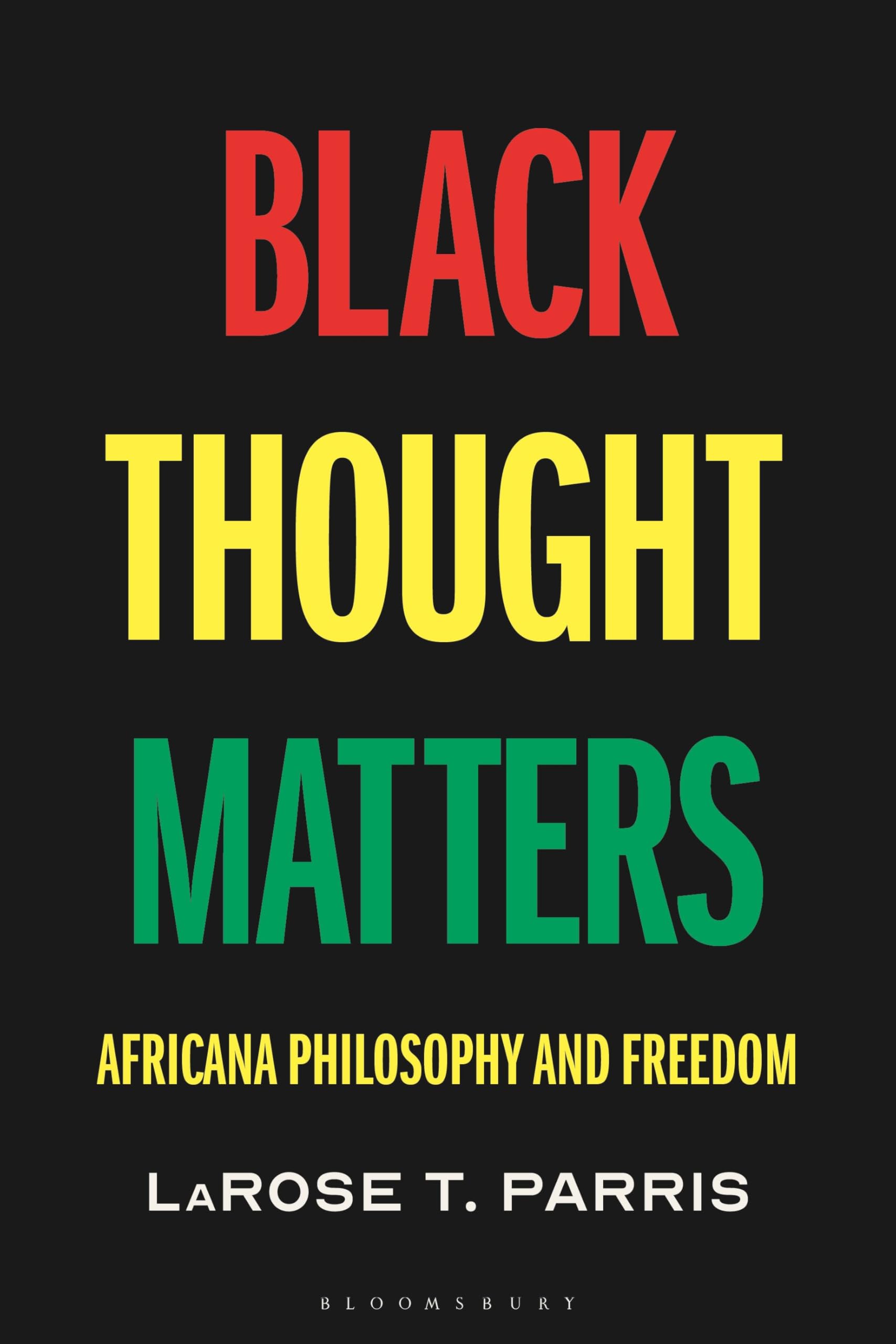



The profound influence of Afro diasporic and African philosophy has been mostly either silenced or dismissed in Western thought. In Black Thought Matters, LaRose T. Parris traces the early production of philosophical thought on the African continent and in doing so disrupts the Eurocentric, hegemonic paradigm of the Enlightenment. This book, in proclaiming that black thought matters, is an act of political and ideological defiance. It argues for Africana philosophy's centrality to the genesis and movement of global ideas and asserts an allegiance with global liberation efforts repudiating Black dehumanization, criminalization, and extermination through state-sponsored police murder. This transnational struggle has shifted geo-political activism towards a reckoning with white supremacy's hegemonic, anti-human agenda. What is more, affirming Black thought's relevance announces a commitment to the import of Africana thinkers whose work laid the foundation for Black Lives Matter's ethical and political mission: to emphasize the intrinsic value of Black life and struggle to advance a radical egalitarianism wherein all lives truly matter. To promote such egalitarianism, Africana philosophy must be embraced as indispensable to this charge since it purposefully expounds upon two of egalitarianism's principal aims: human enlightenment and freedom. Black Thought Matters provides the philosophical, historical, and political evidence supporting the need for widespread recognition – not wilful dismissal – of Africana thinkers' answers to the persistent problems of epistemic erasure, unfreedom, and systemic inequality that continue to diminish the value of human life. “ Black Thought Matters is a major intervention in the fields of philosophy and decolonial studies. This book challenges the hegemonic paradigm of the Enlightenment and its epistemic erasure of scholars of African descent. By centering Black thought, Parris shifts the geography of knowledge production, while also acknowledging the interconnectedness of freedom and Black humanity. Her work shows how academia's exclusion and the marginalization of Black thought mirror centuries of white supremacy, oppression, and anti-Black racism. This book is not a cry for recognition, but an assertation of the historical presence of Black thought in spite of its centuries-long exclusion from academic discourse.” ― Nathalie Etoke, Professor of Francophone and Africana Studies at the Graduate Centre, CUNY, USA. “Reading this book is like being ushered into an African Karamu (feast). The host circulates among old and new friends, spirited conversations all around. In one corner, elders Leonard Harris, Lewis Gordon, and Lucius Outlaw hold forth on Saint Augustine, Ibn Rushd, Zara Yacob, and Anton Wilhelm Amo. In another corner ancestral voices of W.E.B. Du Bois and Frederick Douglass echo in the memories of C.L.R. James, Sojourner Truth, Anna Julia Cooper, Lorraine Hansberry, and Frantz Fanon. Mixing narrative and interviews, LaRose T. Parris deftly presides and delivers a satisfying offering of the broad range of intellectual productions of blackness. The focus spans art, story-telling, music, queerness, and black feminism. Old friends at this gathering will find much to reminisce about. New friends will feel welcome to sample new delights. All who enter here will be better prepared by the rich conversation to more fully tell the story of Islam, of Moor conquests, or even of the influences that made Renaissance achievements possible. Broadening the category of Black Thought opens a space for deeper communion.” ― Samuel Imbo, Professor of Philosophy, Hamline University, USA LaRose Parris is Associate Professor and Chair of the Department of Africana Studies at Lehman College, City University of New York, USA.