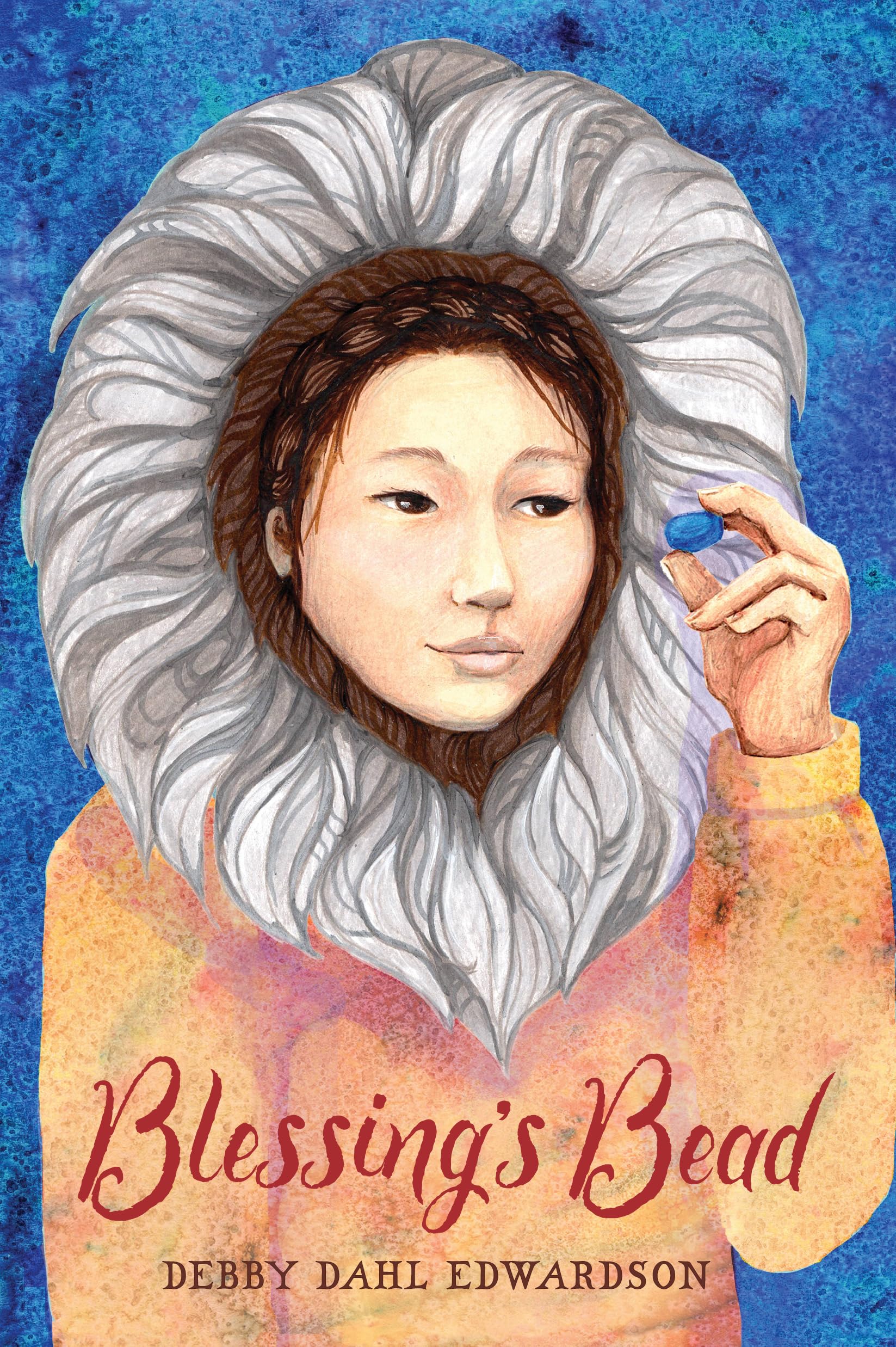



Now in paperback: the acclaimed middle-grade novel tracing four generations of an Iñupiaq family in Alaska, which the Washington Post praised as "a rare and beautiful book." ALASKA, 1917 Nutaaq adores her older sister, Aaluk, and the happy world of their close-knit Iñupiaq village. When Aaluk goes across the sea to marry a Siberian Inuit man, she gives Nutaaq a gift from her husband's people: two precious cobalt blue beads. Through the months that follow, as a great shadow falls over the village, the beads remind Nutaaq of the people she loves, and hold out hope that she might connect with her sister again. ALASKA, 1989 Blessing's life in the city is unpredictable, with a mother who's sometimes wonderful and sometimes gone. When Mom finally can't take care of her anymore, Blessing is sent to live in a remote Arctic village with a grandmother she barely remembers. In her new home, unfriendly girls whisper in a language she doesn't understand, and Blessing feels like an outsider among her own people. Until she looks in her grandmother's sewing tin--and finds a cobalt blue bead. How might Blessing discover her place in her family and community? And will Nutaaq's hope ever be fulfilled? Tracing four generations of bonds and breakage within one Iñupiaq family, Blessing's Bead is a lovely and surprising novel about trauma, survival, and the healing power of culture and stories. * "Concrete and symbolic references to the transforming power of language, names, and stories link the two narratives, but it's the Nutaaqs' rhythmic, indelible voices--both as steady and elemental as the beat of a drum or a heart--that will move readers most. A unique, powerful debut." -- Booklist , starred review "A rare and beautiful book. It's a short read that nonetheless makes many far-reaching connections, like a folk tale or a legend, wrapped in a tough but straightforward narrative, leaving echoes that linger long after and in unanticipated ways.... a rich and nuanced enactment of a perspective and a mode of storytelling that surprises as much as it reveals." -- The Washington Post "Edwardson treads an elegant line in her perspective: Blessing is both an insider--Iñupiaq--and an outsider still learning exactly what that means. It's a perspective that allows any reader in, and they'll learn much about the power of stories and names and how to use them both." -- Kirkus Reviews "The community's sharing of a whale adds color, as do the authentic imagery, details, and language that pervade this memorable story." -- The Horn Book "Blessing makes an emotional journey of self-discovery, as Edwardson weaves a fascinating portrait of a family's rich history." -- Publishers Weekly "This unique and fascinating tale is told in an evocative voice that includes Village English, school English, Native language, and colloquialisms." -- School Library Journal "Atmospheric yet restrained, this is a moving account of what's changed and what remains in Inupiaq life." -- Bulletin of the Center for Children's Books Debby Dahl Edwardson is the acclaimed author of three books for young readers: Blessing's Bead ; My Name Is Not Easy , which was a finalist for the National Book Award; and the picture book Whale Snow . She married into and has lived for more than forty years among the Inupiat people of Alaska, of which she says, "It is not the culture I was not born into but it is the one I belong to, the one that has become home to me as a human being and as an artist." She lives in Utqiagvik, Alaska, the northernmost community on the North American continent, with her husband. Sheshalik, at first sight, is too big tobelieve--all the tents, the skin tents of our people, stretching out along theedge of the beach and reaching up inland for as far as the eye can see.Overflowing with the sounds of happiness--the kind of happiness that only comesof many, many people, all coming together as one. This is my first impression of theSheshalik trade fair, that all the people of the world must be here. Everyonein the entire world, all here at Sheshalik, preparing to trade. People have indeed come from many distant places, each group bringing the specialties of its own region. We ourselves have sealskin pokes full of seal oil, and split walrus skins for boat-making,because our women are the most skillful at preparing these. We also have coilsand coils of sealskin rope, strong enough to pull a whale. The rope our menmake is always in high demand by those from other regions. We will trade these island things for stone from the People-of-the-Land ,soapstone and jade from the mountains up inland, the kind used for lamps, sealoil lamps. Aaluk will of course need a lamp of her own, now that she has become a woman. A pretty new lamp carved of jade, perhaps, or a smooth one of polished soapstone. A lamp to heat her own home, when she leaves ours for the home of her husband, whoever he may be. But not me. I have no use for a lamp, just yet. Nor for a husband. I'v