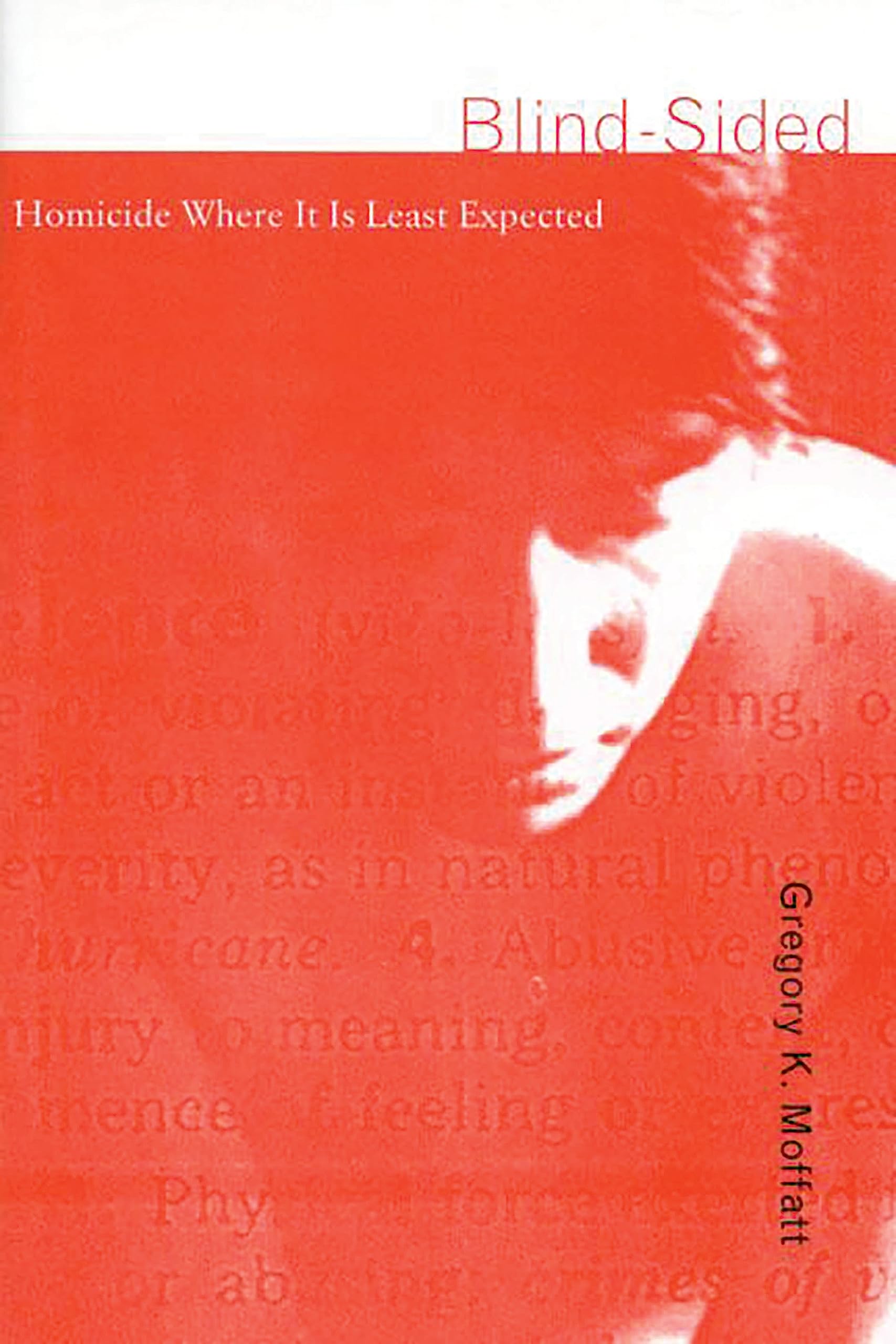



While print and broadcast media are filled every day with homicide accounts, the general public seems most disturbed by crimes attributed to individuals who otherwise seem normal. Murders by those perceived to be historically non-violent often appear to erupt with no warning whatsoever. Moffatt argues that certain key predictors of a predisposition to violence are usually present. Citing case studies of workplace, school, and domestic homicides, he debunks the myth that these murders happen out of the blue. He also includes valuable information on predicting and preventing future tragedies. This book explains why friends and colleagues who knew the perpetrators of violence overlooked or misunderstood warning signs, and it addresses the role that mental illness often plays in such crimes. Chapters are devoted to homicide in the workplace, domestic homicide, stalkers who kill, and homicide by children, including an entire chapter on the Columbine High School shooting. Using his experience as an educator, researcher, and clinician, Moffatt demonstrates how to identify the historically non-violent murderer through a process of risk assessment before a crime is committed. He also describes seven common mistakes people make that have resulted in one or more deaths. Here is a book that focuses on homicides by "historically nonviolent" persons and serves as a guide to intervention and prevention. Moffatt (a clinician, part-time psychology professor, and lecturer) utilizes a large number of recent case studies and derives many general conclusions regarding this specific category of homicide. The idea that certain homicides come "out of the blue" is strongly challenged by Moffatt, who argues that nearly all perpetrators have histories of violence that were usually not documented as warning signs of potentially dangerous behavior. Moffatt identifies four specific triggers that lead individuals to commit murders: poor coping skills, dysfunctional thinking, mental illness, and an attempt to capture, maintain, or regain power. Proper diagnosis of these behaviors allows for potentially successful intervention. Beyond that, this extremely interesting book describes various techniques (e.g., watching for clues, not ignoring warning signs) that all persons can learn in order to keep from being "blind-sided" themselves by seemingly unpredictable tragic events. Strongly recommended for public and academic libraries.DTim Delaney, Canisius Coll., Buffalo Copyright 2000 Reed Business Information, Inc. "Blind-Sided will help readers know that they need never be blind-sided themselves. Gregory Moffatt affirms that like every creature on earth, we can receive warnings before violence. You may not agree with every word he writes, but you will get a clear and compelling understanding of homicide from a master observer of human behavior."-Gavin de Becker author of The Gift of Fear "In this book, Blind-Sided: Homicide Where It is Least Expected, Gregory Moffatt offers us a compelling and often frightening examination of the senseless violence that persistently plagues American society. Using a mosaic of timely case studies, the author confronts and exposes the stark realities of unexpected, often inexplicable acts of murder that so profoundly devastate its victims and ultimately redefine our culture. However, Moffatt's book is much more than an expose of homicide. It is also a practical, understandable guide to intervention and prevention, offering us workable techniques that can save lives. Insightful and well written, Blind-Sided is an important book that should be read by anyone who is concerned about the kind of extreme violence that has become our unwitting, silent partner in contemporary America."-Michael D. Kelleher author of When Good Kids Kill (Greenwood, 1998) "Here is a book that focuses on homicides by historically nonviolent' persons and serves as a guide to intervention and prevention....[T]his extremely interesting book describes various techniques (e.g., watching for clues, not ignoring warning signs) that all persons can learn in order to keep from being blind-sided' themselves by seemingly unpredictable tragic events. Strongly recommended for public and academic libraries."-Library Journal ?Here is a book that focuses on homicides by historically nonviolent' persons and serves as a guide to intervention and prevention....[T]his extremely interesting book describes various techniques (e.g., watching for clues, not ignoring warning signs) that all persons can learn in order to keep from being blind-sided' themselves by seemingly unpredictable tragic events. Strongly recommended for public and academic libraries.?-Library Journal GREGORY K. MOFFATT has been a college professor for 15 years./e Since 1987, he has also been in private practice as a therapist, specializing in children. He has addressed hundreds of audiences, including law enforcement, parenting groups, and schools on the subject of homicide risk assessme