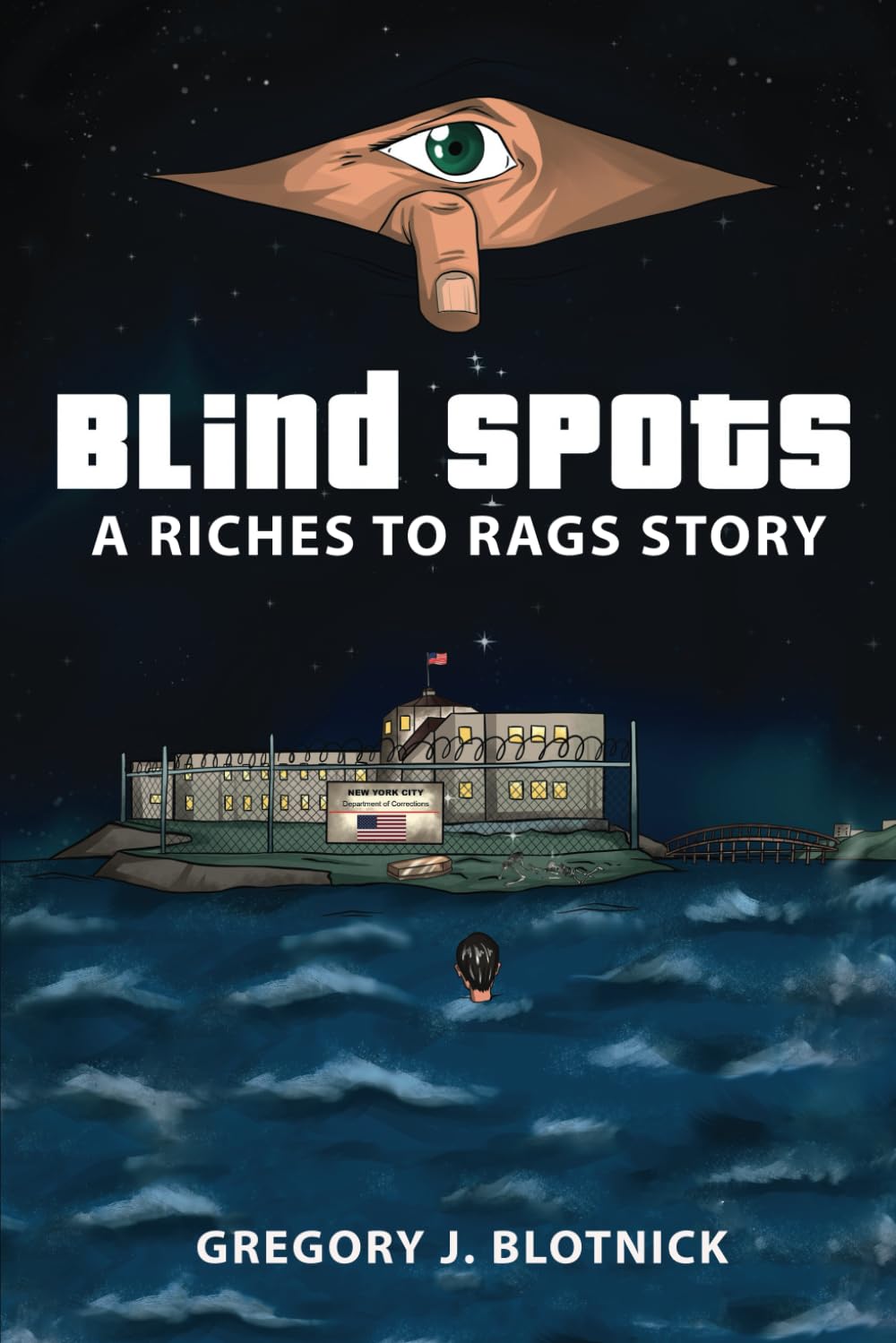



"A raw, self-aware, and earnest remembrance." —RECOMMENDED by Kirkus Reviews "Engaging and entertaining . . . Blotnick delivers a well-written, thought-provoking and incredibly honest account of his fall from grace." —RECOMMENDED by The US Review of Books ". . . a riveting, thought-provoking read that lingers long after the final page. Highly recommended for those who appreciate unvarnished truth and masterful storytelling." —RECOMMENDED by Manhattan Book Review -- “That, dear reader, is what happens when you let your blind spots get the best of you.” One day you’re on top of the world, the next you’re chained in a jail cell on Rikers Island. It turns out that actions have consequences. Gregory Blotnick lived a life of excess, spending money as fast as he could make it. At age thirty, he had everything a man could ever want. It still wasn’t enough. Driven by unchecked ambition and vainglory, he risked it all on himself with no plan B. . . only to discover what happens when burning the boats goes horribly wrong. Each time he thought he'd hit rock bottom, an even rockier bottom laid in wait beneath it. But just when he thought that he’d lost everything a man can possibly lose, he found what really matters. Written from two jails and a rehab clinic, Blind Spots is a shocking, dark and searingly honest memoir, a rollercoaster of decadent highs and soul-crushing lows, and a cautionary tale of how your greatest weakness is always your greatest strength taken too far. All book proceeds donated to the American Foundation for Suicide Prevention (AFSP). "Engaging and entertaining, this memoir is a self-deprecating 'tragic and cautionary tale of total self-destruction.' Blotnick delivers a well-written, thought-provoking, and incredibly honest account of his fall from grace interspersed with funny anecdotes from his life. He emphasizes the danger of thinking, 'It could never happen to me.' Using a sardonic writing style, the author conveys life lessons in loyalty, humility, and true friendship. The book gives readers a front-row seat to the all-consuming, toxic world of finance, which encourages sacrificing all in the relentless pursuit of money that will never bring true happiness. Throughout his account, Blotnick repeatedly asks himself the question at the forefront of everyone's mind: Why? Why not just admit to his investors that he made a bad stock prediction and cut his losses? In answer, he shares this poignant truth: 'Pride isn't the opposite of shame, it's the source.'" —RECOMMENDED by The US Review of Books "In this memoir, which was written largely in jail, Blotnick effectively details his rise to wealth, success, and prominence—and shows how easily it all fell apart. As an author, he's alternately funny and wise, easily shifting between self-deprecating monologues about grades to frank discussions of privilege, money, and an American criminal justice system that's "custom-built to turn your warm heart cold." His vivid descriptions of the violence, filth, and neglect that he and others experienced at Rikers Island will evoke sympathy, but he admirably stresses repeatedly that he isn't writing to make excuses for himself or garner readers' pity. Instead, he writes to expose his own mistakes. A raw, self-aware, and earnest remembrance." —RECOMMENDED by Kirkus Reviews " Blind Spots is a searing, unflinching memoir of self-destruction and consequence, an account that begins in the high-stakes world of finance and ends in the bleak reality of prison. With raw honesty and sharp wit, Blotnick recounts his meteoric rise in the hedge fund industry, his reckless decisions, and the catastrophic fallout that followed . . . equal parts confessional, cautionary tale, and darkly comic reflection on the nature of power, greed, and self-delusion. One of the memoir's most compelling aspects is its refusal to seek redemption. Blotnick does not paint himself as a victim nor does he beg for sympathy. He acknowledges his crimes, accepts his punishment, and exposes his own hubris. This lack of self-pity is refreshing in a genre often riddled with justifications and revisionist narratives. Instead, Blind Spots operates as a postmortem of a life built on unchecked ambition, the illusion of control, and the refusal to acknowledge limitations. The writing itself is crisp and fast-paced, blending financial insider knowledge with street-level grit. Blotnick's voice is a mix of erudition and bravado, a reflection of both his Ivy League education and his time spent navigating the harsh realities of prison life. He shifts seamlessly between humor and despair, creating a memoir that is as entertaining as it is sobering. In the end, Blind Spots is not just a riches-to-rags story, but a meditation on the consequences of ignoring one's weaknesses. It is a riveting, thought-provoking read that lingers long after the final page. Highly recommended for those who appreciate unvarnished truth and masterful storytelling." —4