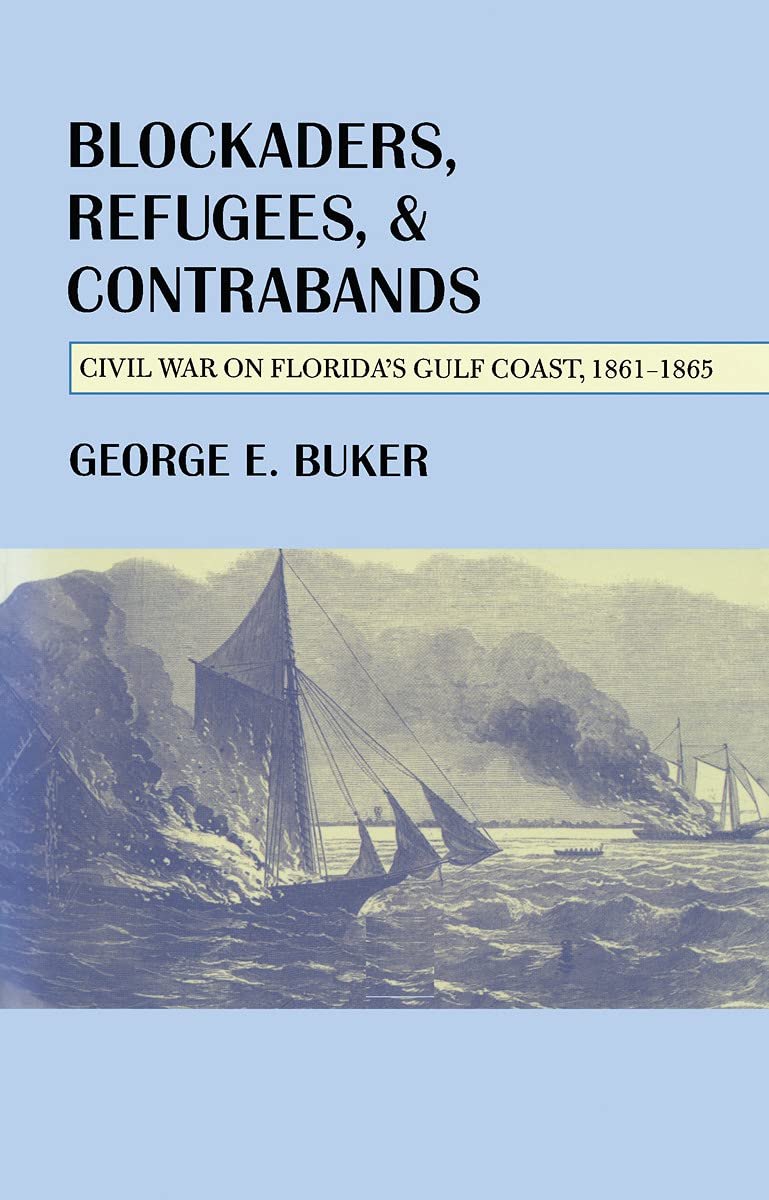
Blockaders, Refugees, and Contrabands: Civil War on Florida's Gulf Coast, 1861-1865 (Fire Ant Books)
$29.95
by George E. Buker Ph.D



Chronicles the role of the East Gulf Blockading Squadron as an important Federal contingent in Florida "[Buker] argues that the presence of Union sailors and their extensive contacts ashore did serious damage to home-front morale and retarded Florida's value as a component of the rebel war machine. Since the state's long coastlines made it a ready target for a naval cordon, its commercial life suffered beginning in 1861 and deteriorated even further as the war progressed despite the efforts of blockade runners. Florida Unionists, antiwar natives, and runaway slaves flocked to these Federal warships to seek protection and quickly became a source of manpower for their crews as well as for land forces."- — Journal of Southern History "The proliferation of publications concerning the American Civil War occasionally produces one that really contributes to our understanding of that conflict. George E. Buker's Blockaders, Refugees, and Contrabands is such a book." — Journal of American History "George E. Buker goes beyond a narrative of the operations of the East Gulf Blockading Squadron to offer an analysis of that unit's impact onshore. . . . Well researched and footnoted, this work also benefits from fine maps." — Military History of the West Chronicles the role of the East Gulf Blockading Squadron as an important Federal contingent in Florida. [Buker] argues that the presence of Union sailors and their extensive contacts ashore did serious damage to home-front morale and retarded Florida's value as a component of the rebel war machine. Since the state's long coastlines made it a ready target for a naval cordon, its commercial life suffered beginning in 1861 and deteriorated even further as the war progressed despite the efforts of blockade runners. Florida Unionists, antiwar natives, and runaway slaves flocked to these Federal warships to seek protection and quickly became a source of manpower for their crews as well as for land forces.-- Journal of Southern History The proliferation of publications concerning the American Civil War occasionally produces one that really contributes to our understanding of that conflict. George E. Buker's Blockaders, Refugees, and Contrabands is such a book.-- Journal of American History Chronicles the role of the East Gulf Blockading Squadron as an important Federal contingent in Florida. "[Buker] argues that the presence of Union sailors and their extensive contacts ashore did serious damage to home-front morale and retarded Florida's value as a component of the rebel war machine. Since the state's long coastlines made it a ready target for a naval cordon, its commercial life suffered beginning in 1861 and deteriorated even further as the war progressed despite the efforts of blockade runners. Florida Unionists, antiwar natives, and runaway slaves flocked to these Federal warships to seek protection and quickly became a source of manpower for their crews as well as for land forces."-- Journal of Southern History "The proliferation of publications concerning the American Civil War occasionally produces one that really contributes to our understanding of that conflict. George E. Buker's Blockaders, Refugees, and Contrabands is such a book."-- Journal of American History George E. Buker is Professor Emeritus of History at Jacksonville University and author of The Penobscot Expedition: Commodore Saltonstall and the Massachusetts Conspiracy of 1779 and Swamp Sailors in the Second Seminole War. Used Book in Good Condition