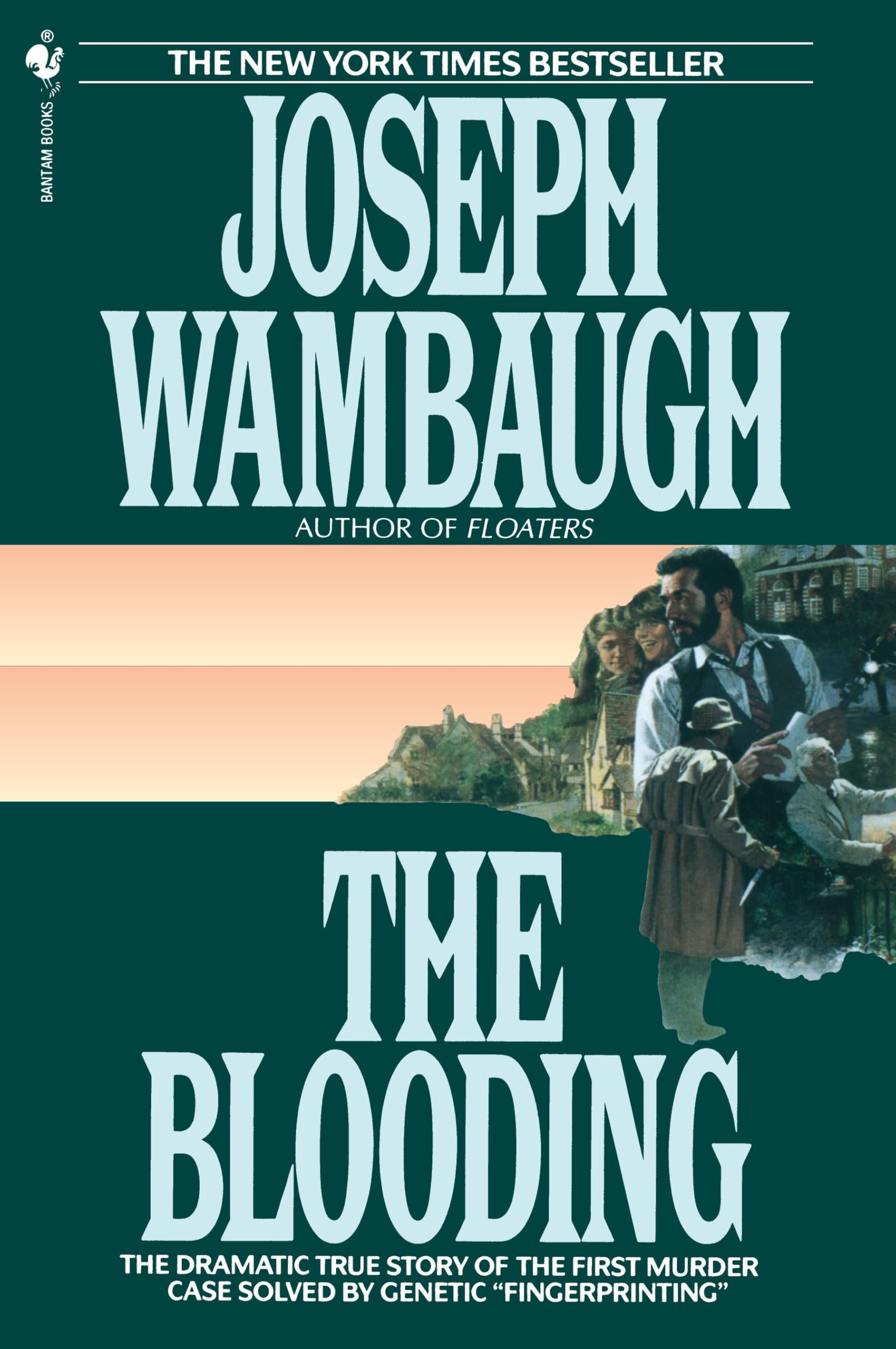



Fifteen-year-old Lynda Mann's savagely raped and strangled body is found along a shady footpath near the English village of Narborough. Though a massive 150-man dragnet is launched, the case remains unsolved. Three years later the killer strikes again, raping and strangling teenager Dawn Ashforth only a stone's throw from where Lynda was so brutally murdered. But it will take four years, a scientific breakthrough, the largest manhunt in British crime annals, and the blooding of more than four thousand men before the real killer is found. "Wambaughs darkest nonfiction since The Onion Field . . . . A meticulous and suspenseful reconstruction . . . . A powerful and elegant police procedural."-- Kirkus Reviews . "Like that cop that he was, Wambaugh brings his English colleagues to vivid life, and like the instinctive reporter that he is, he makes Narborough seem more like Brigadoon than contemporary Britain. For this one, both thumbs up."-- New York Daily News Joseph Wambaugh is the hard-hitting bestselling writer who conveys the passionate immediacy of a special world. He was a police officer with the LAPD for 14 years before retiring in 1974, during which time he published three bestselling novels. Over the course of his career, Wambaugh has been the author of more than 20 works of fiction and nonfiction, all written in his gritty, distinctive noir-ish style. He's won multiple Edgar Awards, and several of his books have been made into feature films and TV movies. He lives in California with his wife. They say that in remote little English villages a newcomer can be accepted by the locals provided he buys property, pays his bills, and stays in continuous residence for about ninety-five years. The village of Narborough isn’t remote, being only six miles southwest of the city of Leicester, and it’s no longer so little—what with land developers enticing young families from urban housing estates with promises of safety and serenity—but it’s a village nonetheless. If you have an ear for pub chat, you might still hear an arcane village debate between elderly dart players as to whether or not Narborough existed during William the Conqueror’s Domesday survey of 1086. A pre-Norman grave cover found in the garden of Narborough House dates from the 10th century, so it can be argued that Narborough was there, Domesday or not. “If we ain’t in the Domesday Book, we wasn’t,” is answered by “If we was in a Saxon graveyard, we was.” But the young villager of today cares less about Domesday and more about the fact that Narborough is woefully short on entertainment; the church/pub ratio is two churches, two pubs. Well, three churches if you want to count the Catholics who showed up about forty years ago. Narborough has a chemist’s shop for pharmaceutical needs, a bakery and confectionary, a tobacconist, a mini-market and a National Westminster Bank. Also, there’s a general store with an off-license, and there’s “R. H. Howe, High Class Family Butcher,” whose sign says: EST. 17TH CENTURY. That’s just down the road from the fruit and vegetable shop, which is next to the fishmonger’s, which is across from the Narborough post office, whose lobby measures ten by fifteen feet. And that’s nearly all there is to the commercial center—that and the two public houses. They complain that the village is woefully short on pubs, but they’ve got two “boozers” in neighboring Littlethorpe, one of which serves very good Leicestershire pork pies. The village of Littlethorpe is on the other side of the river Soar, ten minutes down Station Road (as measured by walking time), just past the tiny Narborough train station, erected in Victoria’s day. Bordering Narborough on the north, a brisk twenty-minute walk up Ten Pound Lane, is the village of Enderby with a different sin-and-salvation mix: seven boozers, two churches. Enderby used to be a quarrying town and the working-class villagers look upon Narborough as being a bit upper crust, or “crusty.” The recent growth of Narborough, Littlethorpe and Enderby causes fear that village identity will be lost entirely. Some think Enderby is already more of a township than a village. But despite local debate among members of the parish council about the alarming influx of strangers, to an outsider the three communities still seem to be typical English Midlands villages. There are reassuring granite churches with mossy slate roofs, turrets and parapets glowing rosy and amber in the setting sun. The churchyards are cluttered with whimsical tottering headstones, parted by irregular stone footpaths worn shiny through the centuries. There are still enough whitewashed Tudor cottages with gnarled black beams and thatched roofs two feet thick, carrying the trademarks of master thatchers. There is still the comfort of strolling on village pavements, too narrow for passing baby prams, along streets barely wide enough for two cars. Most villagers trouble to keep their doors and gutte