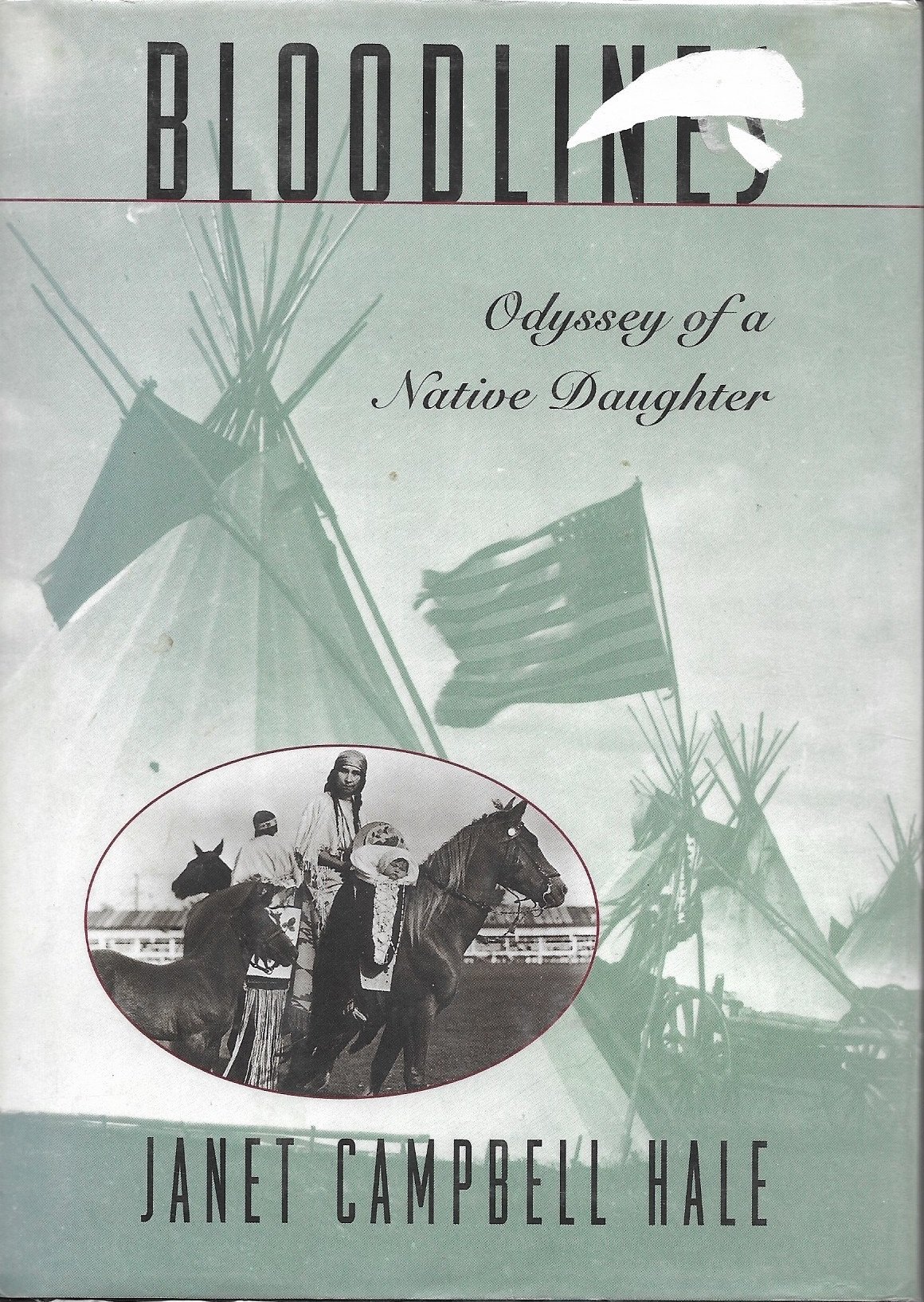



In a collection of autobiographical essays, the author reflects on what it means to be a native American woman, interweaving her own experiences and family history into a study of life on a reservation In this collection of bittersweet autobiographical essays, Hale reveals and examines her often conflicting experiences as the daughter of a Native American father and mixed-blood mother, a single parent, and a fiction writer. Disregarded by her siblings, who are ten to 14 years older than she, and mistreated by her mother, Hale provides a portrait of dysfunctionalism perpetuating itself. In her first nonfiction work (following her novel, The Jailing of Cecelia Capture , Univ. of New Mexico Pr., 1987), Hale attempts to identify and grasp the causes of her unease as she delves into her personal and genealogical history. A sense of the disconnectedness that plagues Hale in terms of her family pervades the text, as does a clash of causes and effects. Hale presents snippets of interesting Native American history throughout this work, which must have been both painful and therapeutic to write. Recommended for public and academic libraries. - Jeris Cassel, Rutgers Univ. Libs., New Brunswick, N.J. Copyright 1993 Reed Business Information, Inc. A different sort of Native American autobiography from novelist and Coeur d'Alene tribal member Hale (The Jailing of Cecelia Capture, 1985). Offering no ``visions of spirits, drums and feathers,'' these overlapping essays instead focus with pathos, though not much insight, on ``family dysfunction.'' Hale's Canadian-born mother, of mixed Indian and white descent, grew up English-speaking in white society but left an abusive and racist white first husband (losing custody of two children) for Hale's father and life on the Coeur d'Alene reservation. The author, ten years younger than the closest of her three older sisters, never witnessed the domestic violence that marred the early days of the marriage, but she was aware of her beloved father's occasional drunken binges and her mother's fury as she repeatedly packed Janet up and fled, taking menial work in a variety of towns in the Northwest. Hale says that she became the family scapegoat to her mother and sisters, enduring all-but- inexplicable rejection and constant verbal abuse. She recounts some Northwest history from a Native American perspective, and jumps through her own passage from single parenthood to Berkeley to lecture tours and a university appointment as a distinguished visiting writer. Family ties are important, she realizes, but those who come from destructive families must break away. Rather than family heritage, the author clings to the most admired quality among the old Coeur d'Alene: ``Courage has been bred into you. It's in your blood.'' Hale never quite brings herself or her world to life here, but, given her past, readers will be relieved at her survival and success. -- Copyright ©1993, Kirkus Associates, LP. All rights reserved. Used Book in Good Condition