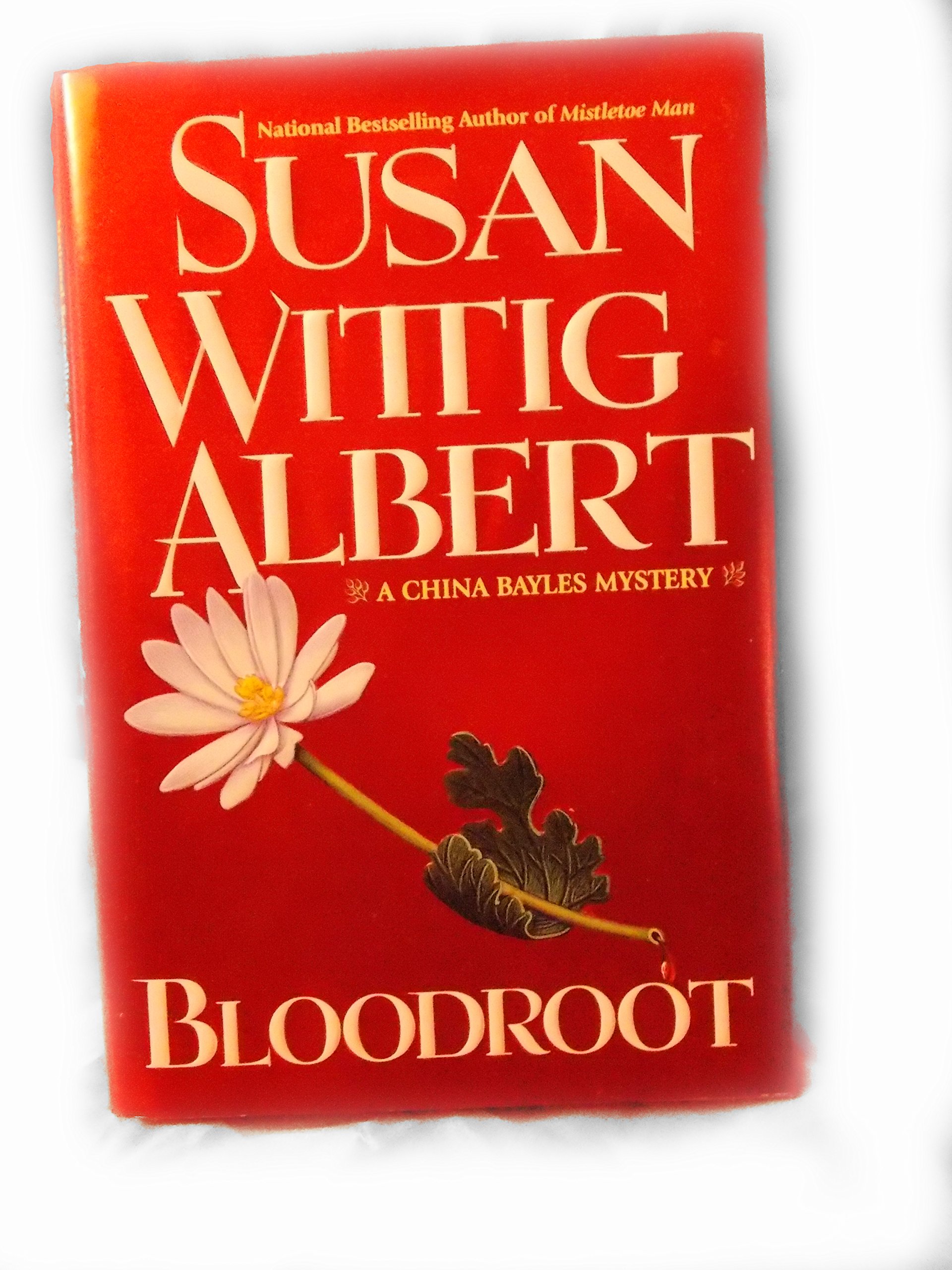



Jordan's Crossing...Just the thought of her family's Mississippi plantation is enough to set China Bayles adrift on a sea of memories. The sweet perfume of magnolia blossoms mixed with the hot, heady smells of the swamp. The house perched on the banks of the Bloodroot River, a trenchant reminder of the bitterest, bloodiest moments in the country's history. And the secrets. The shameful, stifling secrets that have kept her away for so long. A frantic phone call from her mother finally brings her back. But the late-spring air is thick with fear - and from the moment of her arrival, China knows that something has gone desperately wrong at Jordan's Crossing. Her great-aunt, the family matriarch, is gravely ill. An ancient property deed has surfaced - and the man who uncovered it has mysteriously vanished. And as the fates and fortunes of two very different families collide in frightening unpredictable ways, China must face disturbing new questions about her family's past - and her own future. Susan Wittig Albert grew up on a farm in Illinois and earned her Ph.D. at the University of California at Berkeley. A former professor of English and a university administrator and vice president, she is the author of the China Bayles Mysteries, the Darling Dahlias Mysteries, and the Cottage Tales of Beatrix Potter. Some of her recent titles include Widow’s Tears , Cat’s Claw , The Darling Dahlias and the Confederate Rose , and The Tale of Castle Cottage . She and her husband, Bill, coauthor a series of Victorian-Edwardian mysteries under the name Robin Paige, which includes such titles as Death at Glamis Castle and Death at Whitechapel . One Many wild flowers which we have transplanted to our gardens are full of magic and charm, while others are full of mystery. In childhood I absolutely abhorred Bloodroot; it seemed to me a fearsome thing. I remember well my dismay, it was so pure, so sleek, so innocent of face, yet bleeding at a touch, like a murdered man in the Blood Ordeal. --Alice Morse Earle Old Time Gardens, 1901 For a long time, it has seemed to me that every chapter in my life's story has held a meaning I'm meant to understand, a lesson I'm meant to learn-and this one is no different. Before I went to Jordan's Crossing, I believed it was possible to cut myself off from a past I had rejected, to disinherit myself from my family and renounce its unhappy legacy. But the past, as someone has said, is always present, no matter how completely you reject its mysteries or pretend that they don't exist. I think now that everything that happened during those difficult days at Jordan's Crossing was meant to make me come to terms with what is in my blood, to force me (if you'll pardon the metaphor) to dig out my roots. But perhaps the lesson was even more specific than that: I was meant to rediscover the legacy I inherited from the women who bore me-as my friend Ruby Wilcox would say, from the motherline. Whatever the reasons, I had a lot to learn during the days I spent with my mother at the place where she grew up, at Jordan's Crossing. Now, it seems to me that we were able to resolve only a very few of the mysteries. Yes, we found out who killed Wiley Beauchamp, and why. We discovered an unsuspected branch of the family tree. And we learned far more than it is comfortable to know of the ugly truths wrapped in the bloody history of the Mississippi plantation where as a child I spent the hot, still summers, rich in the resinous scent of pine trees and the moist green smells of the swamp. But the deeper shadows in that house, the darker enigmas, the most puzzling mysteries-these ghosts haunted my childhood, and haunt me still. I think they always will. * "Hello, Mother," I said into the phone, as lightly as I could. "What's up?" "I need you, China." Her voice was taut and urgent, and low, as if she were afraid of being overheard. "I want you to come right away. Come today." I cleared my throat. "How's Aunt Tullie? Is she-" "Some days are better than others. But that's not why." "Well, then, what is it? I told you last night: Unless it's really important, I can't just drop everything and-" "I wouldn't ask if it wasn't important," she said, and I thought that the longer she stayed at Jordan's Crossing, the more Southern she sounded: I wudn't ask if it wa'n't impawt'nt. "There's trouble here, China, and there's nobody to talk to. Nobody I can trust, anyway. And you're a lawyer. You can help." Uh-oh. That kind of trouble. "Mother," I said carefully, "you know I don't practice now. And I've never done wills and estates, if that's what this is about." I used to be a criminal defense lawyer before I cashed in my retirement fund, moved from Houston to Pecan Springs, and bought Thyme and Seasons. I keep my bar membership current, just in case, but the old life has no appeal for me, and I hate it when people ask legal questions. "If you and Aunt Tullie need property advice or help with her will or w