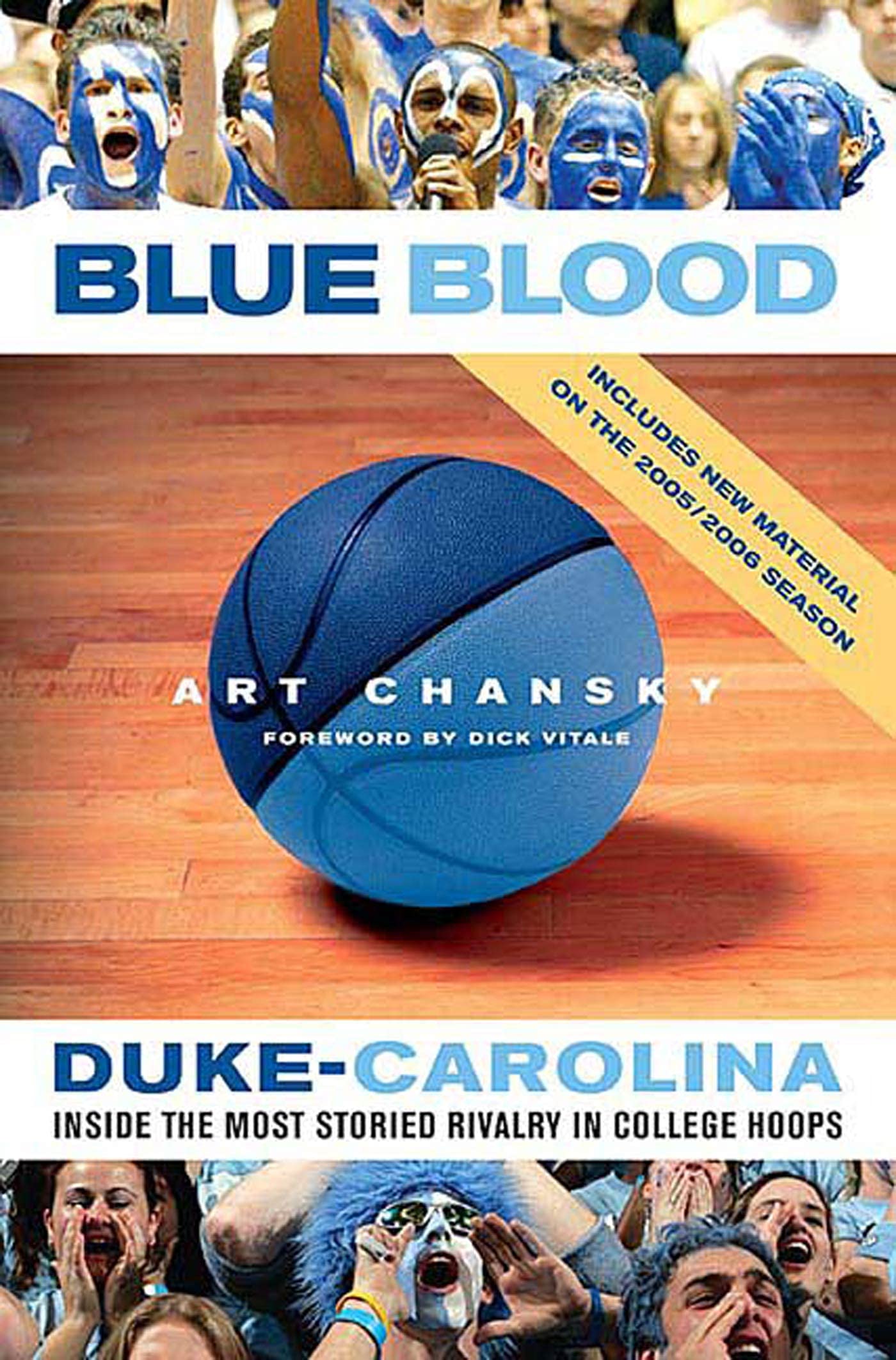
Blue Blood: Duke-Carolina: Inside the Most Storied Rivalry in College Hoops
$14.50
by Art Chansky



Blue Blood is a thrilling chronicle of the Duke-Carolina rivalry as it has evolved over the last fifty years. With unparalleled insider access, veteran journalist and author Art Chansky details the colorful, revered, and respected rivalry--for the first time ever. "It's not about me versus Dean, or me against Roy or Dean against Vic Bubas. Duke and Carolina will be here forever."--Mike Krzyzewski For fifty years the rivalry between Duke and Carolina has featured famous brawls, endless controversy, long-nurtured hatred--and some of the best basketball ever played in the history of the sport. For Duke and UNC players and fans, the competition is not about winning a prize, trophy or title--it's about bragging rights and raw pride. The Duke-Carolina rivalry has fostered more than thirty former players from the two schools playing or coaching in the NBA; it has enchanted a nation of spectators to watch games between the archrivals--garnering some of the highest regular-season TV ratings in history. Blue Blood celebrates the history of this rivalry, the traditions, the heritage, and, most importantly--spectacular basketball. Art Chansky is an author and sportswriter who has covered basketball on Tobacco Road for more than thirty years. By day, he is a sports marketing executive who developed an all-sports competition between Duke and Carolina called the Carlyle Cup. He has written The Dean’s List: a Celebration of Tar Heel Basketball and Dean Smith and Dean’s Domain: The Inside Story of Dean Smith and His College Basketball Empire on North Carolina basketball and coach Dean Smith. He lives with his family on the “Duke side” of Chapel Hill. Blue Blood Duke-Carolina: Inside the Most Storied Rivalry in College Hoops By Chansky, Art St. Martin's Griffin Copyright © 2006 Chansky, Art All right reserved. ISBN: 0312327889 Chapter One Tides of March Under the glint of the newly redesigned 2005 NCAA Tournament trophy, North Carolina’s first in twelve years, many Tar Heel fans could not fully enjoy the moment. Their latest national championship had been achieved in the unlikeliest of ways—by a second-year head coach, who finally had assuaged the anger he caused from first turning down the UNC job in 2000, leading a largely bastardized team of players that former coach Matt Doherty had recruited. Roy Williams was back to stay, for sure, despite almost annual offers to coach the in-flux Los Angeles Lakers. But the stepchildren who had won his first NCAA title after four previous trips to the Final Four at Kansas would not be back, that much was almost certain. Three were graduating and the other top four players were underclassmen who were all likely to enter the NBA draft. Even after their team cut down the nets in St. Louis, returning Carolina to national prominence following a turbulent transition from the Dean Smith era, the specter of archenemy Duke loomed as large as ever. The Blue Devils still dominated the rivalry in recent years, beating Carolina in fifteen of the last eighteen meetings and running up unprecedented strings of ACC regular season and tournament championships. And, Duke was not losing its entire team. Supposedly, only one starter, senior Daniel Ewing, was departing after All-American and ACC Player of the Year J. J. Redick reaffirmed his decision to stay for his senior year and All-ACC center Shelden Williams, the best shot-blocker and post defender in Duke history, also decided not to test the NBA. “I want to accomplish some of the same things Carolina did,” Williams said in his announcement to return. Both programs were bringing in stellar recruiting classes for the 2005–06 season, but Duke’s was rated higher, led by McDonald’s All-Americans Greg Paulus and Josh McRoberts. Heading Carolina’s class was Tyler Hansbrough, a big white center like so many others that had anchored Roy Williams’s Kansas teams, but he would have few seasoned players to help his adjustment. Duke was loaded. The ever-increasing Blue Devil fan base, pervasive everywhere but in the state of North Carolina, was already licking its collective chops over next year’s Final Four in Indianapolis, where the Dukies had won the first of their three national championships in 1991. As was the case a year before, when after Roy Williams turned down the job privately and Mike Krzyzewski freaked out another first-year Duke president, Dick Brodhead, by publicly flirting with the Lakers (he had done the same to Nan Keohane in 1994 over an offer from Portland), the off-season found both basketball juggernauts in the news. Tar Heel players Raymond Felton, Sean May, Rashad McCants, and Marvin Williams, who together with seniors Jawad Williams, Jackie Manuel, and Melvin Scott represented 90 percent of their team’s scoring, 80 percent of its rebounds and assists, and all but 20 of its blocked shots, indeed turned pro and were all NBA lottery picks—the first time four underclassmen from the sam