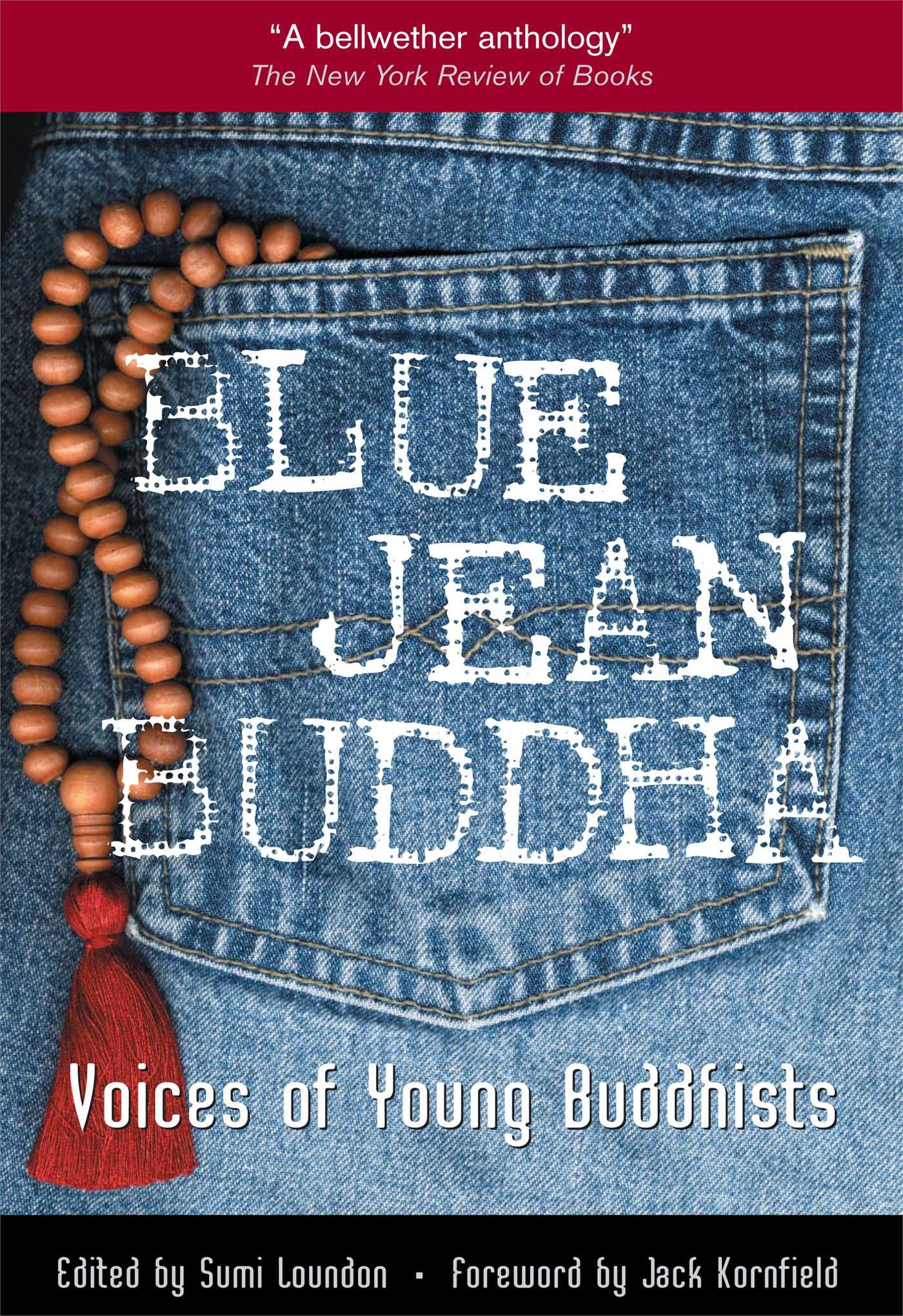



In an age when the Dalai Lama's image has been used to sell computers, rock stars have used tantra to enhance their image, and for many, Nirvana calls to mind a a favorite band, what does Buddhism mean to twenty-somethings? Blue Jean Buddha offers real stories about young Buddhists in their own words that affirm and inform the young adult Buddhist experience. This one-of-a-kind book is about the experiences of young people in America-from their late teens to early thirties-who have embraced Buddhism. Thirty-three first-person narratives reflect on a broad range of life-stories, lessons, and livelihood issues, such as growing up in a Zen center, struggling with relationships, caring for the dying, and using marathon running as meditation. Throughout, up-and-coming author Sumi Loundon provides an illuminating context for the tremendous variety of experiences shared in the book. Blue Jean Buddha was named a finalist in the 2002 Independent Publisher Book Awards (Multicultural Non-Fiction - Young Adult) as well in NAPRA's Nautilus Awards, in the Personal Journey/Memoir/Biography category. Buddhism isn't just for baby boomers anymore. As the spiritual marketplace continues to broaden in North America, Buddhism is emerging as a popular religious alternative among the young. Sumi Loundon, a practicing Buddhist and graduate student at Harvard Divinity School, has gathered a group of Generation X-ers and even younger Generation Y-ers around a virtual campfire to swap stories about what it means to be Buddhist. These are more than just your average tales of pious conversion or blissful living. Loundon's cadres find the relevance of Buddhism atop a sheer cliff face; in the throbbing heart of New York City; strung out on crack; in relationships good and bad; in tragic accidents; and in social activism. Some are monks, others punks; some meditate, others chant; some teach the dharma, others just live it. In this group, Buddhism is neither exotic nor a panacea. For many, it is a feeling of coming home and a proven method of coping while remaining open to the vicissitudes of life. Anyone who has felt the pull of Buddhism--the compelling arguments of its philosophy or the quiet expansiveness of it practices--will quickly identify with the personal experiences in this collection. Like Douglas Coupland's Generation X , Blue Jean Buddha could well become a book that defines and binds a group growing in self-awareness. --Brian Bruya A "twentysomething" American who grew up in the Zen Buddhist tradition, Loundon queried hundreds of her contemporaries in order to confirm that a generation of young Buddhists did in fact exist, to identify the challenges they face, and to define what it means to be a Buddhist in America today. She then asked 28 respondents mostly college-educated, self-identifying Buddhists in their twenties to write about how Buddhism has affected their self-transformations, life stories, and means of livelihood. This resulting collection of mostly brief, well-written, and interesting essays ranges from the poignant and inspiring (e.g., Jessica Morey's "Ordinary Awakening" and Seth Castleman's "If a Nice Jewish Boy Sits in a Cave, Does He Make a Difference?") to the sophomoric. Recommended as a secondary purchase for popular collections; more academic overviews of contemporary Buddhism in America can be found in The Faces of Buddhism in America (Univ. of California, 1998), edited by Charles Prebish and Kenneth Tanaka, and James Coleman's The New Buddhism (LJ 1/01). James R. Kuhlman, Univ. of North Carolina Lib., Asheville Copyright 2001 Reed Business Information, Inc. Buddhists in twenty-first-century America face many conundrums, and many books about the struggle to fit the dharma into daily life (or daily life into the dharma) are available, but most are by Buddhists in their forties or older. What about the challenges facing practitioners in their twenties? Editor Loundon, a young Buddhist born into a Zen community, wanted to know how her peers were coping, and her quest for men and women from diverse backgrounds willing to share their experiences yielded nearly 30 frank and thoughtful essays. Loundon's smart, committed, and articulate contributors include activists, health-care workers, students, teachers, monks, and a nun, and they cover the essentials in their tales of striving to reconcile Buddhist practice with the demands of school, work, family, and relationships. As contributors muse on the rewards and challenges of meditation, the great gap between theoretical and active Buddhism, and bending tradition to accommodate contemporary mores regarding sex, drugs, depression, recreation, and material security, they illuminate an evolving spirituality that is enriching American life. Donna Seaman Copyright © American Library Association. All rights reserved "Those who might have been concerned about the 'graying' of the Western dharma community can relax. Here are the voices of younger people who