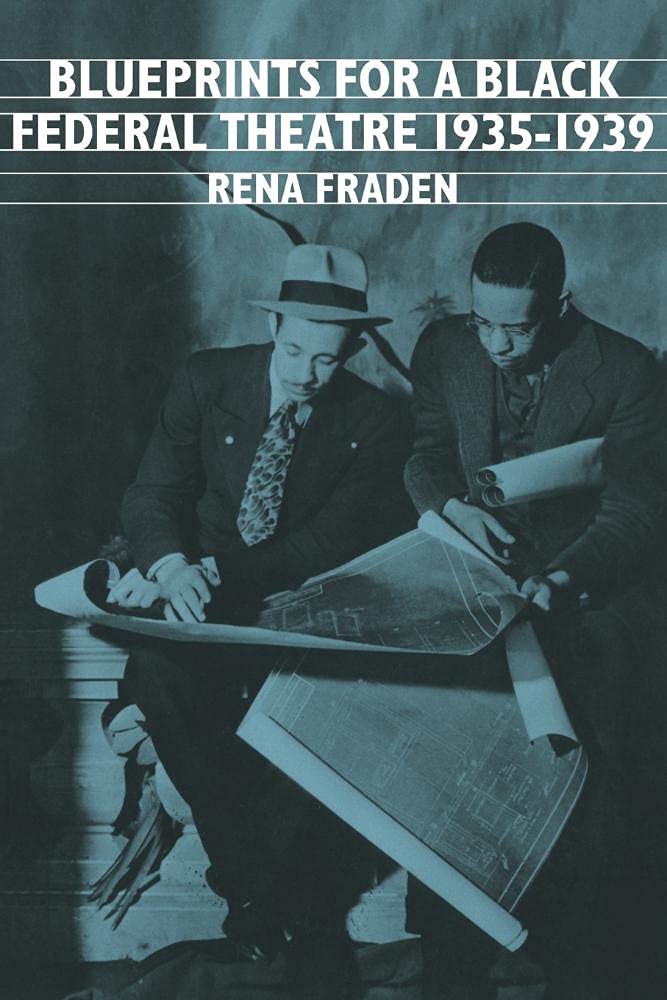
Blueprints for a Black Federal Theatre (Cambridge Studies in American Literature and Culture, Series Number 81) (Volume 0)
$49.00
by Rena Fraden



During the 1930s the Work Progress Administration funded the Federal Theater Project to sustain unemployed theatrical workers in New York, Chicago, Los Angeles and other major urban centers, employing over 12,000 people and presenting countless productions. Some of the most popular and memorable of these works, such as the "voodoo" Macbeth and the "swing" Mikado, were produced in the so-called Negro Units, whose story is narrated in this book. Particular focus is given to problems of representation in a community and in an era trying to define what was African American, what was Negro, what was American, what was peculiar, and what was universal in the arts. "Fraden's active yet balanced voice makes the work approachable for the casual reader yet her meticulous exploration of cultural and political frictions inside and beyond the project represents a significant contribution to the study of Negro FT making it required reading for any serious scholar of not only the Federal Theatre Project but of the American theatre scene of the 1930's." Theatre Studies, Vol. 41 "This major work is complex and scholarly. A critical and historical analysis of the purpose, plays, audiences and actors of the Federal Theatre of 1935-39, Blueprints for a Black Federal Theatre is compelling....useful to theatre students (and others) because of the rich and copious notes." Glenda E. Gill, Theatre Survey "Rena Fraden's 'Blueprint for a Black Federal Theatre' will also be a useful textbook for teaching African American theatre history. Fraden has distinguished her work from that of her major forerunners....'Blueprint' substantially enhance[s] our understanding of African American theatre and will enliven classroom discussions with the cogent and timely arguments [it] present[s]." Joni jones, Drama Review This book focuses on debates of various groups of black and white critics, audiences, and artists over African American theatre in the 1930s. Blue Print for a Black Federal Theatre is compelling...Fraden powerfully states that no group in America has been so invidiously represented onstage and so relentlessly prevented from working backstage.